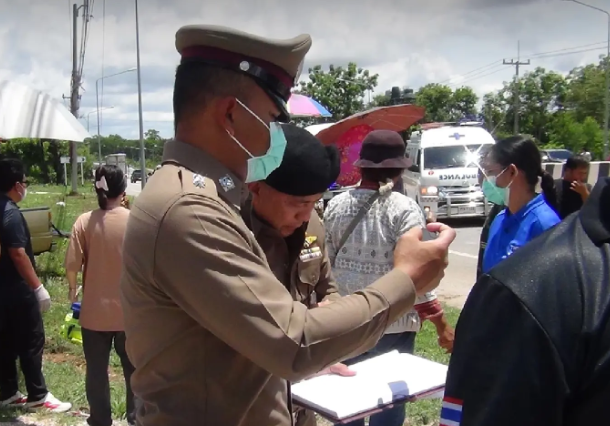
A devastating collision in northeastern Thailand has left ten Buddhist monks dead and ten others hospitalised, marking one of the deadliest accidents involving Thailand's most revered religious figures. The incident occurred Thursday when a pickup truck ploughed into a group of monks and lay followers participating in a pilgrimage procession in Mukdahan province. According to officials and hospital reports released Friday, the death toll has risen as some of the injured succumbed to their injuries whilst receiving treatment. Mukdahan Hospital's latest update indicates that ten people remain hospitalised, with two in critical condition and eight others nursing various injuries sustained in the collision.
Investigators have established that the vehicle was driven by an 11-year-old boy who took his parents' pickup truck without authorisation. The child was at the scene when police arrived and has since been placed under the care of child welfare authorities for assessment, accompanied by his mother. Under Thai law, children younger than 12 years cannot be held criminally liable for their actions, which constrains the legal avenues available to authorities investigating the tragedy. Police chief Prayut Ruanthongkam of Mukdahan City Police confirmed that the boy was unable to provide a formal statement to investigating officers at the time of the incident.
The procession consisted of approximately 35 monks and five lay followers who were walking along a roadside in the province as part of a religious pilgrimage when the truck struck them. Five monks were pronounced dead at the scene, whilst another five perished later whilst receiving emergency medical treatment at the hospital. The incident underscores the vulnerability of religious gatherings and processions that remain commonplace throughout Thailand, where Buddhist traditions form the cornerstone of daily life and cultural practice.
Buddhist monks occupy an exceptionally elevated status within Thai society, serving as custodians of the Buddha's teachings and spiritual guides for millions of adherents. Their public processions, which are frequent throughout the kingdom, represent cherished moments when ordinary citizens engage in acts of merit-making by offering alms and demonstrating reverence to the monastic community. These gatherings, which have occurred without significant incident for generations, represent peaceful expressions of faith that are deeply woven into Thailand's national and cultural fabric.
The investigation into the circumstances surrounding the crash is ongoing, with police continuing to gather testimonies from surviving monks and other witnesses present during the procession. These accounts will help reconstruct the sequence of events leading to the collision and determine whether any mechanical failures, road conditions, or other contributory factors played a role in the tragedy. The investigation process faces the inherent challenge of interviewing traumatised survivors whilst simultaneously conducting a thorough examination of the vehicle involved.
Wat Roi Phra Phutthabat Phu Manorom, a prominent hilltop temple located in Mukdahan, has opened its facilities to accommodate the surviving and recovering monks from the affected procession, as well as other lay followers who were involved in the incident. The temple's decision to provide sanctuary reflects the close-knit nature of Buddhist communities in Thailand and the mutual support systems that exist within monastic networks during times of crisis and grief.
This tragedy raises broader questions about vehicle safety measures in areas where religious processions regularly occur, particularly in rural and provincial regions where fixed infrastructure for protecting pedestrians remains limited. Thailand's road safety record has long been a matter of concern, with the kingdom ranking among the highest in road fatality rates regionally. Whilst this incident uniquely involves a child driver, it nonetheless highlights systemic vulnerabilities in how communities manage the intersection of vehicular traffic and public gatherings.
The incident also draws attention to child safety and supervision practices, particularly regarding access to vehicles. The fact that an 11-year-old was able to take control of a pickup truck without detection speaks to broader questions about how families and communities in Thailand manage access to transportation, especially in provinces where vehicle usage and oversight practices may differ from urban areas.
For Malaysia and other Buddhist-majority nations in Southeast Asia, this tragedy serves as a sobering reminder of the potential consequences when public safety measures remain inadequate at religious gatherings and processions. Many Buddhist communities across the region conduct similar ceremonies and pilgrimages, often traversing roadside routes where traffic management is minimal. The incident may prompt regional discussions about implementing protective protocols for religious processions, particularly in areas where pedestrian and vehicular traffic share the same spaces without formal separation.
The reverberations of this tragedy will extend throughout Thailand's Buddhist community, affecting not only the bereaved families and monasteries directly involved but also reinforcing broader concerns about road safety and public protection. The loss of ten monks represents a significant blow to the monastic institutions they served and the spiritual communities they guided. In the coming weeks and months, Thai authorities and civil society organisations will likely examine whether additional safeguards can be implemented to prevent similar incidents from occurring during future religious gatherings and processions throughout the country.

