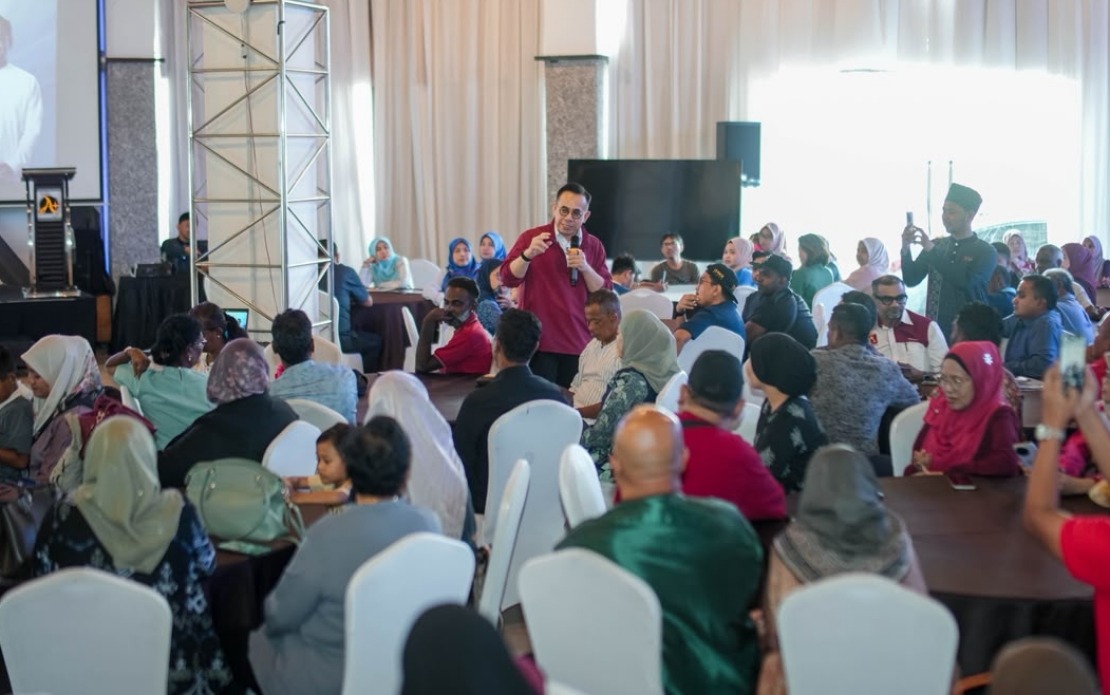
TEKUN Nasional has distributed RM36 million in financing to roughly 1,500 entrepreneurs across Negeri Sembilan as of June this year, according to Entrepreneur Development and Cooperatives Minister Steven Sim Chee Keong. At the national level, the figure climbs substantially higher, with RM540 million reaching 25,600 entrepreneurs during the identical period, underscoring the significant role this institution plays in nurturing Malaysia's entrepreneurial ecosystem at both state and federal levels.
Established three decades ago, TEKUN Nasional has evolved into a cornerstone of Malaysia's enterprise development strategy, channelling capital and support to small and medium-sized ventures across diverse sectors and communities. However, Minister Sim acknowledged that despite this impressive track record, there remain structural inefficiencies and operational gaps that warrant urgent attention. During a recent engagement programme in Seremban where he gathered direct feedback from TEKUN-backed entrepreneurs, concerns emerged regarding approval timelines and fund disbursement procedures that slow down business growth and implementation.
To address these operational bottlenecks, Sim has established concrete performance targets designed to accelerate decision-making without compromising due diligence. Applications for financing exceeding RM100,000 will now face a seven-day deadline for approval or rejection decisions, marking a significant reduction from historical processing periods. More ambitiously, the Ministry of Entrepreneur Development and Cooperatives (KUSKOP) is pursuing a 24-hour turnaround for micro-financing applications of RM20,000 and below, recognising that micro-enterprises often operate on tight cash-flow schedules where delays translate directly into lost opportunities.
Critically, Sim emphasised that expediting approvals alone cannot drive entrepreneurial success without equally efficient fund disbursement mechanisms. The minister pointed out that entrepreneurs frequently face a disconnect between approval and access to capital, where bureaucratic procedures in the disbursement phase create additional waiting periods that undermine the intended benefit of accelerated approvals. This holistic approach to reducing transaction times reflects a growing understanding within Malaysia's entrepreneurship support system that speed and efficiency are competitive advantages in the modern business environment.
One of the most significant policy shifts articulated by Minister Sim concerns the elimination of political patronage from the TEKUN financing process. Historically, entrepreneurs across Southeast Asia have navigated complex informal networks where political connections, party affiliation, and recommendations from elected representatives influence funding decisions. Sim's declaration that applications require no support letters from political leaders represents a direct challenge to this entrenched practice. He stressed that every application must undergo professional, transparent evaluation solely on the basis of applicant eligibility, business viability, and adherence to stipulated criteria, irrespective of the applicant's racial background, religious affiliation, or political sympathies.
This depoliticisation agenda carries significant implications for Malaysia's broader governance framework. By explicitly rejecting the requirement for political endorsement letters, the government signals a commitment to merit-based resource allocation and institutional integrity. Sim's colourful statement—that entrepreneurs should receive fair consideration "regardless of whether they wear blue, green, or red"—reflects an attempt to dismantle the culture wherein entrepreneurs feel obligated to cultivate political relationships as a prerequisite for accessing development financing. For Malaysian entrepreneurs fatigued by the perception that networks and loyalty matter more than business fundamentals, such pronouncements offer hope for a more equitable system.
Beyond operational improvements, the government is also expanding financing schemes designed to reach underrepresented entrepreneurial communities. The Indian Community Entrepreneur Development Scheme (SPUMI) has seen its allocation nearly doubled from RM30 million to RM50 million, while the Indian Community Entrepreneur Financing Package (MUDRA) provides RM220 million in available financing for the current year. These targeted allocations acknowledge that certain communities face structural barriers in accessing mainstream financing and require dedicated support mechanisms to achieve entrepreneurial parity.
Minister Sim framed this inclusive financing approach within a broader nationalist and competitive lens. He argued that when evaluating enterprise support policies, Malaysian policymakers must transcend racial and communal categorisations and instead view all local businesses as representatives of Malaysia in the global marketplace. This perspective represents a departure from earlier policy frameworks that often segmented entrepreneur development along demographic lines. The underlying argument is pragmatic: Malaysia's international competitiveness depends on the collective strength of its entire business ecosystem rather than the isolated success of demographic segments.
The emphasis on unified national competition rather than fragmented community advancement carries particular resonance for a multicultural nation like Malaysia, where resource allocation decisions frequently trigger sensitivity around fairness and representation. By insisting that "if we want to succeed internationally, we must succeed together," Sim attempts to reframe entrepreneurship development as a collective national endeavour rather than a competition for scarce resources among competing communities. This rhetorical repositioning, if accompanied by genuine institutional reform, could reshape how Malaysia approaches small enterprise financing.
For entrepreneurs throughout Negeri Sembilan and beyond, these announcements signal substantive shifts in how government institutions will operate. The seven-day approval window and 24-hour micro-financing target, once implemented and sustained, would represent substantial improvements to the current ecosystem. The commitment to eliminating political interference introduces transparency principles that businesses across Southeast Asia increasingly demand from development finance institutions. Combined with expanded access through targeted schemes like SPUMI and MUDRA, these measures suggest a government attempting to modernise its entrepreneurship support infrastructure and adapt to contemporary expectations regarding institutional efficiency and impartiality.
Nevertheless, the ultimate impact of these reforms depends on execution rather than mere proclamation. Malaysian entrepreneurs have heard commitments to faster approvals and depoliticised processes before; institutional change at the scale required to transform TEKUN's operational culture demands sustained commitment from both political and bureaucratic leadership. The test will come in whether TEKUN's field offices and decision-makers across states like Negeri Sembilan genuinely adopt these standards or whether implementation lags behind ministerial rhetoric. For Malaysia's entrepreneurial community, holding institutions accountable to these stated targets will be essential to realising the transformation that Minister Sim has outlined.

