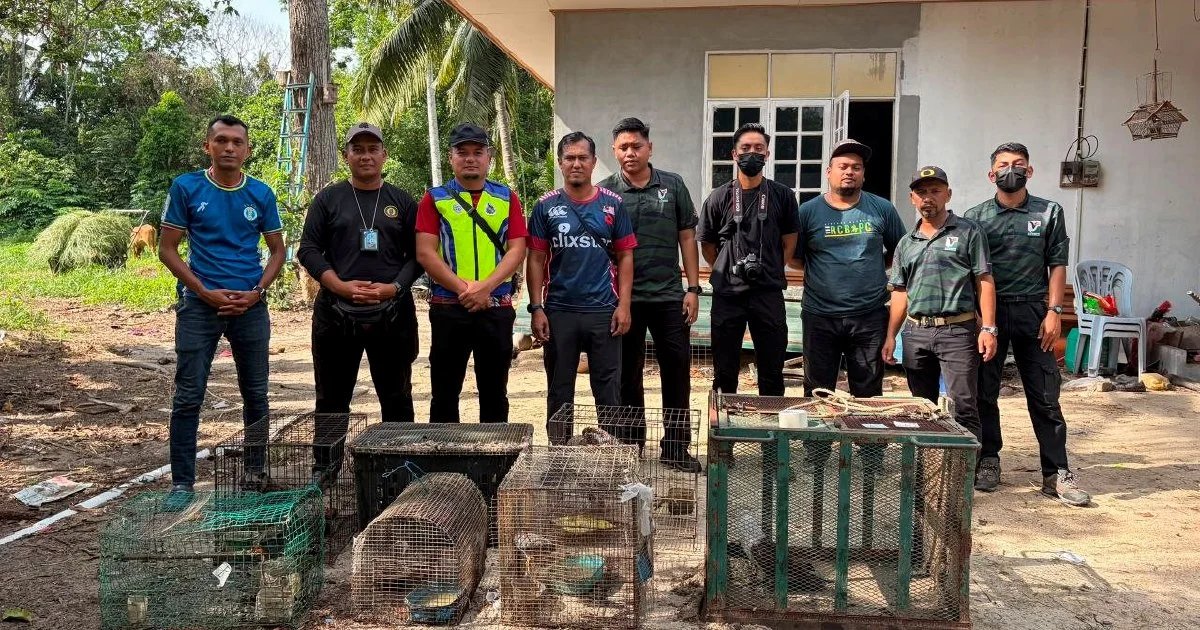
An 18-year-old has been taken into custody following a coordinated enforcement operation in Tumpat, Kelantan, after authorities discovered four distinct species of protected wildlife in his possession, with the confiscated animals collectively valued at RM48,500. The arrest represents a fresh escalation in law enforcement efforts targeting the country's persistent illegal wildlife trade, a multimillion-ringgit criminal enterprise that continues to threaten Malaysia's biodiversity and international conservation commitments.
The raid, executed by wildlife protection authorities, uncovered animals classified under national protection laws, underscoring the scope of trafficking networks that extend beyond major urban centres into smaller towns across the peninsula. The scale of the operation—targeting a teenager rather than an established wildlife dealer—suggests that younger individuals are increasingly being drawn into the illicit trade, either as foot soldiers for larger syndicates or as amateur traffickers exploiting market demand for exotic pets and wildlife products.
Protected species trafficking in Malaysia represents a sophisticated criminal ecosystem. Enforcement agencies operate across multiple fronts, from monitoring international ports to conducting rural raids, yet demand from both domestic and international markets continues to fuel supply chains. The specific identification of four separate species indicates that the teenager may have been engaged in broader trafficking operations rather than casual possession, as collectors typically focus on single species or closely related groups.
The valuation of RM48,500 for the confiscated animals reflects market prices that traffickers command for protected species, prices that incentivize further poaching and capture from the wild. For context, certain protected reptiles, primates, and birds fetch thousands of ringgit each on black markets, making the trade economically attractive to individuals facing limited legitimate employment opportunities, particularly in rural regions where education and job prospects remain constrained.
Kelantan's position on Malaysia's east coast makes it a potential transit hub for wildlife movements both domestically and toward ports serving regional and international smuggling routes. The state's proximity to forested areas and its geography create natural advantages for poachers and traffickers, while limited enforcement resources in some rural zones have historically allowed illegal activities to proliferate with reduced detection risk compared to more heavily monitored urban areas.
The detention of a teenager also raises questions about recruitment and mentorship within trafficking networks. Young offenders often operate under guidance from established criminals who provide suppliers, logistics, and buyers while maintaining distance from direct involvement in arrests. Understanding how juveniles become integrated into these operations is critical for developing prevention strategies that address root causes of youth involvement in environmental crime.
Malaysia's international obligations under treaties including the Convention on International Trade in Endangered Species (CITES) obligate the country to maintain robust enforcement against wildlife trafficking. Each successful enforcement action, particularly high-value seizures, demonstrates commitment to treaty partners and contributes to global efforts against transnational environmental crime. However, arrests remain far below the estimated volume of illegal trade, suggesting that law enforcement disrupts only a fraction of actual trafficking movements.
The psychological profile of wildlife traffickers varies significantly. Some individuals are driven primarily by profit in communities with minimal economic alternatives, while others may be motivated by demand from collectors and hobbyists seeking rare animals. Educational campaigns targeting both supply and demand sides remain underdeveloped compared to enforcement actions, creating an imbalance in the government's anti-trafficking strategy.
This bust occurs amid rising regional concerns about wildlife trafficking networks operating across Southeast Asia. Criminal organisations exploit porous borders, inconsistent enforcement standards between countries, and online platforms to expand their reach. Malaysia, serving as both a source country for certain species and a transit point, faces particular vulnerability to exploitation by larger trafficking syndicates targeting species toward markets in East Asia and beyond.
The arrest carries implications for local communities in Tumpat and surrounding areas. While enforcement protects remaining wildlife populations from further depletion, it also signals to residents that engaging in wildlife trafficking carries legal consequences. Coordinated community engagement alongside enforcement could reinforce these messages while addressing socioeconomic factors driving participation in the trade.
Wildlife authorities are investigating the source of the animals and potential connections to larger trafficking networks. Determining whether the teenager acted independently or as part of an organized operation will shape the trajectory of the investigation and potentially lead to further arrests upstream in the supply chain. Such intelligence gathering remains critical for moving beyond reactive enforcement toward dismantling trafficking infrastructure.
The confiscated animals will likely be transferred to rehabilitation facilities or zoological institutions capable of providing appropriate care. Recovery of protected wildlife removes them from the illicit trade and may enable eventual reintegration into wild populations, depending on species, health status, and available habitat.
Moving forward, this case underscores the necessity for Malaysia to strengthen prevention programs in rural communities while enhancing international cooperation with neighbouring countries. The involvement of a teenager signals that trafficking networks are adapting recruitment strategies, making prevention efforts targeting youth increasingly vital to disrupting supply chains before they fully establish.

