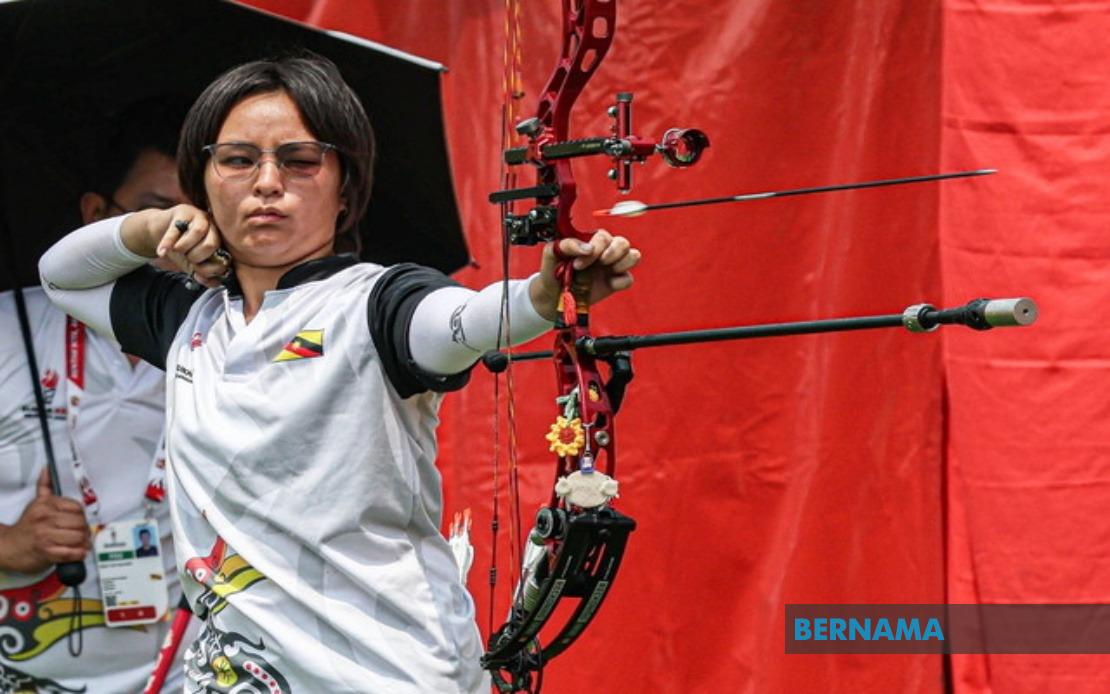
Sarawak's emerging archery prospect Wee Yee Qi has made a striking impression at the 2026 SUKMA Games, claiming dual gold medals in her debut appearance after an unconventional career pivot. The 17-year-old archer's decision to abandon the recurve discipline in favour of compound archery late last year is already demonstrating its merit, with immediate success at the national games held at the National Institute of Valuation Stadium in Bangi.
Yee Qi's first triumph came in the mixed team competition, where she partnered with Eason Lau Hui Wan to edge Kedah's pairing of Muhammad Zaim Ahmad and Ili Nabihan Shafizan in a closely contested final that separated the competitors by a single point, 151-150. The narrow victory showcased the calibre of archery competing at the SUKMA level, where precision and consistency under pressure determine outcomes. This mixed team event victory immediately announced Yee Qi as a formidable competitor capable of delivering results when it matters most.
Her second gold medal came through the women's team event, where Sarawak's archer teamed alongside Aira Nadirah Aizuddin and Nur Zara Aisyah Khairul Fadly to defeat Terengganu by four points in a scoreline of 217-213. The Sarawak contingent's comeback narrative proved particularly compelling, as the trio found themselves trailing throughout the initial three ends before mounting a dramatic recovery in the final end to overcome Terengganu's lineup of Airazalia Azrai, Nur Shafiena Mohd Shuhamri, and Putri Aqiera Issandra Ismayuddin. This resilience under adversity demonstrates mental fortitude essential for elite archery competition.
In remarks following her victories, Yee Qi attributed her success to the coaching infrastructure supporting her development. She expressed particular gratitude towards her coaching team, acknowledging their instrumental role in guiding her progression and facilitating participation in competitive platforms that have enriched her experience. This emphasis on coaching quality reflects a broader recognition within Malaysian archery that technical instruction and strategic competition exposure remain foundational to athlete development, particularly for younger competitors navigating tactical and technical challenges.
The Miri-born archer outlined her pathway into archery, noting that her talent was initially identified during her school years, a discovery that catalysed six years of continued involvement in the discipline. Rather than viewing the sport purely as recreation, she has cultivated a genuine passion for archery, supported consistently by her family unit. This combination of institutional identification, sustained family backing, and personal commitment provides a stable foundation upon which further development can be built.
Yee Qi's transition from recurve to compound archery represents a deliberate strategic repositioning. She acknowledged encountering difficulties in establishing her competitiveness within the recurve category, a situation that prompted exploration of alternative specialisation. The compound bow discipline, which relies on mechanical advantage systems including pulleys and cams, offers different technical characteristics and learning curves compared to the traditional recurve format. Her willingness to pivot rather than persist with an apparently suboptimal trajectory demonstrates pragmatism and adaptability, qualities that often distinguish athletes capable of sustained progression.
Looking forward, Yee Qi's immediate priorities involve completing her Sijil Pelajaran Malaysia examination scheduled for November, which will temporarily divert her attention from competitive archery. However, she has signalled intentions to resume intensive focus on the sport following this academic milestone. Her long-term ambition extends toward national representation, positioning these SUKMA successes as stepping stones toward competing at international levels under the Malaysian flag. This trajectory from state-level success to potential national and international competition is typical of developing elite athletes within Malaysian sports systems.
Selangor archery contributed supporting performances across the medal podium. The state's mixed team pairing of Muhammad A'rif A'fiq Suhaimi and Nur Alyaa Nazurah Fadzil Fairuz claimed bronze after prevailing over Sabah's Hiew Ichin and Catherine Looi Mei Qi Abdullah in a closely fought contest finishing 154-152. Similarly, Selangor's women's team comprising Amira Batrisyia Mohamad Azizul Rahman, Nur Alya Sofrina Mohd Sarif, and Nur Alyaa Nazurah Fadzil Fairuz secured bronze by defeating their opponents 219-212, indicating depth of archery talent across Malaysian states.
Yee Qi's achievement at SUKMA 2026 carries broader implications for Malaysian archery development. The success of compound archery, a discipline gaining increased prominence globally, suggests that Malaysian sports authorities should consider diversifying specialisation pathways rather than concentrating resources exclusively on traditional recurve competition. Her double-gold debut at SUKMA indicates that dedicated athletes willing to explore alternative specialisations can achieve rapid progression and medal success. As Malaysia continues developing its archery programme and preparing for international competitions, the identification and cultivation of versatile athletes across multiple disciplines may enhance overall competitive standing within regional and global contexts.

