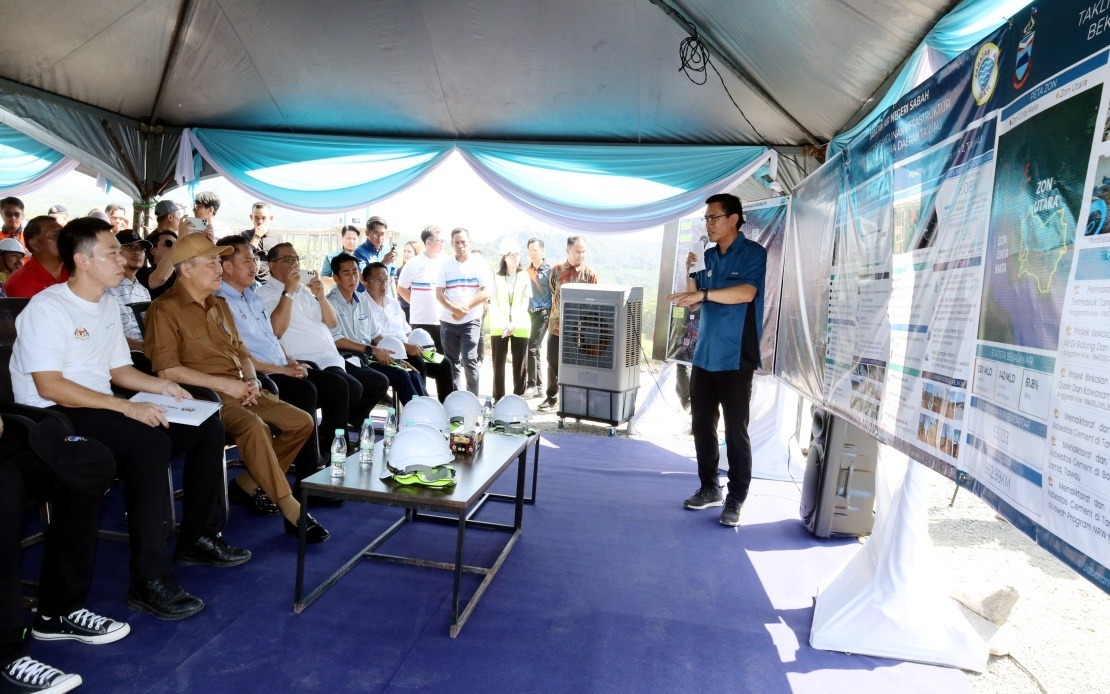
Tawau's persistent water supply crisis, which has plagued the eastern Sabah town for years, is poised to reach resolution through an ambitious RM450.5 million infrastructure initiative expected to be operational before the close of 2027. The Tawau Water Supply Scheme Phase III represents a transformative undertaking for the region, addressing supply deficiencies that have constrained development and burdened residents throughout the district.
Sabah Chief Minister Datuk Seri Hajiji Noor confirmed during a site inspection that despite contractor requests for timeline extensions, the overall project remains aligned with its original completion target. This assurance carries weight given the long history of water-related challenges in Tawau, an issue the current administration inherited rather than created. The acknowledgment that this problem predates the existing state government underscores the scale of infrastructure debt that Sabah has confronted, while the commitment to additional funding if needed signals serious intent to resolve the matter comprehensively.
The centrepiece of Phase III is the construction of a dedicated dam designed to capture and store raw water for processing through the Cinta Mata 1 and Cinta Mata 2 treatment facilities. As of late July, the dam construction had progressed to 74.04 percent completion, indicating that the project has passed its midpoint and momentum appears sustainable. Beyond addressing the immediate supply shortage, the new dam will also provide secondary benefits by reducing flood risks that have historically affected downstream communities in Tawau, integrating water security with disaster mitigation.
The infrastructure specifications reveal an ambitious scope intended to fundamentally reshape Tawau's water capacity. The dam itself will hold 30 million cubic metres of raw water—a substantial reserve for a district that currently struggles with daily demand fluctuations. The project encompasses the installation of 11.6 kilometres of large-bore pipelines, specifically 700-millimetre diameter conduits, to distribute unprocessed water from the dam to treatment plants. This redundancy in pipeline infrastructure represents a shift from Tawau's existing fragmented system to an integrated network designed for reliability.
The Cinta Mata 2 Water Treatment Plant, the largest component facility, represents a RM299.9 million investment with a projected treatment capacity of 30 million litres per day. Though scheduled for completion in July 2028—slightly beyond the overall Phase III target—this plant will substantially expand Tawau's processed water output. The combined treatment capacity across all three plants receiving water from the new dam will reach 161 million litres daily, directly addressing the current supply-demand imbalance where production falls approximately 12 million litres short of consumption.
Current statistics paint a stark picture of Tawau's infrastructure constraints. The district currently registers 53,133 water accounts while producing only 130 million litres daily against an acknowledged demand of 142 million litres. This 12-million-litre deficit represents approximately 9 percent of total demand, a shortfall that forces water managers to implement rationing during peak consumption periods and leaves consumers vulnerable to service interruptions during maintenance or equipment failures. The proposed expansion to 161 million litres of treatment capacity would not merely close this gap but create surplus capacity for future population growth and economic expansion.
The Cinta Mata 2 facility has achieved 16.08 percent physical progress as of late July, a more modest pace than the dam construction but typical for complex water treatment infrastructure requiring precision in mechanical and chemical systems installation. This plant specifically targets approximately 42,000 consumers throughout Tawau and adjacent areas, meaning roughly four-fifths of the district's registered accounts will benefit directly from this single facility. The staged approach to bringing treatment plants online also provides operational flexibility, allowing the water department to integrate new capacity gradually while maintaining service continuity for existing consumers.
For Malaysian policymakers and infrastructure specialists across Southeast Asia, the Tawau project offers important lessons in addressing structural deficits in basic services. The willingness of Sabah's state government to commit substantial capital to resolving inherited infrastructure problems, combined with openness to additional funding if required, demonstrates a framework for tackling similar challenges elsewhere. Many Southeast Asian towns face comparable water supply pressures arising from rapid urbanisation, aging infrastructure, and incomplete earlier-phase development projects.
The project's flood mitigation co-benefit also merits attention, as integrated infrastructure solutions that address multiple challenges simultaneously generate greater public value than single-purpose investments. By combining water storage with flood control, the Tawau Dam positions the district better for climate resilience, a consideration increasingly relevant across the region as rainfall patterns become more unpredictable. This multiplier effect—delivering both improved supply and reduced flood risk—justifies the substantial capital outlay and extends the project's significance beyond simple water supply augmentation.
Implementation challenges remain, as evidenced by the contractor's extension requests, yet project leadership appears confident in the revised timeline. The involvement of both the Sabah State Water Department and the Department of Irrigation and Drainage reflects coordination across administrative levels necessary for projects of this complexity. The phased approach to completion, with the dam ready slightly before full treatment plant deployment, allows the system to operate with initial capacity while final components come online, reducing pressure for single-date completion and improving reliability.
Tawau residents and businesses can reasonably anticipate meaningful improvement in water availability within approximately three years, conditional on continued project momentum. Beyond the immediate relief to current demand, the expanded infrastructure capacity creates foundation for industrial development and population growth that economic planners identify as crucial for eastern Sabah. The project's completion will likely catalyse broader investment as businesses gain confidence in reliable utility provision, one of the fundamental prerequisites for sustainable economic expansion in regional markets.

