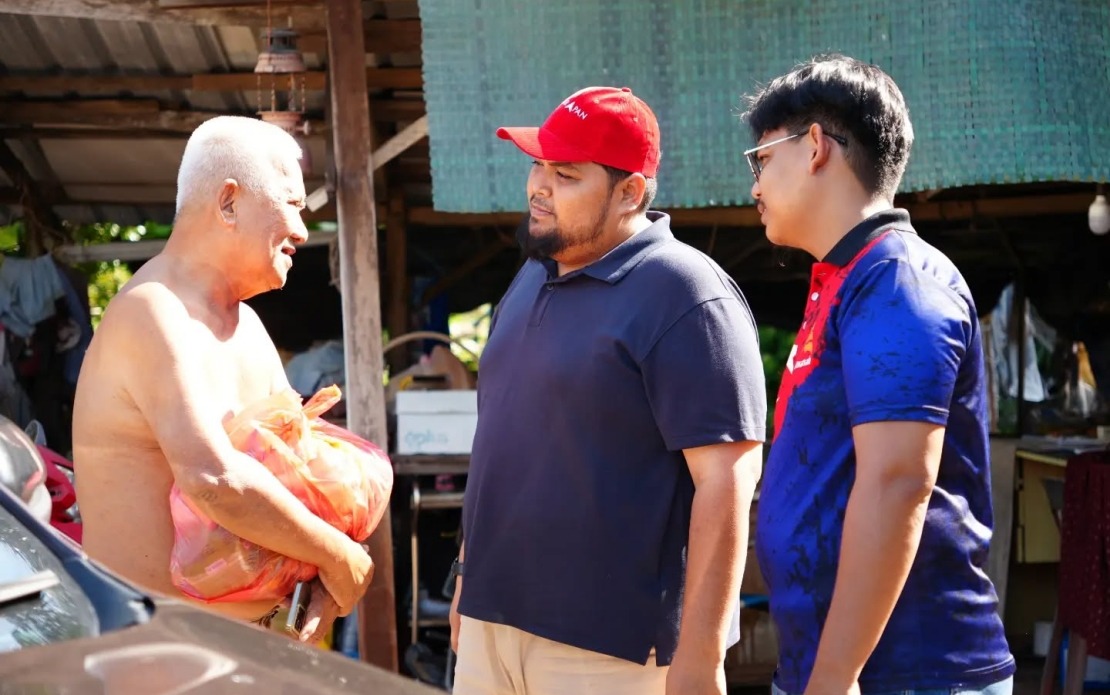
The 16th Johor State Election enters its final sprint with Pakatan Harapan's Muhammad Taqiuddin sharpening his campaign message around issues that resonate most with younger constituents in the Maharani state seat. Facing a competitive four-way contest, the former Pulai Sebatang assemblyman—known colloquially as Taqi—has zeroed in on bread-and-butter concerns: job creation, business expansion opportunities, and technical skills development. With voting day set for July 11, his team is accelerating engagement sessions across youth communities in Muar to build support in what analysts see as a potentially tight three-cornered race involving Perikatan Nasional, Barisan Nasional, and newcomer MUDA.
Muar's persistent problem as a "retirement town" underpins Taqiuddin's campaign strategy. The district has long struggled with youth outmigration, as school leavers and graduates pursue opportunities elsewhere, particularly in semiconductor manufacturing hubs and larger urban centres. This demographic drain reflects broader challenges facing smaller Malaysian towns that lack diversified economic anchors. Taqiuddin's diagnosis of the problem is straightforward: young people would stay and invest in Muar if viable pathways existed locally. His engagement with young entrepreneurs at District 84 illuminated a tangible bottleneck—approximately 70 traders operating in cramped conditions, forced to share limited commercial space in rotation. While this might seem a narrow issue, it exemplifies the administrative and infrastructure gaps that deter youth entrepreneurship in secondary towns.
The solutions Taqiuddin is promoting extend beyond symbolic gestures. Pakatan Harapan's "Johor For All" manifesto pledges RM500 million specifically allocated to support young entrepreneurs scaling their operations. For a constituency where small-business formation has stalled due to space constraints and capital shortages, this funding pool represents tangible advantage. Critics might note that campaign promises require legislative approval and budgetary discipline post-election, yet the commitment signals a different priority set compared to competing manifestos. The pledge also reflects PH's broader calculation that younger voters increasingly demand evidence-based development plans rather than heritage-based political appeals.
Infrastructure projects loom large in Taqiuddin's narrative. The Maharani Energy Gateway, positioned as an imminent economic catalyst, could fundamentally alter the constituency's investment climate if delivery timelines hold. Major infrastructure plays—particularly energy-related developments—historically attract downstream manufacturing, logistics, and service sectors. For Muar, traditionally oriented toward agriculture, palm oil processing, and fishing, a gateway project could diversify the economic base and create opportunities for younger workers seeking alternatives to traditional sectors. However, voters and analysts will scrutinize whether MEG's anticipated completion dates are realistic, given Malaysia's mixed track record with infrastructure projects.
Technical and vocational education emerges as another strategic pillar. Taqiuddin advocates establishing quality TVET institutions within Maharani to cultivate a skilled local workforce aligned with industry demand. This addresses a documented skills mismatch in Malaysia's economy, where employers report difficulty finding workers with relevant qualifications while graduates struggle to find suitable positions. For Muar specifically, TVET infrastructure could retain young people by enabling them to acquire marketable skills without relocating, while simultaneously attracting employers seeking pre-trained workforces. The proposal also signals recognition that not all young people pursue university degrees—a demographic shift Malaysian policymakers have been slow to accommodate compared to regional peers like Thailand and Vietnam.
Secondary livelihoods for fishing communities feature in his platform as well. Taqiuddin acknowledges that younger fishermen face generational pressure to leave the profession, citing infrastructure constraints—particularly the shallow river mouth at Parit Raja Laut—that impede boat movement and commercial viability. Addressing such physical bottlenecks directly supports second-generation fishermen, a vulnerable cohort often overlooked in development planning. Drainage system improvements affecting oil palm plantations similarly target agricultural communities that form Muar's demographic backbone. These granular infrastructure pledges distinguish Taqiuddin's campaign from purely rhetorical appeals to youth, grounding his message in observable local problems.
The competitive landscape shapes campaign dynamics considerably. Facing challenges from Mohamad Anuar Hayan of Perikatan Nasional, Datuk Ashari Md Sarip of Barisan Nasional, and Muhammad Amir Fiqri of MUDA, Taqiuddin must consolidate support across multiple voter segments. Barisan Nasional's traditional base includes older, rural constituencies, terrain where PH has historically struggled in Johor. Perikatan Nasional commands substantial grassroots organisation and Islamic messaging appeal. MUDA, newer and youth-oriented, paradoxically poses the sharpest threat to Taqiuddin's youth-focused positioning—MUDA's independent brand and generational messaging may resonate with voters seeking alternatives to established coalitions. Taqiuddin's advantage lies in his prior assembly experience and connection to PH's state-level governance record, though voters' assessment of that record across Johor will heavily influence his prospects.
Broader state-level considerations intersect with local Maharani dynamics. The 16th Johor election determines which coalition governs the state for the next five years, making each seat consequential. Voters increasingly cast ballots with awareness of state-level implications, not merely local concerns. This environment rewards candidates like Taqiuddin who can anchor local grievances within coherent state-level platforms. PH's "Johor For All" manifesto attempts precisely this—connecting district-level youth employment to state-wide economic transformation. Whether voters perceive this as credible depends substantially on PH's performance in existing portfolios and its communication discipline during the final campaign week.
The emphasis on youth engagement reflects demographic reality and electoral calculation. Younger voters comprise an expanding share of Malaysia's electorate but historically show lower turnout rates. Campaigns targeting their concerns—employability, entrepreneurship, skills development—aim partly to mobilise this cohort. Taqiuddin's investment in youth-community sessions suggests PH recognises that competing for younger voters requires more than generic manifesto releases; it demands direct, substantive dialogue addressing their lived experience. Whether this investment translates into votes depends on execution quality and perceived authenticity across the final four days of campaigning.

