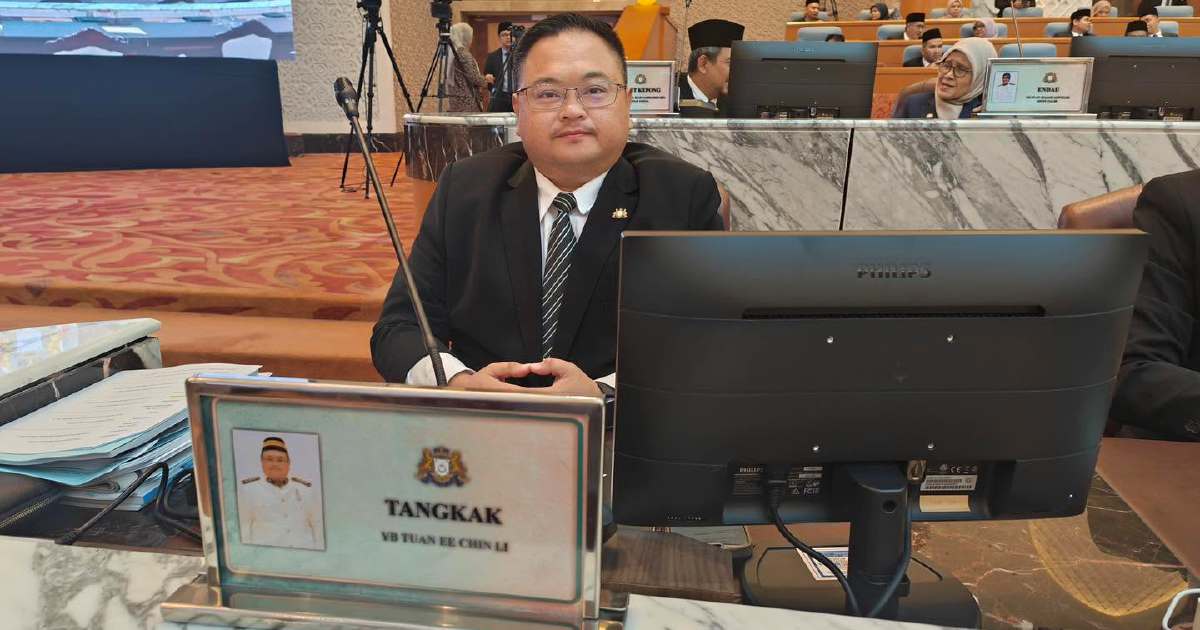
The Tangkak state constituency in Johor is shaping up as a direct confrontation between two major political blocs in the upcoming state election scheduled for July 11. Incumbent Ee Chin Li, representing Pakatan Harapan, will defend his seat against How Chin Teck, fielded by Barisan Nasional. The absence of third-party contenders means the electoral battle will centre entirely on these two heavyweights, creating a clear binary choice for voters in this crucial southern state constituency.
Tangkak's political complexion reflects the broader competitive dynamics that have characterised Johor politics in recent years. The state has emerged as a testing ground for both coalitions, with results often indicating shifts in voter sentiment across Malaysia's southern regions. The constituency has historically been contested territory, making the July 11 poll a significant barometer of public opinion on the respective performance records of both PH and BN in state governance.
Ee Chin Li's incumbent status brings operational advantages and visibility derived from legislative tenure and local engagement through established machinery. As the sitting representative, Ee enters the contest with demonstrated knowledge of constituent grievances, ward-level issues, and existing relationships with community stakeholders. Incumbent candidates typically benefit from name recognition and the ability to point to concrete achievements or policy initiatives undertaken during their term. However, incumbency can also become a liability if constituents perceive unfulfilled promises or ineffective advocacy on persistent local problems.
How Chin Teck represents BN's strategy to recapture ground in constituencies where the coalition experienced setbacks. Barisan Nasional has invested substantial resources in state-level contests across Malaysia, seeking to rebuild influence after the dramatic political realignment of recent years. BN's candidate selection reflects calculations about which personalities and figures can most effectively mobilise traditional party supporters whilst appealing to swing voters concerned about governance, development, and economic management.
The July 11 election assumes particular importance given Johor's size and economic significance within Malaysia. The state contributes substantially to national GDP, with major manufacturing, port, and service sectors that employ hundreds of thousands. State-level policies on infrastructure investment, business licensing, land development, and worker protections directly impact these economic pillars. Both coalitions have framed their campaigns around development trajectories, fiscal management, and the capacity to attract investment that generates employment.
Voter sentiment in Tangkak, like elsewhere in Johor, has demonstrated considerable volatility in recent election cycles. Migration patterns, demographic shifts among younger voters, and changing economic circumstances have altered electoral mathematics substantially since 2018. Urban and semi-urban areas within the constituency may respond differently to messaging around economic management, corruption, institutional reforms, and administrative efficiency than more rural subdivisions where service provision and infrastructure connectivity remain primary concerns.
The two-way contest format simplifies voter decision-making but intensifies pressure on both campaigns to consolidate support. Neither candidate can afford to take their base for granted, as the absence of splitting votes means that swing voters in the middle become the true prize. Ground campaigns will likely emphasise personal credibility, constituency service records, and superior understanding of local development priorities. Both teams will marshal party machinery to ensure maximum turnout, recognising that in tight contests, mobilisation margins often determine outcomes.
Local issues specific to Tangkak—whether related to industrial zones, smallholder agriculture, housing, education infrastructure, or healthcare access—will likely dominate campaigning. Candidates will position themselves as better advocates for addressing these particularised concerns within the broader state legislature. Community leaders, business associations, and civil society organisations representing various interest groups will expect sustained attention and commitment from whichever representative ultimately claims the seat.
The broader coalition performance in other Johor constituencies will inevitably influence voter psychology in Tangkak. If PH demonstrates strong momentum across the state, undecided voters may shift toward Ee Chin Li. Conversely, if BN appears positioned for comeback victories, momentum could advantage How Chin Teck. Electoral contests rarely unfold in isolation; they operate within cumulative narratives about coalition health, leadership capacity, and party morale that shape voter perceptions.
Internal party dynamics within both PH and BN also merit consideration. Ee Chin Li's position as a PH incumbent in Johor reflects his standing within the coalition's component parties. How Chin Teck's selection as the BN standard-bearer indicates confidence in his electoral appeal and organisational capabilities. Both candidates will draw upon networks within their respective political structures for campaign resources, volunteer mobilisation, and strategic guidance. Party unity or fragmentation at state and national levels can substantially impact how effectively individual candidates execute their campaigns.
The stakes extend beyond the Tangkak seat itself. State assembly results contribute to determining overall coalitional control of the Johor government. A PH victory across multiple constituencies strengthens the coalition's capacity to govern; conversely, significant BN gains would reposition the latter as a governing force. These macro-level calculations inform voter considerations, particularly among political sophisticates who recognise that individual seat contests aggregate into control over state resources, appointments, and policy direction.
As the election approaches, both camps will intensify their campaigns with candidate visibility, policy pronouncements, and contrasting visions for Tangkak's development. The July 11 contest will ultimately reflect how effectively each side mobilises its constituencies, persuades swing voters, and executes ground-level organisation. The straight fight between these two candidates means that victory margins may prove decisive indicators of emerging voter preferences across the broader Johor political landscape.

