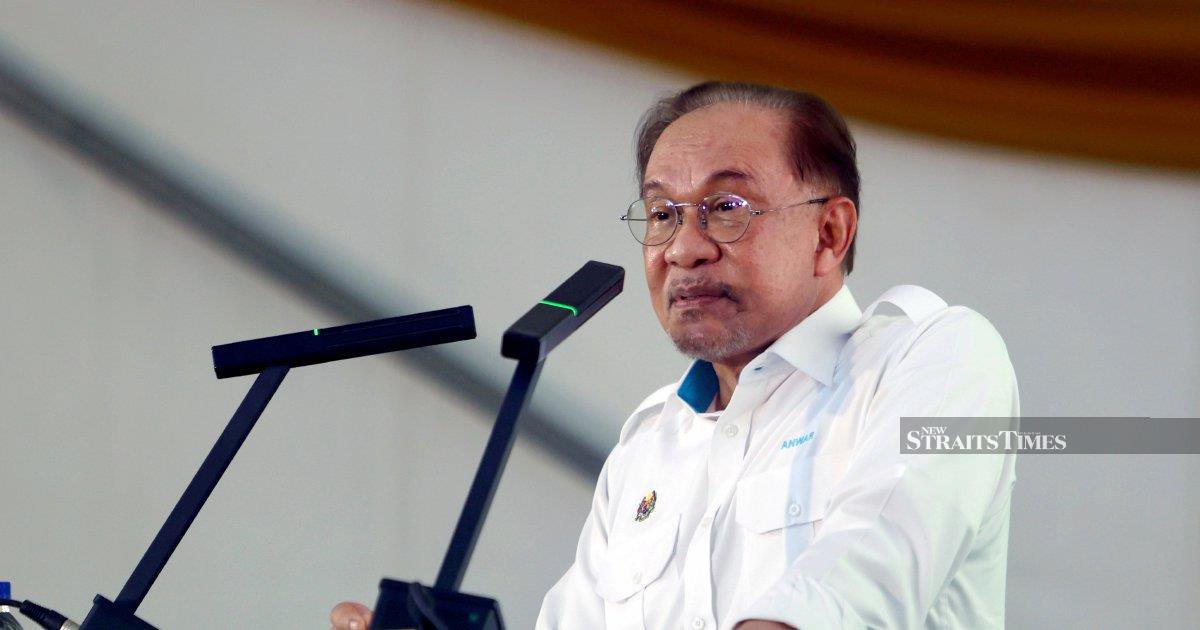
The Taiwan Chamber of Commerce & Industry in Malaysia has escalated its concerns following Prime Minister Datuk Seri Anwar Ibrahim's recent comments characterising Taiwan as "part of China", signalling potential ramifications for the flow of high-value semiconductor and technology manufacturing projects into the nation. The business advocacy group, which represents Taiwanese commercial interests operating across Malaysian markets, has flagged the diplomatic tensions as a source of "deep concern" that extends beyond rhetorical posturing into the realm of tangible investment decisions.
Taiwan's semiconductor sector represents one of Asia's most critical industrial pillars, and Malaysian policymakers have long courted Taiwanese manufacturers as part of broader efforts to position the country as a regional technology hub. The island's firms control roughly 65 per cent of the global semiconductor foundry market, with companies like Taiwan Semiconductor Manufacturing Company maintaining significant operational footprints throughout Southeast Asia. Any friction in Malaysia's relationship with Taipei therefore carries material consequences for the nation's industrial ambitions and employment prospects within high-wage manufacturing clusters.
Anwar's characterisation aligns with Beijing's longstanding diplomatic position on Taiwan's status, yet it carries particular weight given Malaysia's economic interdependencies and positioning within the region's delicate geopolitical architecture. The Prime Minister's remarks, delivered in a formal context, represent a departure from Malaysia's historical approach of maintaining careful neutrality on cross-strait questions whilst simultaneously cultivating robust commercial ties with both Beijing and Taipei. This balancing act has underpinned the nation's ability to capture investment from both Chinese and Taiwanese technology firms seeking to diversify production beyond increasingly fraught geographies.
The Taiwan Chamber's intervention reflects legitimate apprehension among established Taiwanese business operators who have invested substantially in Malaysian manufacturing and supply chain operations. These firms face reputational complications and internal corporate governance scrutiny when host governments adopt language suggesting reduced policy stability or shifting diplomatic orientation. Investment decisions within the semiconductor sector, which require multi-year commitments and face global competition for location, depend heavily on predictability and consistent policy frameworks that safeguard intellectual property and facilitate cross-strait operational continuity.
Malaysia's technology sector expansion has depended fundamentally on drawing global investors, particularly from Taiwan and South Korea, to establish production facilities and research operations. Over the past decade, semiconductor-adjacent industries have generated substantial employment in urban centres, contributed meaningfully to export earnings, and supported the emergence of ancillary service providers across logistics, engineering, and specialised manufacturing. The sector's growth trajectory faces headwinds from regional competition, particularly from Vietnam and Thailand, which have launched aggressive investment attraction campaigns targeting identical manufacturing cohorts.
The broader context reveals how Taiwan's industrial dominance intersects with Malaysia's development aspirations. Whilst the nation has positioned itself as a potential secondary manufacturing hub for semiconductor companies seeking to reduce concentration risk in Taiwan itself—particularly given geopolitical uncertainties surrounding the strait—this strategic positioning requires consistent policy frameworks that keep Taipei's investors confident in Malaysia's political neutrality and commitment to secure, transparent operating conditions. Comments that suggest shifting diplomatic orientation therefore trigger legitimate risk assessments within Taiwanese boardrooms evaluating alternative investment locations.
Foreign Direct Investment flows from Taiwan into Malaysia exceeded USD 2 billion annually during recent years, encompassing not merely manufacturing but also research facilities, innovation centres, and financial services operations. The sectors targeted for expansion extend beyond semiconductors into electronics, precision engineering, and increasingly, artificial intelligence-related applications where Taiwan's technological sophistication creates competitive advantages. The Taiwan Chamber's statement reflects awareness that such investments, once redirected to alternative locations, prove difficult to recapture once investor confidence erodes.
Anwar's government has otherwise pursued pragmatic economic diplomacy, securing commitments from major technology firms and maintaining dialogue channels across the region's divided geographies. The Prime Minister himself has emphasised Malaysia's potential as a manufacturing alternative that welcomes responsible investment from across the Indo-Pacific region. This apparent inconsistency between forward-looking economic messaging and comments that adopt Beijing's political framing creates genuine confusion within investor communities attempting to gauge long-term policy directions and regulatory stability.
The episode underscores persistent tensions within Malaysian foreign policy between aspirational neutrality and the practical realities of deepening economic integration with multiple major powers pursuing incompatible geopolitical objectives. Taiwan's government, though diplomatically constrained from direct response, has historically demonstrated sensitivity to such public statements from neighbouring governments, particularly those capable of influencing investment flows within sensitive sectors. The Taiwan Chamber's statement effectively channels official concerns through commercial channels, applying implicit pressure through the investment lens rather than through diplomatic channels that might provoke Chinese objections.
Moving forward, Malaysia faces mounting pressure to clarify its diplomatic position in ways that reassure both Taipei and Beijing whilst simultaneously protecting economic interests that depend on access to technology and investment from both sources. The government's response to the Taiwan Chamber's concerns will likely telegraph how seriously it prioritises semiconductor sector expansion relative to alignment with Beijing's political positions on cross-strait questions. For Malaysian policymakers, the challenge reflects a broader regional predicament: the impossibility of maintaining complete neutrality within an environment where major powers increasingly demand explicit alignment on fundamental questions of territorial sovereignty and political legitimacy.

