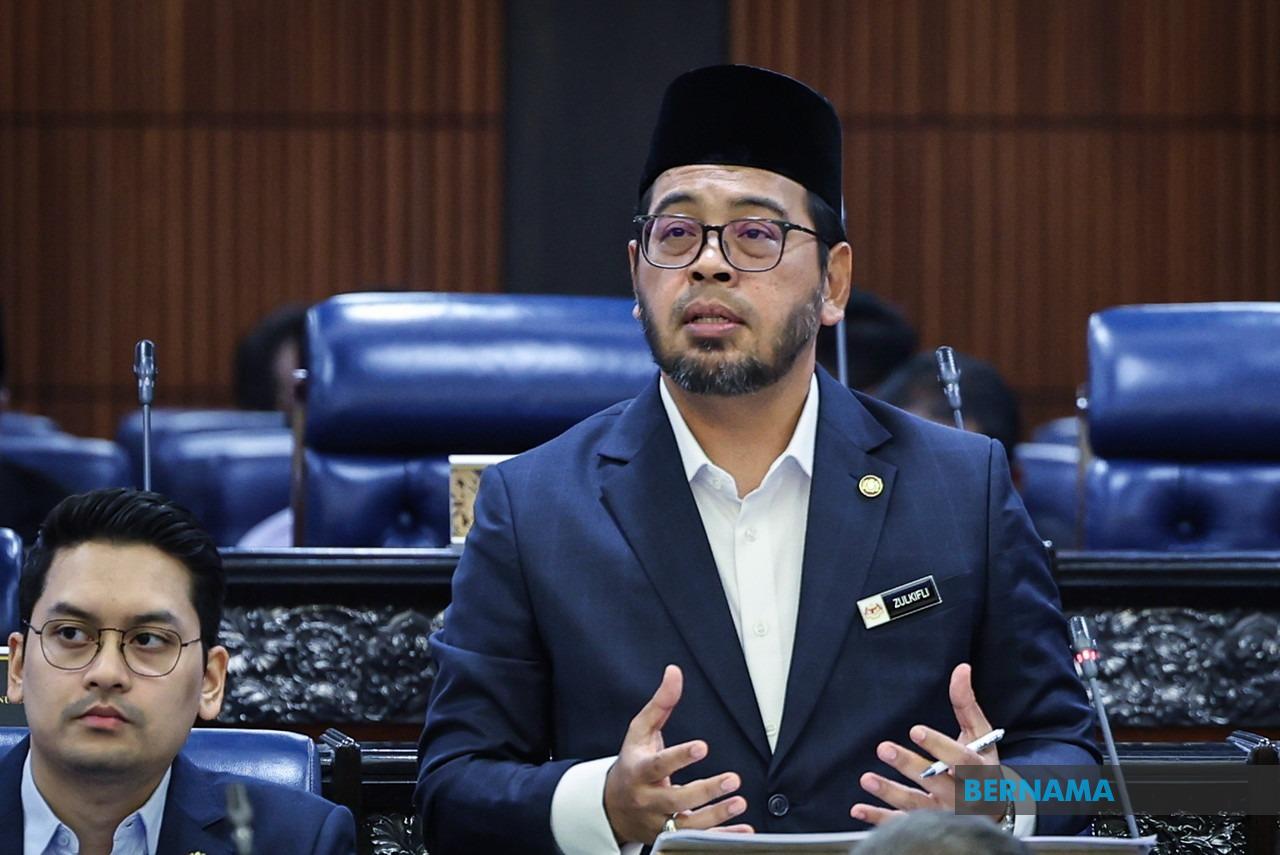
Tabung Haji has stabilised its financial footing through a systematic six-year reform agenda that has addressed fundamental weaknesses in governance, investment practices, and operational management, according to Minister in the Prime Minister's Department (Religious Affairs) Dr Zulkifli Hasan. Speaking during a parliamentary briefing on the Royal Commission of Inquiry report into the institution, he outlined how the recovery plan initiated in 2018 has produced measurable outcomes that extend beyond balance-sheet improvements to encompass institutional resilience and service delivery.
The recovery framework rests on nine interconnected strategic pillars designed to comprehensively rebuild the institution from operational and governance perspectives. These pillars encompass restoration of financial stability through asset and liability restructuring, establishment of robust governance frameworks and enhanced accountability mechanisms, elevation of investment portfolio quality, and commitment to delivering consistent returns to the institution's depositor base. The approach reflects recognition that Tabung Haji's crisis was not merely a financial problem but rather a structural governance failure requiring multifaceted intervention.
Beyond financial rehabilitation, the reform agenda prioritises accessibility to the hajj pilgrimage for Malaysia's Muslim population, a critical social objective given the institution's foundational role in enabling religious observance. The plan explicitly addresses preserving affordability while maintaining service standards, ensuring depositor protection, cultivating international service benchmarks, and cultivating professional management structures insulated from political interference. Collectively, these measures constitute an attempt to reposition Tabung Haji as a trusted, sustainable Islamic financial institution capable of serving its constituency for generations.
The financial restructuring has produced tangible results in stabilising the institution's balance sheet. Through comprehensive reorientation of asset holdings and liability management, Tabung Haji has reversed the deterioration that necessitated government intervention. Minister Hasan emphasised that these structural improvements represent not temporary fixes but permanent recalibration of the institution's financial architecture, enabling it to absorb future shocks and operate with greater resilience.
A particularly significant achievement lies in maintaining hajj pilgrimage costs at RM33,300 across three consecutive seasons spanning 2024 to 2026. This price stability is noteworthy given inflationary realities in both Malaysia and internationally. The minister noted that general inflation has accelerated by 250 percent since 2001, when the financial assistance scheme for hajj was established, placing substantial downward pressure on affordability. Preserving constant costs in such an environment required deliberate managerial intervention across multiple cost categories.
The institution has deployed several tactical approaches to offset inflationary pressures on the pilgrimage programme. Procurement strategies have focused on long-term contractual arrangements with international airlines, enabling cost containment despite volatile fuel prices and capacity constraints. Simultaneously, Tabung Haji has renegotiated accommodation arrangements by engaging directly with hotel proprietors and building owners rather than intermediary booking agents, yielding material savings on lodging expenses—a significant cost component of the hajj package. These procurement innovations demonstrate that institutional reform extends into granular operational decision-making.
Governance improvements have translated into measurable improvements in hajj management quality and broader service delivery standards. The institution recently achieved the Labaytum Diamond Award in successive years, representing the fifth consecutive recognition from the Labaytum programme. This external validation reflects substantive transformation in operational and management practices, signalling to depositors and pilgrims that service standards have genuinely elevated. The award sequence indicates sustained improvement rather than episodic achievement, suggesting institutional capacity for ongoing excellence.
Professional leadership autonomy has emerged as a cornerstone of the reform narrative. Minister Hasan emphasised that the institution now operates under management structures characterised by professional capability and freedom from undue political influence. This operational independence, he suggested, has enabled strategic planning and execution without the distortions that previously compromised institutional effectiveness. The emphasis on management autonomy reflects broader Malaysian discourse regarding the relationship between political supervision and institutional effectiveness in state-linked entities.
The reform trajectory also addresses depositor confidence and capital preservation. Tabung Haji's crisis precipitated widespread concern regarding the safety of individuals' savings accumulated for religious purposes. The recovery plan has sought to rebuild institutional credibility through transparent governance, improved financial position, and demonstrable commitment to protecting depositor interests. Such measures are essential for an institution that mobilises resources from millions of individual Muslims, many of whom regard Tabung Haji contributions as both financial and religious obligations.
For Malaysian policymakers and Islamic finance practitioners, Tabung Haji's recovery presents both practical lessons and broader implications. The six-year trajectory demonstrates that institutional rehabilitation requires comprehensive rather than piecemeal intervention, combining financial restructuring, governance reform, professional management, and operational innovation. The maintenance of hajj accessibility despite inflationary conditions also illustrates how state-linked Islamic institutions can balance social objectives with financial sustainability when appropriately managed.
Looking ahead, the sustainability of these improvements depends on continued commitment to the reform agenda and maintenance of governance standards. While short-term indicators appear positive, demonstrating long-term institutional resilience will require sustained management discipline and continued protection of professional autonomy. The parliamentary briefing and RCI report represent milestones in acknowledging reform progress, but the institution's ultimate test will be sustained performance across economic cycles.
For depositors, particularly lower-income Malaysians for whom Tabung Haji represents a significant savings vehicle, the recovery plan's achievements offer reassurance. Hajj cost stability provides planning certainty for prospective pilgrims, while improved governance suggests reduced risks of future institutional crises. Similarly, regional Islamic financial institutions observing Tabung Haji's experience may derive insights regarding recovery strategies for troubled institutions, particularly those attempting to balance religious, social, and financial objectives within competitive markets.

