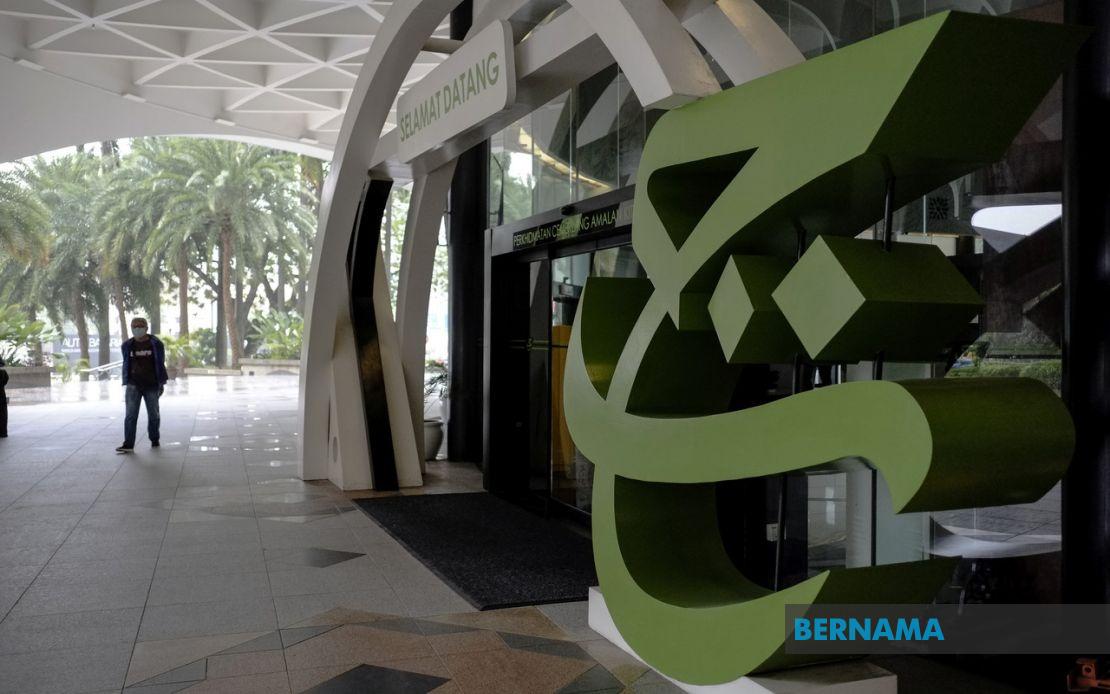
The Royal Commission of Inquiry into Tabung Haji has delivered its verdict on the institution's restructuring journey: the recovery plan worked in reversing years of financial distress, but the hard work of institutional reform must not stop. According to the fully declassified RCI findings released this week, Tabung Haji's financial position has been substantially restored following the systematic resolution of RM12.6 billion in accumulated investment losses. Yet the commission's cautionary tone—emphasising that progress to date should not breed complacency—underscores a deeper anxiety about whether the foundation laid will endure without continued vigilance and structural change.
The scale of the financial crisis that Tabung Haji faced was staggering. Under the 2018 Recovery Plan, RM10 billion of the RM12.6 billion loss was addressed directly, with the remaining RM2.6 billion resolved progressively through the end of 2025. For Malaysian Muslims saving for the hajj pilgrimage, these losses represented a betrayal of trust. The RCI's analysis reveals that while the recovery framework halted the bleeding, it has not fully healed the underlying institutional weaknesses that permitted such losses to accumulate in the first place. Three-quarters of the commission's reform recommendations have now been implemented, a respectable achievement, though the government's commitment to completing the remaining 25 percent will ultimately determine whether Tabung Haji emerges from this episode as a genuinely reformed institution.
The centrepiece of the recovery strategy was the transfer of Tabung Haji's problematic assets to Urusharta Jamaah Sdn Bhd, a government-owned special purpose vehicle created to absorb the institution's underperforming holdings. This manoeuvre, while pragmatic in isolating the toxic assets, came at a considerable cost to the public purse. The assets were transferred at a value of RM19.9 billion, substantially higher than their market valuation of RM9.7 billion at the time—a premium of RM10.2 billion effectively subsidised by taxpayers. The RCI concluded that this transfer preserved Tabung Haji's financial stability, and there is merit to that assessment. However, the large gap between book value and market value raises troubling questions about how those assets became so impaired in the first place, and whether the institutional controls that should have prevented such deterioration were ever truly effective.
One measure of the recovery's success lies in Tabung Haji's investment income trajectory. Last year, the institution generated RM4.64 billion in investment income, marking its strongest performance since 2018. This rebound reflects both improved market conditions and a recalibrated investment strategy. For depositors, the tangible consequence has been rising profit distributions: the rate climbed from 1.25 percent in 2018 to 3.25 percent in 2024 and 3.5 percent projected for 2025. These figures matter deeply to the 10 million Malaysians who entrust their hajj savings to Tabung Haji, and the upward trend has partially restored confidence in an institution that many Malaysians view not merely as a financial intermediary but as a sacred custodian of their religious aspirations.
Yet the RCI has sounded a powerful warning: the recovery plan should not be mistaken for a comprehensive cure. The commission identified several critical vulnerabilities that continue to threaten Tabung Haji's long-term resilience. Governance structures require strengthening. The Tabung Haji Act 1995, the legislation governing the institution's operations, is outdated and requires significant revision. Risk management frameworks and cost control mechanisms need overhauling. Most pressingly, the regulatory landscape itself must be reimagined to ensure Tabung Haji operates under modern supervisory standards comparable to other financial institutions. These are not peripheral concerns; they strike at the operational DNA of an institution entrusted with billions in public savings.
Among the commission's most pointed observations is its concern regarding the government's capacity to service its obligations to Urusharta Jamaah. The special purpose vehicle is financed through two sukuk issuances carrying annual profit rates of 4.05 percent and 4.10 percent, backed by government letters of support. The RCI has expressed anxiety about whether the government can reliably redeem these sukuk and maintain the annual cash allocations that Cabinet previously promised. If these commitments falter, Tabung Haji could find itself obliged to pay depositor distributions without adequate cash backing—a scenario that would mark a return to the fragility of earlier years, albeit through a different mechanism.
The politics of Tabung Haji also matter enormously for regional stakeholders. As Southeast Asia's largest Islamic financial institution dedicated specifically to hajj financing, Tabung Haji's resilience carries symbolic weight beyond Malaysia. Its troubles in recent years reflected broader challenges in Islamic finance governance across the region. A Tabung Haji that remains vulnerable invites uncomfortable questions about whether Islamic financial institutions can be held to the same governance standards as their conventional counterparts. Conversely, a fully reformed Tabung Haji could serve as a model demonstrating that Islamic finance can combine ethical foundations with professional institutional management—a lesson with relevance across Southeast Asia's expanding Islamic banking sector.
Interestingly, Tabung Haji has begun reacquiring some of the assets it transferred to Urusharta Jamaah, though at more attractive valuations than the original transfer prices. In 2024, it repurchased land at Tun Razak Exchange for RM270 million, below the original transfer price of RM400 million. Similarly, it reacquired the UJ Estates oil palm plantation for RM695 million, down from the RM800 million transfer price. These repurchases suggest two things: first, that Tabung Haji's improved financial position allows it to selectively reacquire assets, and second, that the original transfer prices may have been inflated, raising further questions about the valuation methodology employed at the time. The RCI did not extensively scrutinise these repurchases, leaving room for additional investigation into whether the initial asset transfer truly represented a fair deal.
The institutional reforms required go well beyond technical fixes. Tabung Haji's governance structure must be fundamentally modernised to prevent future crises. This includes establishing independent risk oversight, professionalising the investment function, and implementing transparent reporting standards that rival those of public-listed companies. The Tabung Haji Act 1995 must be comprehensively revised to reflect contemporary financial regulation. An independent regulator with genuine supervisory authority over Tabung Haji should be established, moving the institution away from a model where government departments exercise de facto oversight without formal statutory powers. These changes will require political will and potentially unpopular decisions, such as reducing ministerial discretion over appointments and operations.
For Malaysian Muslims contemplating hajj, the RCI's assessment offers qualified reassurance but not certainty. Tabung Haji's core operation—managing hajj logistics and financing—appears sound. The pilgrimage services that Tabung Haji provides to hundreds of thousands of Malaysians annually have continued largely uninterrupted throughout the recovery period. What remains uncertain is whether the institution's governance architecture will truly prevent future crises or merely defer them. The commission's emphasis on sustained reform reflects this ambivalence: confidence in the recovery plan's immediate efficacy, but anxiety about institutional durability without deeper change.
The path forward requires the government to implement the remaining 25 percent of the RCI's recommendations with urgency. This is not a matter of bureaucratic tidiness. Each unreformed element represents a potential vulnerability. The commission's findings ultimately suggest that Tabung Haji remains at a crossroads. It has successfully climbed out of the valley of crisis, but it has not yet scaled the heights of genuine institutional excellence. The recovery plan provides breathing room; sustained reform will determine whether that room becomes a platform for lasting stability or merely another interlude before the next institutional convulsion.

