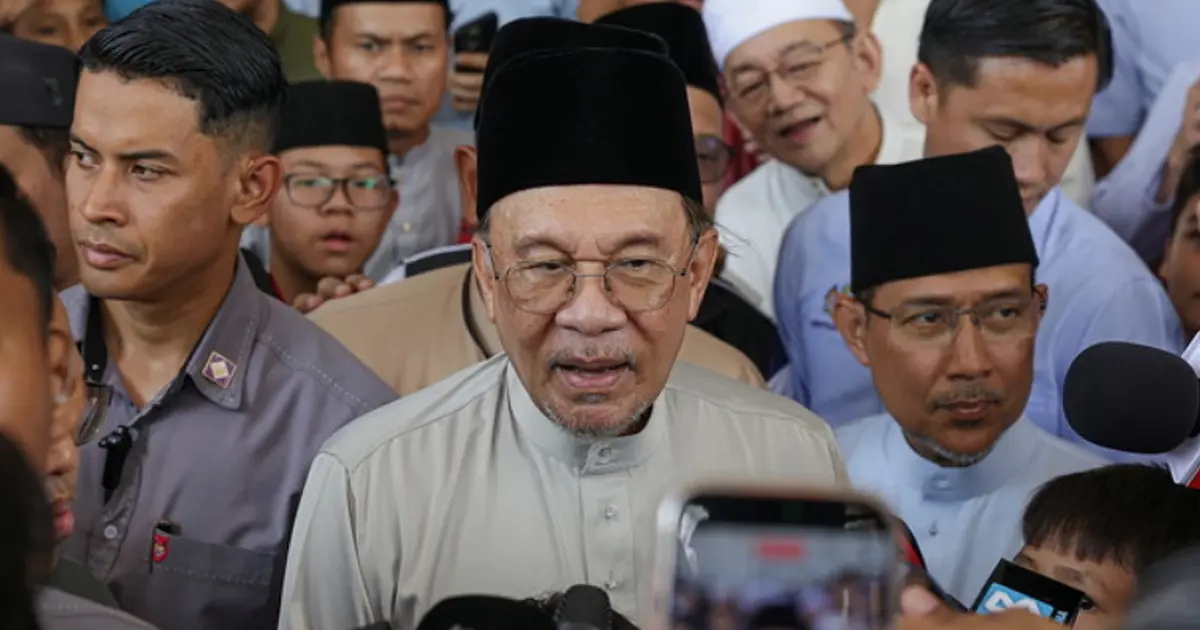
Prime Minister Anwar Ibrahim has assured the public that the Royal Commission of Inquiry report concerning Tabung Haji has been released in its entirety, without any alterations to its original text or suppression of its findings. This declaration addresses concerns that had circulated regarding the selective disclosure of sensitive government investigations, particularly given the high-profile nature of Malaysia's pilgrim savings fund and the serious issues that prompted the establishment of the inquiry.
The confirmation that the report underwent no editorial intervention represents a significant gesture towards transparency in Malaysian governance. Anwar's explicit assurance that neither censorship nor modifications were applied suggests an intent to demonstrate the government's commitment to accountability, particularly in matters involving public institutions and the management of funds entrusted to the state by ordinary Malaysians. The timing of this announcement carries weight given ongoing public discourse about institutional reforms and democratic governance in the country.
Tabung Haji, formally known as the Tabung Haji Pilgrimage Fund Board, manages savings and investment accounts for millions of Malaysian Muslims preparing for the Islamic pilgrimage. The organisation has faced considerable scrutiny in recent years due to financial mismanagement allegations, governance lapses, and investment losses that affected the life savings of contributors. These failings prompted the establishment of the royal commission to investigate the extent of problems and identify those responsible for the institution's deterioration.
The decision to publish the report in complete form reflects broader pressures within Malaysia's political ecosystem for greater governmental openness. Civil society organisations, opposition lawmakers, and media commentators have increasingly questioned whether official inquiries are being weaponised selectively or their findings suppressed to protect political allies. By releasing the Tabung Haji investigation without redactions, the government signals its willingness to confront uncomfortable truths, at least in this instance, and to expose misconduct regardless of the political implications.
The report itself likely contains detailed findings about how Tabung Haji's leadership mishandled billions of ringgit in contributor funds, made questionable investment decisions, and failed in basic governance and oversight responsibilities. Such revelations could prove embarrassing to individuals within the previous administration or connected to the institution's oversight bodies. The full publication therefore suggests either that the report's findings do not implicate sitting ministers or that the government has chosen political honesty over protection of former colleagues.
For Malaysian contributors to Tabung Haji, access to the complete report offers crucial information about what went wrong and where accountability mechanisms failed. Millions of Malaysians depend on Tabung Haji for their pilgrimage savings, and the fund's mismanagement has eroded public confidence in state-backed financial institutions. Understanding the full scope of the problems documented in the royal commission inquiry enables contributors to assess whether recent reforms are adequate and whether their money remains secure within the system.
The publication also carries implications for broader institutional reform across Malaysia's government and statutory bodies. If the Tabung Haji report demonstrates systematic governance weaknesses—inadequate board oversight, absence of independent auditing mechanisms, weak regulatory supervision, or conflicts of interest among leadership—these patterns may reflect similar vulnerabilities in other Malaysian public institutions. The findings could therefore catalyse reforms that extend beyond Tabung Haji to strengthen accountability frameworks across the public sector.
Anwar's emphasis that no editing or censorship occurred should be understood within Southeast Asia's regulatory context, where government-commissioned inquiries into sensitive matters sometimes emerge with politically convenient omissions. Malaysia's history includes instances of delayed publication, selective disclosure, or official reinterpretation of investigation findings. Against this backdrop, the prime minister's statement carries significance as a counter-narrative, positioning the current government as more willing to embrace scrutiny than predecessors.
The full release may also reflect pressure from international observers and Malaysia's standing within the global community regarding governance standards. International investors, rating agencies, and multilateral organisations increasingly factor institutional transparency and accountability into their assessments of countries' investment climate and political stability. A government willing to publicly confront institutional failures demonstrates institutional maturity and respect for rule of law, characteristics that enhance Malaysia's economic and political reputation.
However, the availability of the report alone does not automatically translate into consequence for those responsible. The true measure of the government's commitment to accountability will depend on whether the findings trigger prosecutions, civil suits, removal of officials from positions, and implementation of substantive reforms. Publication without enforcement represents incomplete accountability, a distinction Malaysian readers should understand as they evaluate the government's sincerity regarding institutional reform and anti-corruption efforts.
The Tabung Haji situation remains a test case for how seriously Malaysia's political leadership treats transparency and public institutional integrity. As the report enters public discourse, its detailed findings will likely inform debates about reforming governance across Malaysian public institutions, strengthening regulatory oversight, and restoring public confidence in organisations entrusted with managing citizen savings. The coming months will reveal whether this commitment to transparent disclosure translates into meaningful institutional change.

