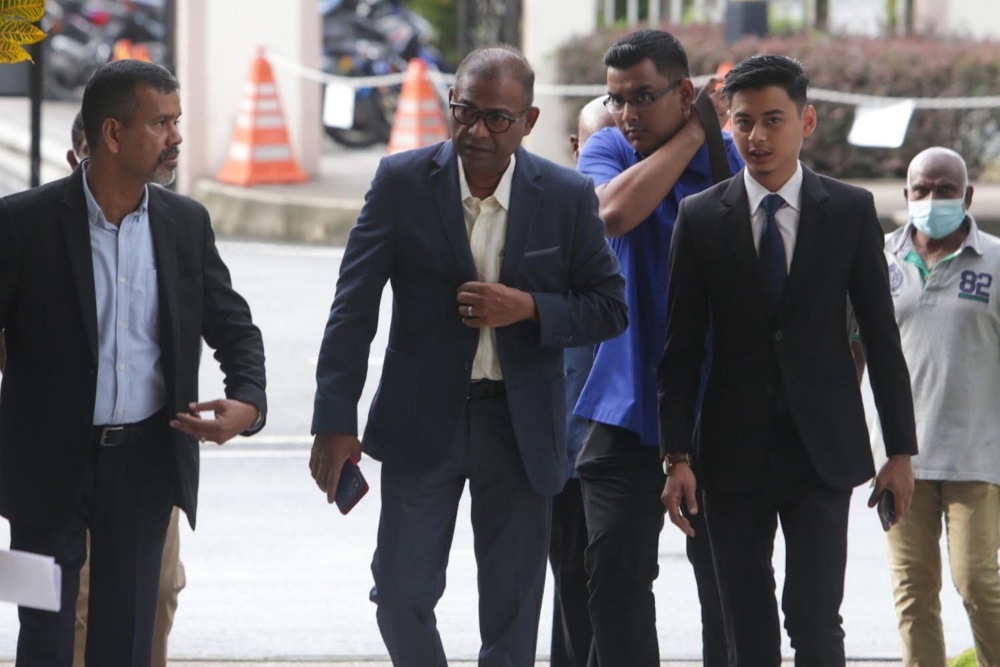
Rumours sweeping across social media platforms claiming that former Baling Member of Parliament Datuk Seri Abdul Azeez Abdul Rahim had been arrested by the Malaysian Anti-Corruption Commission in connection with the Tabung Haji Royal Commission of Inquiry have been firmly denied by his family. The son of the veteran politician took to social media on August 16 to refute the widespread speculation, characterising the claims as baseless and cautioning the public against accepting unverified information circulating online.
The emergence of such claims underscores the broader challenge Malaysia faces in managing misinformation during sensitive political and institutional investigations. The Tabung Haji RCI, established to examine governance and financial matters at the Islamic pilgrimage fund, has drawn considerable public attention given the institution's significance to millions of Malaysian Muslims who depend on it for their Hajj arrangements. When high-profile figures become implicated in unsubstantiated allegations, the rapid dissemination through social media can rapidly shape public perception regardless of factual accuracy.
Abdul Azeez Abdul Rahim, who served as Member of Parliament for Baling, holds a longstanding position in Malaysian politics and has been associated with various government roles throughout his career. His involvement in matters relating to Tabung Haji or other institutional governance would naturally attract scrutiny, particularly given the public interest in how such significant bodies are managed. However, the distinction between genuine investigation and mere rumour remains crucial in maintaining public confidence in both political institutions and anti-corruption agencies.
The MACC, Malaysia's principal agency tasked with combating corruption, has not issued any public statement regarding arrests or investigations connected to Abdul Azeez in relation to the Tabung Haji matter. The absence of official confirmation from the commission itself represents a significant indicator that the social media claims lack substantiation. In Malaysia's institutional framework, arrests of notable political figures typically receive formal announcement through official channels, and the lack of any such communication suggests these allegations have no basis in fact.
The timing and nature of such rumours reflect a pattern commonly observed in Malaysian political discourse, where unverified claims about investigations and arrests frequently circulate during periods when major institutions are undergoing scrutiny. The Tabung Haji RCI has already generated considerable public debate about governance standards, financial management, and accountability within Islamic religious institutions. Against this backdrop, opportunistic or malicious actors may weaponise the existing public attention to spread false claims about specific individuals.
For Malaysian citizens and investors who rely on Tabung Haji for their savings and pilgrimage arrangements, the RCI itself represents an important mechanism for ensuring institutional integrity. The inquiry's legitimate findings and recommendations deserve to be evaluated on their substantive merit rather than obscured by unverified allegations about political figures. Distinguishing between the actual outcomes of institutional investigations and social media speculation becomes essential for informed public discourse.
The family's decision to respond publicly to these rumours reflects a broader need for Malaysian society to develop more robust critical evaluation of online claims. With the proliferation of messaging platforms and social media channels, false information can achieve rapid circulation before fact-checking mechanisms come into play. Public figures and their representatives have increasingly found it necessary to proactively counter misinformation to protect their reputations and maintain public trust.
This incident also highlights the importance of media literacy among Malaysian internet users. The ability to distinguish between verified reporting from credible news organisations and unsubstantiated claims circulating through social media platforms remains underdeveloped in many segments of the population. Educational initiatives promoting critical evaluation of online information could help mitigate the damage caused by viral falsehoods affecting public figures and institutions alike.
Going forward, as the Tabung Haji RCI continues its work and considers what findings and recommendations to present, maintaining clarity about the distinction between actual investigative outcomes and internet rumours will be vital. The public's confidence in both the inquiry process and Malaysia's anti-corruption framework depends on ensuring that genuine investigations proceed based on evidence rather than becoming conflated with unverified social media claims designed to mislead or sensationalise political matters.

