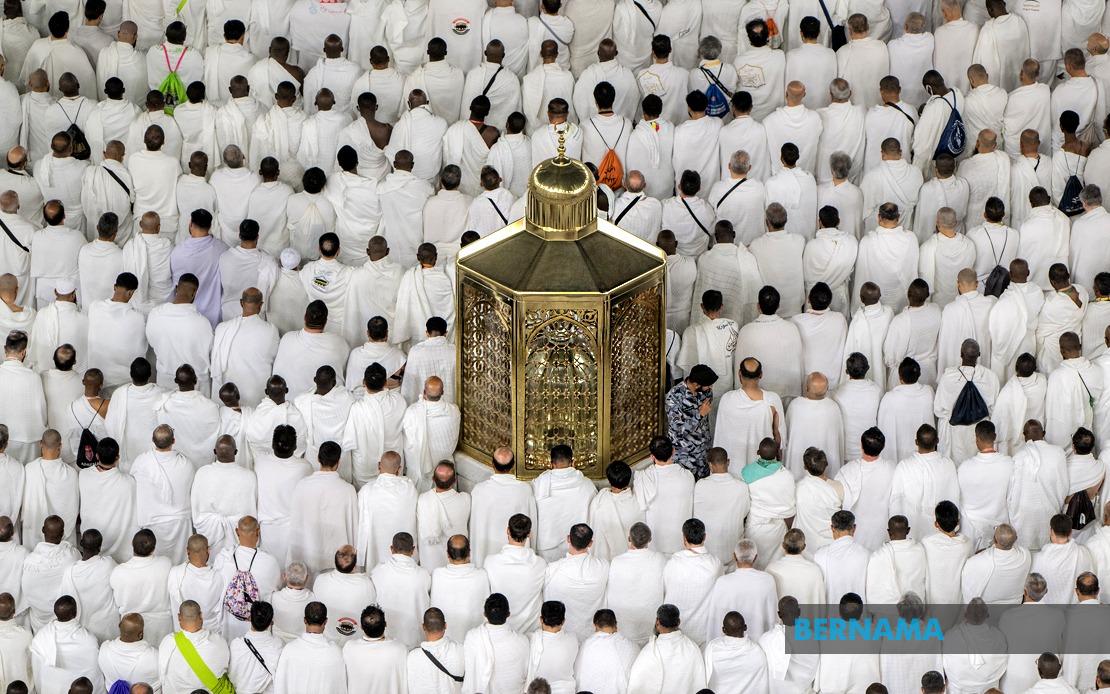
Tabung Haji has confirmed its commitment to the long-standing principle of allocating Haj pilgrimage slots strictly on a first-registered-first-served basis, rejecting any move toward creating preferential categories that could undermine the integrity of its waiting list system. The decision, articulated by Deputy Minister in the Prime Minister's Department (Religious Affairs) Marhamah Rosli during parliamentary proceedings, reflects the institution's determination to maintain consistency with fundamental principles of fairness and transparency that have governed its operations for decades.
The statement came in response to a proposal from Kuala Krai parliamentarian Abdul Latiff Abdul Rahman, who had questioned whether the government would consider establishing a special allocation track for compulsory retirees receiving gratuity payments. The underlying logic of the suggestion centred on the observation that such individuals, despite possessing immediate financial capacity to meet Haj expenses, faced disproportionately long waits within the conventional queue system. However, Marhamah's response made clear that administrative convenience or demographic targeting would not override the foundational commitment to sequential ordering.
Marhamah articulated the rationale behind maintaining the existing framework with particular emphasis on the disruption that alternative approaches might create. Introducing privileged categories for specific depositor groups would inevitably distort the established queue, potentially disadvantaging those who have already invested years of patience and deferred their pilgrimage aspirations. This concern resonates deeply within Malaysia's Muslim community, where the opportunity to perform Haj represents both a religious imperative and an emotionally significant life milestone. For many Malaysians, the waiting period itself becomes part of a spiritual and financial preparation journey rather than merely a bureaucratic obstacle.
The current system requires all prospective pilgrims to receive advance notification of their estimated year for Haj performance, enabling them to engage in comprehensive preparation across financial, health, and educational dimensions. This notification mechanism allows depositors to arrange their affairs systematically rather than being caught unprepared when an offer suddenly materializes. Tabung Haji actively encourages such advance planning, recognising that the pilgrimage involves complex logistical arrangements beyond the immediate financial outlay. The institution has further tightened its requirements by introducing a mandatory minimum savings threshold of RM15,000 before issuing any Haj offer letter, despite the actual pilgrimage cost standing at RM33,300. This buffer requirement helps ensure that accepted pilgrims possess adequate financial cushion beyond their core Haj expenses.
While the institution maintains rigidity on categorical preference, it has preserved a safety valve through its appeals mechanism. Depositors not yet eligible for standard Haj offers may submit appeals that undergo individual merit-based evaluation using established criteria. This approach attempts to balance administrative predictability with recognition that exceptional circumstances may warrant consideration outside the ordinary queue sequence. However, such appeals remain exceptional rather than routinized, preserving the integrity of the broader first-come-first-served framework.
Malaysia's allocation challenge within the global Haj framework remains acute. The nation received an official quota of 31,600 pilgrims for the current Haj season from the Saudi Arabian government, whose control over annual quotas remains absolute. This figure, while substantial, pales against the accumulated demand from Malaysia's depositor base, which continues expanding as more citizens contribute to Tabung Haji accounts. The quota allocation system itself reflects complex international negotiations and Saudi domestic capacity considerations, leaving Malaysia with limited leverage. Nevertheless, Marhamah confirmed that Tabung Haji submits formal requests annually seeking quota expansions to accommodate mounting demand from the Malaysian Muslim population.
The security environment surrounding Haj operations has shown marked improvement through coordinated institutional effort. During the 1447 Hijrah Haj season, the designated Haj Fraud Task Force—comprising Tabung Haji, the Royal Malaysia Police, and the Ministry of Tourism, Arts and Culture—recorded zero reported fraud cases affecting Malaysian pilgrims. This achievement reflects strengthened enforcement mechanisms and heightened public awareness through the "No Visa, No Haj" campaign, which promotes alignment with Saudi Arabia's "No Haj Without Permit" policy. Fraudulent Haj packages targeting Malaysian citizens had previously represented a significant concern, with unscrupulous operators exploiting the emotional intensity surrounding pilgrimage arrangements. The recent clean record suggests that coordinated enforcement and public education have substantially raised barriers to such exploitation.
The parliamentary exchange illuminates broader tensions within Malaysia's approach to religious obligation administration. While the government emphasises democratic equality through first-come-first-served allocation, legitimate questions arise about whether this approach adequately addresses the peculiar circumstances of ageing depositors or those facing shortened remaining lifespans due to health considerations. The current system offers only the appeals mechanism as recourse, which lacks transparent published criteria and remains inherently discretionary. This opacity, while perhaps unavoidable given the sensitivity of individual health assessments, creates potential perceptions of favouritism or inconsistent application.
For Southeast Asian Muslims observing Malaysia's Haj administration, the commitment to first-registered-first-served allocation carries symbolic weight beyond pilgrimage logistics. The approach represents a democratic principle applied to religious practice—that spiritual obligations should not become commodified or subject to hierarchical prioritization based on wealth, social status, or proximity to political influence. This ethos, while occasionally creating hardship for specific individuals, reflects a societal choice about how religious institutions should function within plural democratic frameworks. The comparative absence of scandals in Malaysian Haj administration, contrasted with periodic problems in other countries' pilgrimage systems, validates this institutional philosophy.
Moving forward, Tabung Haji faces the enduring challenge of managing steadily growing demand against Saudi Arabia's relatively stable quota allocations. Malaysia's Muslim population continues expanding, and economic development has expanded the capacity of more citizens to save toward Haj aspirations. Without parallel growth in Saudi-allocated quotas, waiting periods will inevitably lengthen. This structural constraint means that maintaining fair allocation through first-come-first-served principles becomes ever more crucial for institutional legitimacy, even as it frustrates individual expectations. The absence of preferential categories, rather than representing inflexibility, may paradoxically prove the most resilient approach to preserving public confidence in Tabung Haji's governance during an era of increasing competition for limited sacred space.

