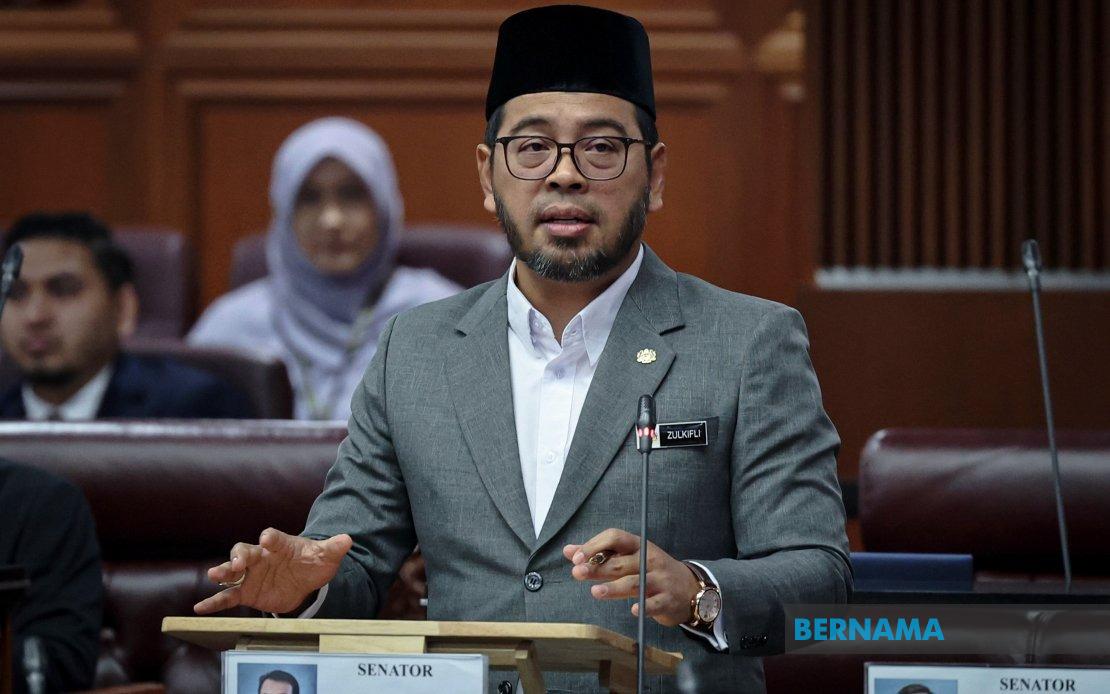
Religious affairs minister Dr Zulkifli Hasan has moved to allay concerns among Tabung Haji (TH) depositors about the legitimacy of zakat payments made on their behalf, asserting that the institution has fulfilled all obligations in accordance with Islamic law and national fatwa rulings. Speaking during a special parliamentary sitting to address findings from a Royal Commission of Inquiry into the pilgrim fund manager, Zulkifli emphasised that depositors face no cause for anxiety regarding the Syariah compliance of their zakat contributions.
The reassurance comes at a critical juncture for TH, which has faced sustained scrutiny over its financial management and operational practices. The institution's Syariah Advisory Committee determined in September 2020 that zakat payments made for depositors before the introduction of the wakalah (agency) concept in 2019 were entirely valid and compliant with Islamic principles. This ruling effectively addressed a key area of uncertainty that had prompted questioning from depositors and the broader Muslim public about the legitimacy of historical zakat disbursements.
Zulkifli's statement draws support from a foundational 1979 decision by the National Fatwa Committee for Islamic Religious Affairs Malaysia, which established that whilst TH itself is not subject to zakat as an institution, it bears a direct obligation to discharge zakat liabilities on behalf of its depositors. The minister indicated that TH has consistently honoured this obligation since the fatwa's issuance, maintaining a unbroken record of compliance across nearly five decades. This historical continuity provides a strong basis for reaffirming the legitimacy of the fund's zakat practices, particularly as the institution transitioned through different contractual frameworks.
The specific treatment of zakat payments during the 2016-2019 period, when TH operated under the Wadiah Yad Damanah (safe custody) contract, has been categorised as business zakat collected collectively from the pooled deposits that were placed into trading activities. This classification reflects the actual nature of the funds' deployment and ensures that zakat calculations correspond to the investment nature of depositors' contributions during that operational phase. By framing the matter in these precise technical terms, the minister sought to demonstrate that TH's approach was methodologically sound and aligned with Islamic finance principles governing zakat obligations on invested wealth.
The Royal Commission of Inquiry, which had been tasked with investigating TH's governance structures and operational weaknesses spanning 2014 to 2020, specifically recommended that matters concerning the fund's zakat practices be submitted to the National Council for Islamic Religious Affairs (MKI) Muzakarah Committee for detailed examination and validation. This recommendation appears to have prompted a proactive engagement with the highest Islamic advisory bodies in Malaysia's federal structure. Zulkifli confirmed that the matter was presented to and approved by the Muzakarah Committee in June 2024, following which the committee's conclusions were forwarded to the October 2024 Conference of Rulers, Malaysia's supreme body on Islamic affairs.
This cascading approval process through increasingly senior Islamic and constitutional bodies underscores the thoroughness with which TH's zakat operations have been subjected to scrutiny and validation. The decision to escalate the matter to the Conference of Rulers—comprising the Yang di-Pertuan Agong and the nine hereditary state rulers—signals the highest level of institutional endorsement possible within Malaysia's Islamic governance framework. For depositors, this multilayered validation provides substantial assurance that their zakat obligations have been discharged not merely administratively, but with full compliance endorsed by the nation's supreme Islamic authorities.
The minister emphasised that TH's entire zakat operations are underpinned by formally approved Zakat Guidelines and remain under continuous monitoring by the institution's Syariah Advisory Committee. This committee comprises experts in Islamic law and Islamic finance, ensuring that technical expertise undergirds the fund's approach. The existence of a dedicated oversight body with specialist credentials addresses potential concerns about whether lay administrators might inadvertently deviate from correct Islamic practice. By highlighting this governance mechanism, Zulkifli sought to demonstrate that TH's approach extends beyond one-off compliance efforts to encompass systematic, institutionalised adherence to Islamic principles.
Beyond the zakat controversy, the minister also addressed the Royal Commission's recommendations concerning reforms to TH's hajj management policies. The RCI had identified shortcomings in the fund's approach to pilgrim eligibility and waiting periods, prompting the government to initiate a comprehensive policy review. Zulkifli indicated that TH is in the advanced stages of finalising improvements to its hajj management framework, with an announcement anticipated in the near term. These refinements are intended to establish a more transparent, systematic, and organised approach to hajj planning that prioritises the Islamic principle of istito'ah—meaning the depositor's demonstrable financial and physical capacity to undertake the pilgrimage.
The updated hajj management policy will place greater emphasis on early preparedness and advance planning, moving away from approaches that may have generated uncertainty or inconsistency among prospective pilgrims. This reorientation aligns with international best practices in large-scale religious tourism whilst maintaining strict fidelity to Islamic principles regarding the conditions under which the hajj obligation applies. For Malaysian Muslims seeking to fulfil this cardinal pillar of Islam, a clearer and more methodical process should reduce frustration and enhance confidence in TH's stewardship of their hajj aspirations.
The Royal Commission itself was established in 2021 with members appointed in January 2022, culminating in a 211-page report presented to the Yang di-Pertuan Agong on 30 August 2022. The report was publicly released on 29 July 2024, revealing substantial weaknesses in TH's governance and operations during the 2014-2020 period and proposing 25 specific recommendations for systemic improvement. By the time of the ministerial briefing to parliament, TH had already implemented 75 per cent of the recommended reforms, indicating a demonstrable commitment to institutional rehabilitation. This progress rate suggests that rather than being a defensive posture, TH's engagement with the RCI's findings has catalysed genuine operational reform.
For Malaysian Muslims who hold deposits with TH, the government's multi-layered efforts to validate the fund's zakat practices and implement governance improvements offer reassurance that their religious obligations are being appropriately discharged and that the institution is undergoing substantive transformation. However, the fact that such reassurance has been deemed necessary by the minister himself reflects the depth of public concern that had accumulated around TH's practices. Going forward, the effectiveness of TH's reforms will ultimately be judged by whether public confidence in the institution is restored and whether depositors perceive meaningful improvements in both Islamic compliance and financial management. The minister's parliamentary address represents a significant step toward transparency, yet sustained action and transparent communication will remain essential to fully rebuild stakeholder trust.

