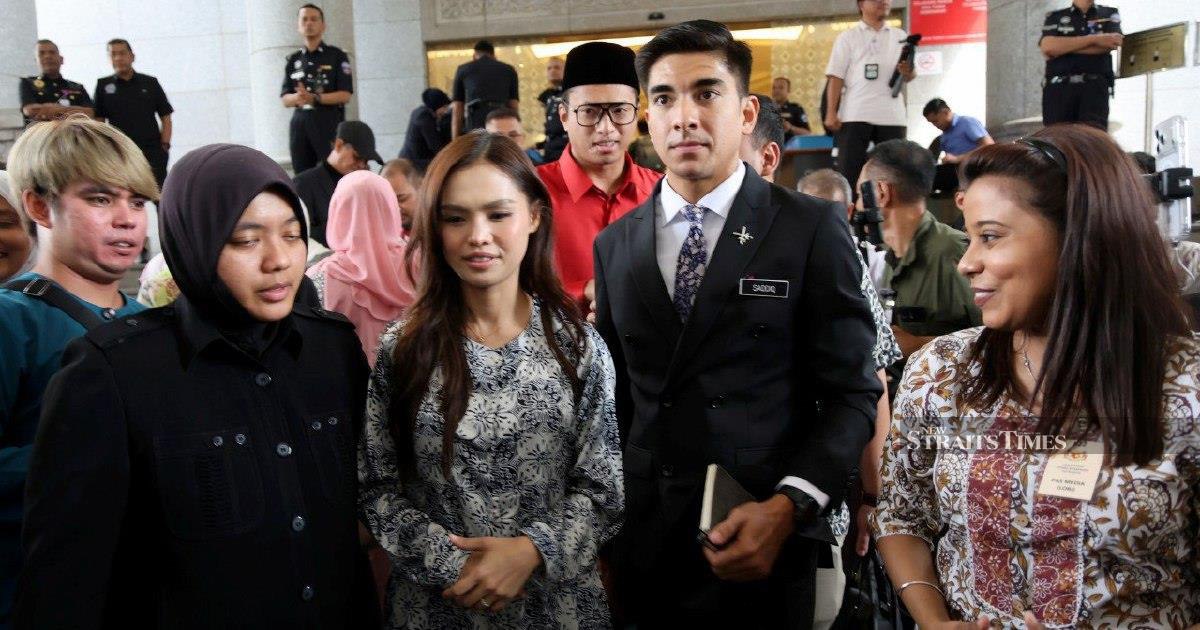
Syed Saddiq Syed Abdul Rahman, the member of parliament for Muar, has indicated that a return to the helm of Muda is not an immediate priority following his recent legal vindication in court. Speaking in his parliamentary constituency, the former party leader suggested that his focus remains on personal matters before he turns attention to potential political moves involving the party he founded.
The timing of his statement carries particular significance given the legal battles that have consumed much of his recent attention. His acquittal represents a turning point in a challenging period that had cast uncertainty over his political future and personal circumstances. For many observers in Malaysian politics, this moment could have signalled an immediate campaign to reclaim leadership of the party he established, yet his measured response suggests a different set of priorities.
Muda, which stands for Malaysian United Democratic Alliance, has been navigating its own trajectory since Syed Saddiq stepped back from his leadership role during the legal proceedings. The party, which emerged in recent years as part of Malaysia's evolving political landscape, has continued to operate and maintain its parliamentary presence through his representation of Muar. The question of formal leadership succession has loomed, particularly as the party seeks to establish its long-term institutional direction.
Syed Saddiq's emphasis on marriage preparations reflects a personal dimension that often remains beneath the surface of Malaysian political discourse. The MP's decision to signal this prioritisation publicly suggests a deliberate effort to establish boundaries between his personal life and political ambitions, a stance that resonates with growing expectations for work-life balance even among high-profile public figures. In the Malaysian context, where political fortunes can shift rapidly and personal circumstances often become subject to public scrutiny, his candid acknowledgment of private priorities demonstrates a notable willingness to step back from the relentless pace of political competition.
This approach also carries strategic implications for Muda's present situation. By not immediately rushing to reclaim the leadership position, Syed Saddiq avoids potential perceptions of a triumphalist return that might alienate party members who have undertaken responsibilities during his absence. His absence from the leadership structure, if extended, could allow the party to develop organisational maturity and demonstrate its capacity to function independently of its founder-leader, a crucial test for any relatively young political organisation seeking to establish credibility and institutional longevity.
The legal acquittal itself represents a watershed moment in Malaysian jurisprudence and political life. The resolution of his case removes a significant cloud that had overshadowed both his personal standing and the party's public perception. For supporters and observers who viewed the legal challenges as unjust, the court decision affirms their confidence in his integrity. However, the deliberate choice to prioritise marriage over an immediate political comeback suggests that Syed Saddiq is conscious of the distinction between legal vindication and political rehabilitation.
Within Malaysian political circles, his statement will likely be interpreted through multiple lenses. Muda's supporters may view it as a sign of stability, allowing the party to continue building its base without the distraction of a dramatic leadership transition. Opposition voices might see it as an acknowledgment that rebuilding credibility takes time beyond merely winning a legal case. For the broader electorate, particularly younger voters who form Muda's core demographic, the message emphasises that even political leaders maintain personal lives worthy of respect and investment.
The Muar constituency itself remains a significant consideration in this equation. As the MP representing this Johor seat, Syed Saddiq's focus on constituency matters, combined with his personal endeavours, occupies substantial bandwidth. The expectation that an MP maintains close engagement with constituents, particularly in a diverse area like Muar, creates practical constraints on how intensively he can pursue party-wide leadership activities. This reality adds another layer to understanding his measured approach to a potential Muda comeback.
Looking ahead, the timeline for any decision regarding Muda's formal leadership structure remains open. Syed Saddiq's statement suggests that such considerations will emerge only after his marriage has been solemnised and the immediate post-wedding period has settled. This creates a window during which Muda can continue its current trajectory while remaining under the shadow of a potential leadership change. The party may use this period to consolidate its organisational structures and policy platforms, preparations that would theoretically serve well regardless of eventual leadership arrangements.
The intersection of personal milestone and political calculation evident in Syed Saddiq's position reflects contemporary Malaysian politics' increasing acknowledgment that public figures are also private individuals. His willingness to articulate this balance openly sets a precedent, however modest, for other politicians who might otherwise feel compelled to prioritise their political resurrection above all other considerations. In a political environment often characterised by relentless competition and personal scores, such a statement carries subtle but genuine significance for how Malaysian public life might gradually evolve.

