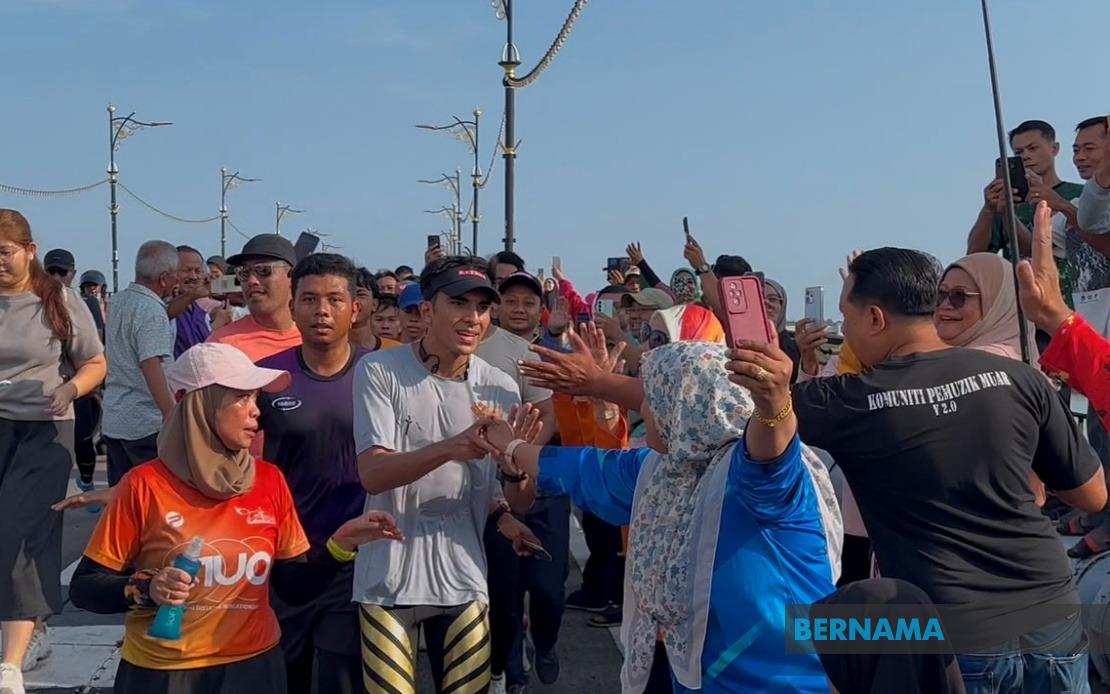
Muar Member of Parliament Syed Saddiq Syed Abd Rahman crossed the finishing line at Laman Maharani on July 19, concluding an ambitious four-day endurance challenge that has raised significantly more than initially hoped. The "Larian Kesyukuran" or Gratitude Run, which commenced from the Palace of Justice in Putrajaya on July 16, culminated with approximately 2,000 residents converging on the venue to welcome the politician as he arrived at 9.15 am, underscoring the considerable public engagement the initiative generated across the Muar parliamentary region.
The final leg of the marathon journey involved Syed Saddiq covering 17 kilometres from Simpang Sungai Rambai in Melaka, running alongside members of the 'Muo Runner' group and crossing the Sultan Ismail Bridge to reach the designated endpoint. This closing segment appeared to energise both the MP and his supporters, with the politician later remarking on the profound emotional impact of the tremendous backing he received, particularly during the concluding 10 kilometres of the undertaking.
The financial success of the charity endeavour substantially exceeded projections, with the four-day initiative generating RM650,959.2 against an original target of RM200,000. This threefold overperformance reflects genuine community enthusiasm and perhaps broader recognition of alternative approaches to political engagement beyond conventional town halls or constituency services. Syed Saddiq provided categorical assurances that every dollar raised would be distributed directly to welfare programmes serving Muar residents, establishing accountability at the outset and mitigating scepticism about fund utilisation.
The charitable proceeds are earmarked for tangible interventions addressing documented community needs. Food basket distributions represent an immediate, practical response to food insecurity within the constituency, whilst the provision of tablet devices targets the digital divide affecting students from disadvantaged backgrounds. Such targeted applications demonstrate strategic thinking about how fundraising translates into measurable improvements in constituents' daily circumstances, moving beyond generic welfare assistance toward specific, addressable gaps.
Reflecting on the completion, Syed Saddiq expressed genuine appreciation for contributions across the economic spectrum, explicitly referencing that a child had donated 50 sen. This detail, whether literal or illustrative, encapsulates the campaign's ability to mobilise support from diverse socioeconomic segments within Malaysian society. The emotional authenticity of such gestures often resonates more powerfully than larger institutional donations, creating a sense of collective ownership over the charitable mission.
The geographical reach of contributions and participation extended well beyond Muar's formal boundaries, encompassing neighbouring constituencies including Batu Pahat. This spillover effect suggests that constituents increasingly evaluate their elected representatives based on demonstrated commitment and willingness to undertake physically demanding, visible initiatives. The marathon provided a tangible measure of political engagement that transcends rhetoric, demanding sustained physical effort over multiple consecutive days.
Among those who travelled to witness the finish were Aminah Abd Rahman, a 64-year-old Batu Pahat resident, and her daughter Syarifah Fatimah Syed Ali, aged 26. Their decision to journey to Muar and provide both moral support and financial contribution reflects calculated investment in demonstrating civic engagement and, implicitly, appreciation for leadership approaches differing from conventional parliamentary representation. Aminah's observation that "not every elected representative is willing to do something like this" suggests the comparative rarity of such physically demanding charitable undertakings within Malaysia's political landscape.
The social media documentation throughout the four-day period appears to have amplified participation, with supporters monitoring progress through digital channels and subsequently deciding to attend the culmination event. This pattern illustrates how contemporary political communication operates through hybrid channels, blending traditional physical gathering with digital acceleration of awareness and engagement. The transparency enabled by real-time updates likely contributed to the fundraising total exceeding expectations.
From a broader Southeast Asian perspective, the initiative reflects evolving expectations about political accountability and visible leadership commitment. Malaysian constituents, comparable with voters across Thailand, Indonesia, and the Philippines, increasingly appreciate politicians who demonstrate sacrifice and endurance comparable to their own daily hardships. A marathon run, whilst physically demanding, remains accessible as a conceptual model for other politicians seeking to differentiate themselves through distinctive service approaches.
The RM650,000-plus quantum raised during a four-day period substantially demonstrates community financial capacity and willingness to support targeted initiatives when sufficiently motivated. This suggests potential for replicating the model across other parliamentary constituencies facing comparable welfare challenges. However, the undertaking's success likely correlates significantly with Syed Saddiq's pre-existing political capital and public recognition, meaning outcomes would vary considerably depending on the politician's existing relationship with constituents.
The tablet distribution component addresses increasingly urgent concerns about digital access inequality affecting Malaysian students, particularly post-pandemic, when online learning capabilities became essential rather than supplementary. Food basket provisions meanwhile respond to persistent concerns about nutritional adequacy among vulnerable populations, particularly children whose educational performance correlates directly with adequate nutrition. These dual interventions demonstrate sophisticated understanding of interconnected welfare challenges.
Looking forward, the successful completion and substantial fundraising may establish expectations among Muar constituents for comparable future initiatives, creating both opportunity and obligation for the incumbent MP. The charitable run model could potentially inspire similar approaches from other politicians seeking to distinguish themselves through visible, physically demanding engagement with constituents. The initiative's documentation and apparent social media success mean the strategy is now accessible to aspiring politicians throughout Malaysia and the broader region.

