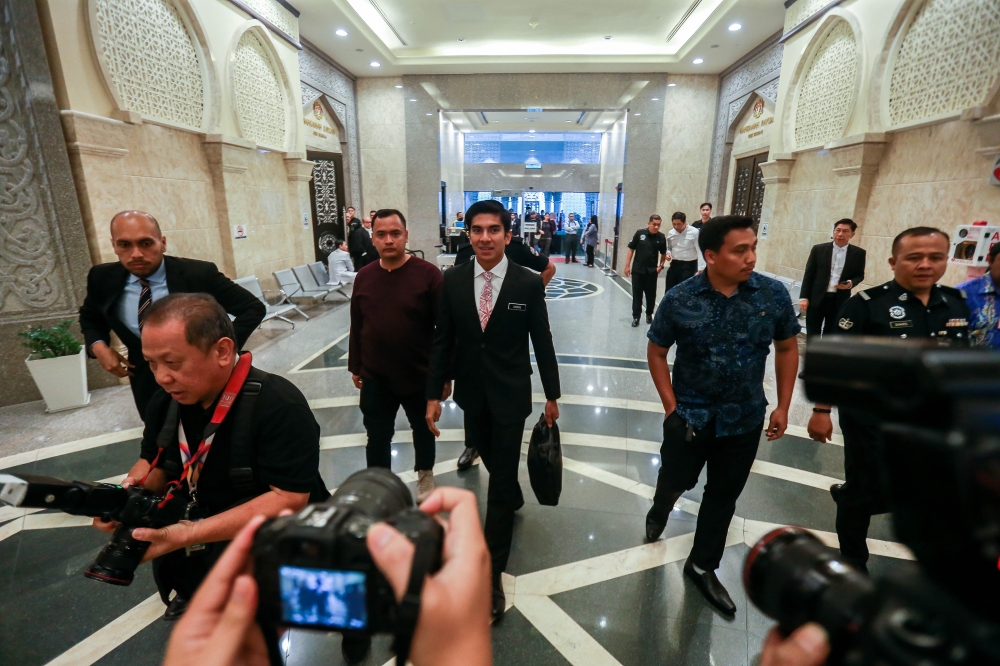
Muar Member of Parliament Syed Saddiq Syed Abdul Rahman made an early arrival at the Palace of Justice in Putrajaya on July 13 for what promised to be a consequential ruling from Malaysia's apex court. The decision carried substantial implications not only for the politician himself but potentially for broader questions of judicial interpretation and political accountability in the country. The court session drew considerable public attention, with crowds gathering well before proceedings commenced, reflecting the high-stakes nature of the case.
The presence of Syed Saddiq's immediate family members and fiancée at the courthouse underscored the personal dimensions of the legal proceedings. Beyond the formal courtroom dynamics, the appearance of close relatives signalled the gravity with which the defendant's household regarded the judgment. Their attendance also represented a wider pattern in Malaysian political discourse, where significant legal outcomes involving public figures attract familial and community solidarity.
The Federal Court is Malaysia's highest judicial authority, hearing constitutional matters and final appeals on points of law. When the apex court accepts a case, it signals institutional recognition of issues warranting the most senior judicial examination. The assembly of supporters at the Palace of Justice demonstrated public consciousness of the ruling's potential resonance across Malaysian political circles and beyond.
Syed Saddiq, a relatively younger member of parliament representing Muar, has maintained a presence in Malaysian political discourse over recent years. The nature of the Federal Court case remains significant within the context of governance standards and legal frameworks that structure political conduct in Malaysia. The involvement of the country's highest court indicates the complexity and precedential weight of the legal questions at stake.
The Palace of Justice in Putrajaya serves as the institutional home for Malaysia's most senior courts, lending formality and constitutional weight to proceedings conducted within its walls. The location itself becomes symbolically important when major political and legal figures appear before the bench, attracting media attention and public interest. The physical gathering of crowds at such venues reflects how Malaysian society engages with its judicial system and the outcomes that emerge from judicial deliberation.
Courts in Malaysia operate within a common law framework inherited from British legal traditions but evolved through decades of independent jurisprudence. The Federal Court's role in reviewing cases represents the final checkpoint in Malaysia's legal architecture. When appeals reach this level, they typically involve either novel interpretations of law or fundamental questions about the proper application of existing legal principles. The presence of multiple parties and their supporters at the hearing indicated the case's significance to stakeholders beyond the immediate litigants.
The timing of judicial rulings often carries political and social dimensions in Malaysia, where court decisions involving public figures frequently attract broader commentary about governance, accountability, and institutional independence. Observers of Malaysian politics frequently examine how the judiciary navigates cases involving parliamentarians and political actors, with outcomes potentially influencing public confidence in judicial institutions and the rule of law more broadly.
Crowds assembling at courthouses during significant rulings reflect the interconnections between law, politics, and public opinion in Malaysia. While the immediate legal question focused on Syed Saddiq's particular circumstances, the broader audience engagement suggested awareness that judicial outcomes possess implications extending beyond individual cases. The familial dimension, with his fiancée's presence, added a human element to proceedings that might otherwise be perceived as purely legalistic.
The Malaysian judicial system, like those throughout the region, operates under constitutional frameworks that define court jurisdiction, authority, and procedure. Federal Court rulings establish precedent that influences how lower courts interpret and apply law subsequently. This cascading effect means that even cases appearing narrowly focused on individual circumstances may generate broader jurisprudential consequences affecting how Malaysian law develops over time.
For regional observers and Malaysian citizens following political developments, Federal Court proceedings involving sitting parliamentarians warrant attention as indicators of how the country's institutions manage questions of accountability and legal propriety. The public assembly at the Palace of Justice represented collective engagement with these fundamental questions about governance and the role of courts in maintaining constitutional order.
The ruling that emerged from this July 13 session would become part of the public record and potentially influence subsequent judicial interpretations and political discourse surrounding accountability standards in Malaysia. The presence of supporters, family, and media at the Palace of Justice reflected recognition that the court's decision would resonate beyond the immediate parties involved, carrying implications for how Malaysian institutions address questions of legal responsibility and political conduct.

