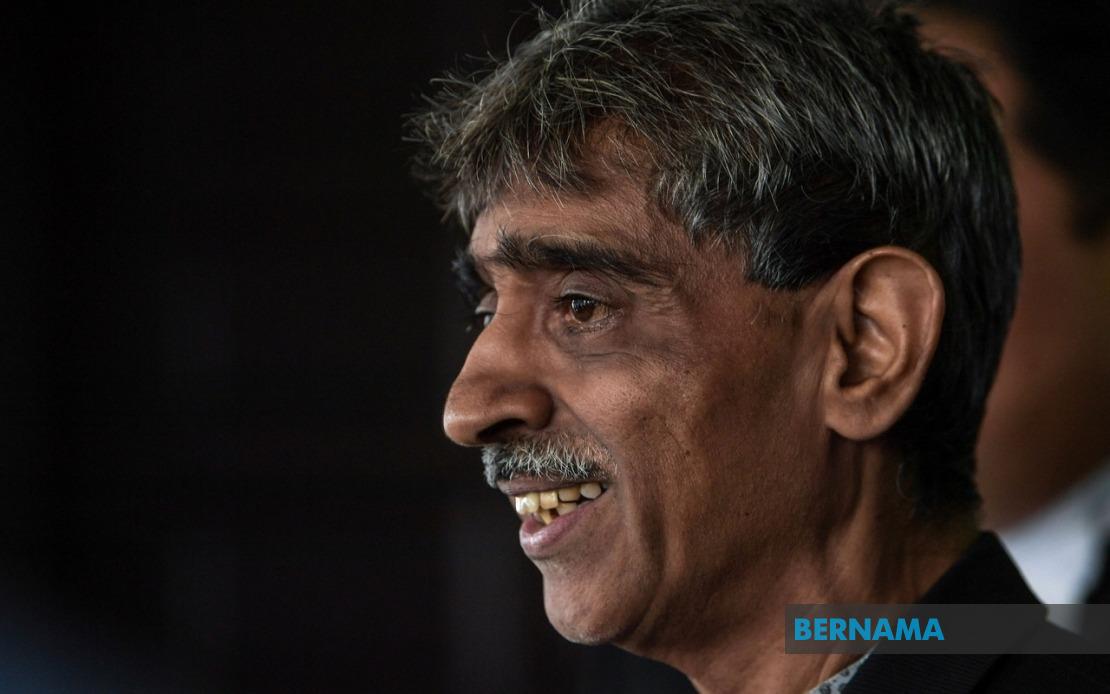
The path from inquiry to courtroom for those implicated in the Tabung Haji scandal must be accelerated once investigators have secured adequate evidence, according to Mohamed Haniff Khatri Abdulla, a lawyer who participated in the Royal Commission of Inquiry proceedings. His remarks underscore growing pressure on enforcement authorities to translate the RCI's findings into concrete legal action, a move seen as critical for rebuilding confidence among the hundreds of thousands of depositors whose savings have been affected by the institution's financial troubles.
Mohamed Haniff emphasised that decisive prosecution regardless of an accused person's rank or position represents the most effective means of fulfilling the RCI's recommendations and reassuring the public that wrongdoing will not go unpunished. He argued that visible legal consequences, pursued swiftly once investigations reach their natural conclusion, signal to depositors that the system takes their grievances seriously. The lawyer highlighted that ordinary citizens are watching closely, with their faith in Tabung Haji contingent on seeing tangible accountability measures emerge from the lengthy inquiry process.
However, the lawyer cautioned that launching prosecutions in individual cases should not be misinterpreted as signalling the conclusion of all investigations spawned by the RCI report. The distinction matters significantly, as the inquiry has opened multiple investigative pathways covering governance lapses, questionable investment decisions, and potential criminal violations. According to Mohamed Haniff, the government and relevant agencies should release information in measured stages, each announcement accompanied by detailed explanation of why particular cases are proceeding to court while others remain under investigation.
Managing public perception represents a delicate challenge, he suggested, particularly given Malaysia's political climate. Without careful communication, observers might cynically attribute prosecutions to shifts in political leadership rather than to objective findings of wrongdoing supported by evidence. To counter this narrative, authorities must consistently explain that each prosecution flows from completed investigative work and admissible evidence, not from political considerations. This transparency becomes especially important given the complexity of the Tabung Haji matter, which spans multiple years and numerous potential violations.
The investigation itself faces inherent time constraints that the public must understand. According to information received by Mohamed Haniff, law enforcement authorities including the Royal Malaysia Police and the Malaysian Anti-Corruption Commission have already called roughly 200 individuals for statement-taking. Conducting thorough criminal investigation into matters of this scale—spanning institutional governance, investment practices, and financial irregularities—cannot be rushed without compromising the quality of evidence gathered or legal viability of eventual prosecutions. He estimated that substantial portions of the investigation may take another three to six months, a timeline that reflects the genuine complexity rather than bureaucratic sluggishness.
To improve investigative efficiency, Mohamed Haniff proposed that the Attorney General's Chambers establish a dedicated unit comprising three experienced Deputy Public Prosecutors specialising in anti-corruption and conventional criminal matters. This unit would assume responsibility for evaluating all investigation papers submitted by PDRM and MACC, ensuring coordinated review despite the two agencies' differing procedural frameworks. Such institutional coordination could eliminate bottlenecks arising from fragmented oversight and accelerate the journey from investigation completion to prosecution decisions.
Former Court of Appeal judge Datuk Yaacob Md Sam, who has conducted multiple royal commissions and served as secretary to several inquiries, reinforced these themes by clarifying that RCI findings do not themselves constitute admissible evidence or provide direct grounds for prosecution. An RCI report, however comprehensive, represents an inquiry's conclusions based on its terms of reference but lacks legal force in criminal or civil proceedings under the Commissions of Inquiry Act 1950. The distinction carries profound implications: enforcement agencies cannot simply adopt an RCI's findings as substitutes for independent investigation but must instead conduct parallel investigations gathering evidence meeting strict courtroom standards.
Yaacob's perspective, rooted in decades of judicial experience, underscores why the post-RCI phase necessarily extends investigation timelines. Enforcement agencies must re-examine evidence through their own procedures, secure witness testimony that meets evidential thresholds, and establish chains of custody satisfying legal requirements. What appeared problematic during commission hearings may require substantially different treatment when presented before criminal courts bound by strict evidentiary rules. This reality, while frustrating to public observers hungry for accountability, reflects fundamental principles protecting defendants' rights while ensuring convictions withstand appellate scrutiny.
The implications for Malaysia's Tabung Haji depositors extend beyond individual prosecutions. How efficiently and visibly authorities convert investigation findings into legal action will shape institutional confidence and perhaps broader public perception of governance accountability in Malaysia. Each prosecution represents an opportunity to signal that systems work, that wrongdoing carries consequences, and that regulatory institutions merit trust. Conversely, unexplained delays or perceived inaction breed cynicism and undermine faith in state institutions precisely when rebuilding such faith becomes most critical.
For Southeast Asian investors and deposit-holders more broadly, the Tabung Haji case offers lessons about institutional vulnerability and the enforcement mechanisms theoretically protecting savings. The scandal has demonstrated that even respected, religiously-aligned financial institutions can suffer mismanagement and governance failures, yet has also revealed that investigation mechanisms exist to examine such failures. How Malaysia navigates this crucial period of prosecution and accountability will resonate across the region, where confidence in financial institutions and state oversight capabilities shapes investor decisions and savings behaviour.
The path forward requires patience tempered by visible momentum. Authorities must balance the genuine need for thorough investigation against public expectations for accountability. Mohamed Haniff's call for staged public updates offers one mechanism for maintaining confidence whilst investigations proceed. With roughly 200 individuals having provided statements and investigations still expanding, the coming months will test whether Malaysia's enforcement agencies can convert this unprecedented investigative effort into prosecutions that restore faith in both Tabung Haji and the broader governance infrastructure.

