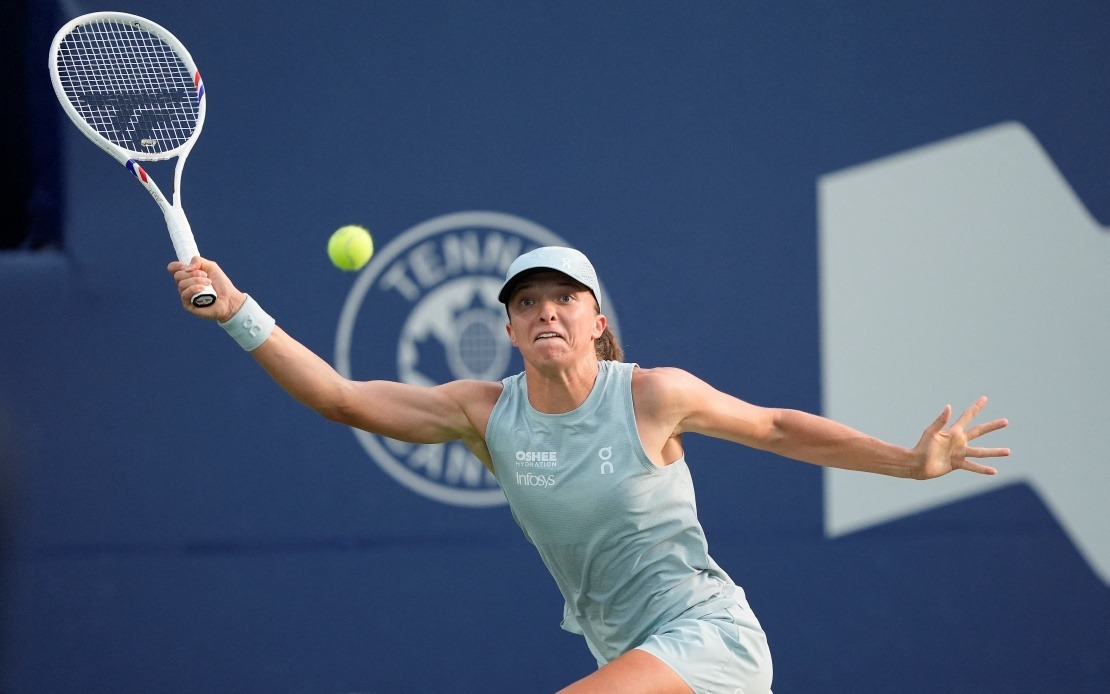
Iga Swiatek has restored her championship credentials by winning the National Bank Open in Toronto, delivering a commanding performance against Elena Rybakina that signals a resurgence for the Polish player. The seventh-seeded Swiatek dispatched the world number two with a convincing 6-2, 6-3 scoreline in the final, capturing her first title since September of the previous year and underlining her status as one of the sport's elite competitors despite recent struggles.
The Polish star's dominance was established from the opening exchanges as Rybakina immediately struggled with her serve, gifting away break points through consecutive double faults. Swiatek capitalised on this gift decisively, seizing control of the first set with clinical precision. Rather than squander her early advantage, she maintained relentless pressure throughout the opening frame, converting her opportunities and closing out the set with the kind of authority that had seen her play exceptional tennis during the week's earlier rounds.
Rybakina's difficulties multiplied rather than improved in the second set, as unforced errors continued to undermine her performance. Two critical missed backhands proved costly, handing Swiatek another crucial break that essentially sealed the contest. The momentum had swung decisively in the Polish player's favour, and despite Rybakina's spirited attempt to claw back one championship point, Swiatek's precision and composure proved insurmountable when the opportunity came again.
The victory carries particular significance for Swiatek given the gap since her previous title triumph. Nearly a year without a championship represents a challenging period for any player of her calibre, bringing questions about consistency and mental resilience. This Toronto success demonstrates that those doubts may have been premature, suggesting that Swiatek possesses both the technical and psychological fortitude to compete at the highest level and reclaim her position among the game's dominant forces.
For Malaysian and Southeast Asian tennis enthusiasts, Swiatek's resurgence offers a compelling narrative. The Asian tennis community has long admired the technical excellence and mental toughness displayed by top European and global competitors. Swiatek's ability to overcome a prolonged title drought and defeat the world number two showcases the qualities that separate champions from mere talented players—resilience, focus, and the capacity to perform under pressure when championships are on the line.
In her remarks following the final, Swiatek demonstrated the philosophical perspective that often characterises champions. She dedicated her victory to all who face unfair judgment and hatred, encouraging perseverance and self-belief. This message resonates beyond tennis, speaking to broader themes of resilience against adversity and the importance of maintaining focus on personal growth regardless of external criticism.
Swiatek's counsel to "keep pushing, keep growing, keep focusing on yourself because you know what's best for you" reflects a maturity that extends beyond her years on tour. For players across Southeast Asia and the region aspiring to international excellence, her words offer a roadmap for navigating the pressures of professional sport while maintaining mental wellbeing and personal integrity. The emphasis on forward-looking optimism—"always remember what's ahead and what might be possible"—provides inspiration for younger competitors facing their own periods of struggle.
The Toronto victory also reinforces broader competitive patterns in women's tennis. Rybakina's loss, despite her elevated ranking, highlights that seeding and rankings cannot guarantee results on any given weekend. Swiatek's seventh seeding entering the tournament proved no obstacle to claiming the title, demonstrating that depth of talent and match-day performance remain the true arbiters of success. This unpredictability keeps the sport engaging and provides opportunities for players outside the highest rankings to stake claims for prominence.
For the international tennis calendar, this result carries implications for the remainder of the season. Swiatek's return to the winner's circle after such a prolonged absence suggests she may be poised for a strong finish to the campaign. Tournament organisers and broadcasters across Asia, including those in Malaysia covering international tennis, will be monitoring her trajectory closely as she seeks additional titles and attempts to reclaim her position in the year-end rankings.
The technical aspects of Swiatek's victory deserve examination as well. Her ability to punish Rybakina's service lapses and force errors through consistent pressure demonstrates the tactical acumen expected of top-ranked players. The manner in which she capitalised on opportunities, converting her second championship point rather than folding under pressure, underscores the mental fortitude required to close matches in major finals. These elements collectively illustrate why Swiatek merits consideration among the sport's elite talents despite the year-long gap in titles.

