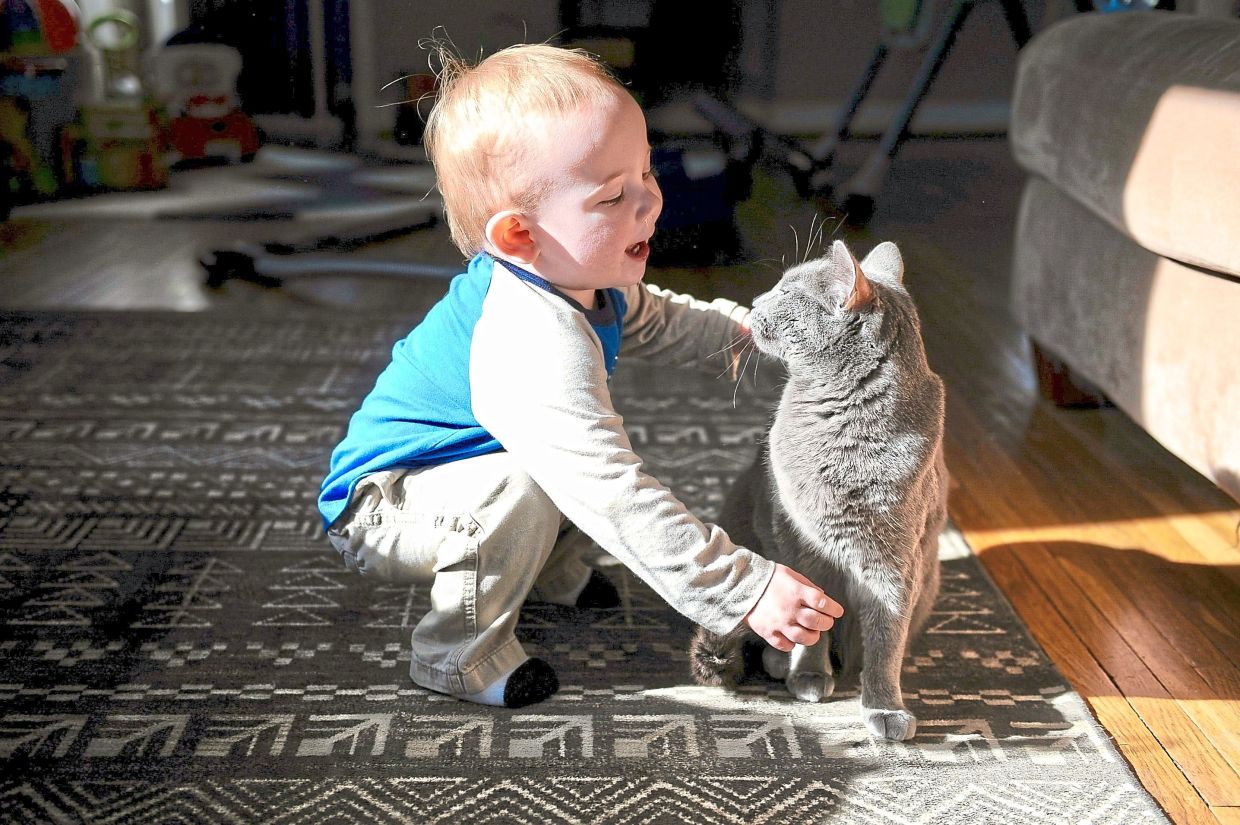
Cat ownership has long been blamed for worsening asthma in children, a concern that has kept many families from bringing feline pets into homes with asthmatic youngsters. Now, a large-scale Swedish study examining nearly 30,000 children challenges this conventional wisdom, suggesting that the presence of cats in the household does not significantly impact childhood asthma outcomes over the short term.
Asthma remains the most prevalent chronic disease affecting children globally, with the Global Asthma Network estimating that approximately 9.1% of children and 11% of adolescents live with the condition. The actual prevalence differs markedly across countries and regions, reflecting diverse environmental and genetic factors. This variability underscores why understanding what truly exacerbates asthma in specific populations is crucial for parents and healthcare providers seeking to manage the disease effectively.
Respiratory specialists have long identified several established risk factors that contribute to asthma development and severity. These include exposure to air pollution, both outdoor and indoor; parental smoking and secondhand smoke exposure; childhood viral infections that inflame airways; obesity, which affects lung function; and pre-existing allergic conditions such as eczema or hay fever. Despite these well-documented triggers, the evidence regarding animal allergens, particularly cat dander, has remained muddled and inconclusive.
Anecdotal reports from patients and parents have consistently pointed to cats as a culprit in triggering asthma attacks. The mechanism seems intuitive: cat dander, saliva and urine contain proteins that can provoke allergic responses in sensitised individuals. However, when researchers have examined clinical and epidemiological data on this relationship, they have encountered contradictory findings, largely because earlier studies involved small, non-representative groups of children rather than large population-based cohorts.
The Swedish research team, led by Dr Resthie R Putri at Karolinska Institutet in Stockholm, resolved to investigate this question systematically across an entire nation. Beginning in 2023, they assembled a cohort of 30,277 children aged four to seventeen years who had been diagnosed with asthma or airway allergies. These children were born between 2006 and 2020, allowing the researchers to examine a generation growing up in a modern Swedish context. The team then monitored each child for 24 months through 2024, accessing comprehensive health records from Sweden's integrated national health databases.
Sweden's unique national registries provided an exceptional research opportunity. The researchers drew information on diagnoses, emergency department visits, prescribed medications, asthma control test results and spirometry lung function measurements from three linked databases: the Swedish National Patient Register, the Prescribed Drug Register and the National Airway Register. Crucially, since 2023 Sweden has required mandatory registration of all pet cats born after 2008 in the National Cat Register, enabling researchers to identify which households contained cats with precision.
The findings were striking in their consistency. Among the 30,277 children studied, only 9.4% lived in households with at least one registered cat. When the researchers compared asthma outcomes between cat-exposed and non-exposed children, they discovered no meaningful differences. Moderate-to-severe asthma, measured by prescribed asthma medication intensity, occurred in 9.6% of children living with cats compared to 10.1% of those without cats. Emergency asthma exacerbations or attacks happened in 3.3% of the cat-exposed group versus 3.5% of the unexposed group. For the 1,428 children with available lung function testing, there were no significant differences in spirometry measurements between those with and without household cats.
Dr Putri suggested several explanations for why cat exposure did not emerge as a risk factor. One compelling possibility is that cat allergen exposure occurs so widely in the broader environment that distinguishing between household and non-household exposure becomes meaningless. Children without cats at home encounter feline allergens in schools, public transportation, friends' homes and other shared spaces, meaning the non-cat-owning children may have accumulated similar allergen exposure to their cat-owning peers. This environmental ubiquity of cat allergens could mask any protective or harmful effects of household cat ownership.
The researchers acknowledged important limitations that contexualise their conclusions. The study lacked detailed information about which specific allergens individual children were sensitised to, meaning some participants might have had non-cat allergies driving their asthma while unaffected by cat exposure. Additionally, because Sweden's National Cat Register is newly implemented, some children actually living with cats may have been incorrectly classified as unexposed if their families had not yet registered their pets, potentially weakening the study's ability to detect differences.
For Malaysian and Southeast Asian families, these findings carry particular relevance. Pet ownership, including cats, is increasingly common across the region's growing middle class. Parents wrestling with the decision to adopt a cat often face health concerns about their asthmatic children, and veterinarians and paediatricians frequently field anxious questions about this supposed connection. This Swedish evidence suggests that such concerns, while understandable given anecdotal reports, may not reflect the actual risk in practice.
The study does not definitively prove that cats are safe for all asthmatic children, particularly those with severe cat allergies. Rather, it demonstrates that at the population level, cat ownership does not appear to systematically worsen asthma control or severity. Individual children with specific cat allergies would still benefit from avoiding cats, a determination best made through allergy testing and clinical assessment. However, the broader population of asthmatic children need not automatically be prohibited from enjoying feline companionship based on disease risk alone.
These results align with a gradual shift in understanding about allergen exposure and asthma development. Emerging evidence suggests that early exposure to diverse allergens, far from universally worsening asthma, might in some contexts help modulate immune responses and prevent severe allergic disease. Future research would benefit from examining whether cat exposure at particular life stages offers any protective effects for children's respiratory health, and whether the findings from Sweden's temperate climate apply equally across different geographical and environmental contexts in Southeast Asia and other tropical regions.

