Four European countries have been granted membership in the Treaty of Amity and Cooperation in Southeast Asia, underscoring growing international endorsement of ASEAN's foundational principles and expanding the treaty's diplomatic reach across continents. Sweden, Poland, Romania and Lithuania will formally execute their instruments of accession during a ceremonial signing scheduled for Friday, a milestone that coincides with the treaty's 50th anniversary celebrations. The decision emerged from deliberations at the 59th ASEAN Foreign Ministers' Meeting held in Manila at the Philippine International Convention Centre on July 21.
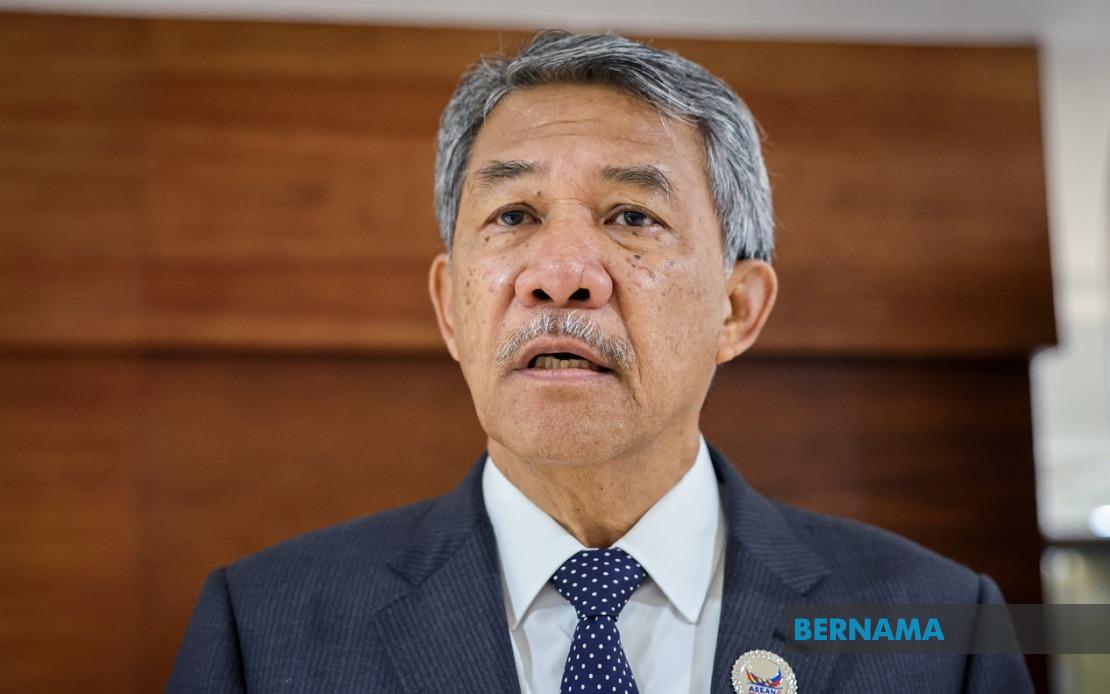
Malaysian Foreign Minister Datuk Seri Mohamad Hasan highlighted the significance of the expansion during remarks to journalists following the plenary session. He characterised the admission as validation of ASEAN's standing as a respected regional organisation committed to peaceful resolution of disputes and collaborative governance. The acceptance of these four nations, he observed, demonstrates confidence within the international community that ASEAN represents a reliable partner for advancing stability and fostering cooperative frameworks across geopolitical divides.
The Treaty of Amity and Cooperation functions as Southeast Asia's paramount diplomatic instrument, establishing the behavioural norms that regulate interactions between signatory states. Originally established in 1976, it enshrines fundamental principles including peaceful coexistence, mutual respect for sovereignty, abstention from interference in internal affairs, and commitment to peaceful settlement of disagreements. These foundational commitments have proven sufficiently durable and appealing that nations far beyond ASEAN's geographical boundaries have sought accession over nearly five decades.
Current membership now encompasses 58 High Contracting Parties, a figure that includes all 11 ASEAN member states plus signatories from across the global spectrum. Beyond the four newest European entrants, the treaty's roster reflects substantial geographic diversity. Major powers including China, India, Japan, the United States and Russia have all committed to the treaty's provisions, alongside middle powers such as Australia and New Zealand. The treaty has also attracted signatories from the Middle East, Africa and the Americas, with countries including Saudi Arabia, Iran, Egypt, Morocco, Brazil and Peru among its adherents.
Mohamad disclosed that the ASEAN Secretariat in Jakarta is presently processing applications from numerous additional nations seeking accession. This backlog of pending applications will be transmitted to individual ASEAN member states for formal consideration, suggesting that further expansion of the treaty community remains probable. The pipeline of applications indicates sustained international appetite for formalising diplomatic relationships with ASEAN through this established multilateral framework.
The expansion assumes particular importance for Malaysia and the broader Southeast Asian region at a moment when geopolitical competition and strategic fragmentation challenge regional cohesion. By welcoming European nations into the treaty framework, ASEAN reinforces its positioning as a neutral convening force capable of bringing together states with divergent strategic interests. For Malaysian policymakers, this development affirms that ASEAN's non-aligned principles and emphasis on inclusive dialogue retain relevance and attraction even as international relations grow more polarised.
The acceptance of these four nations also carries implications for how ASEAN manages its relationship with major powers. The treaty provides a diplomatic mechanism through which countries can signal commitment to regional peace norms without compromising their broader strategic autonomies. This proves especially valuable for European nations seeking to engage constructively with Southeast Asia while maintaining independent foreign policies within their own continental framework. The expansion therefore enhances mutual understanding and creates additional channels for dialogue beyond traditional bilateral arrangements.
The 59th Foreign Ministers' Meeting proceeded under the Philippines' chairmanship of ASEAN during 2025, with the themed focus of navigating collective futures collaboratively. This framing reflects ASEAN's perception that contemporary international challenges—spanning climate change, cybersecurity, maritime disputes and economic resilience—require coordinated regional responses supplemented by partnerships with external powers. The treaty admissions announced during these meetings substantiate that vision through tangible institutional expansion.
For Malaysia specifically, the treaty's growth carries economic and diplomatic implications. Expanded treaty membership potentially facilitates enhanced bilateral relationships between Malaysian entities and European counterparts, whether in trade, investment or cultural exchange. The commitment these nations have demonstrated by acceding to the treaty signals their acceptance of ASEAN's preferred operating principles, creating a shared normative foundation for future interactions. This becomes particularly relevant as Malaysia pursues its own engagement with European markets and seeks to position itself as a bridge between Asian and European economic and political constituencies.
The treaty's durability across nearly half a century, alongside its continuing appeal to nations spanning multiple continents, demonstrates the enduring value of ASEAN's founding diplomatic philosophy. Rather than imposing rigid ideological or strategic requirements on participants, the framework permits states to pursue their own interests while committing to peaceful interaction and respect for established norms. This flexibility explains why the treaty has attracted participation from countries with genuinely competing interests and perspectives, from the United States to China to Russia, all of whom have found sufficient common ground in committing to these baseline principles.
Looking ahead, the admission process for additional applicants will test ASEAN's ability to maintain the treaty's credibility while managing potentially contentious accessions. The organisation must balance its stated openness to international partnership against considerations of whether prospective members genuinely embrace the treaty's peaceful cooperation ethos. Each new accession carries implications for treaty monitoring, dispute resolution and whether the framework can accommodate increased diversity of strategic interests while preserving its unifying function.
The ceremonies planned for Friday represent more than symbolic gestures. They institutionalise European engagement with Southeast Asian peace and stability frameworks at a moment when Europe itself confronts significant security challenges. By formalising their commitments through TAC accession, Sweden, Poland, Romania and Lithuania publicly affirm that peaceful cooperation across regions and among diverse political systems remains achievable and desirable. For ASEAN and its members including Malaysia, the expansion validates the relevance of regional principles developed half a century ago and offers evidence that these ideals continue attracting adherents in an increasingly complex international environment.

