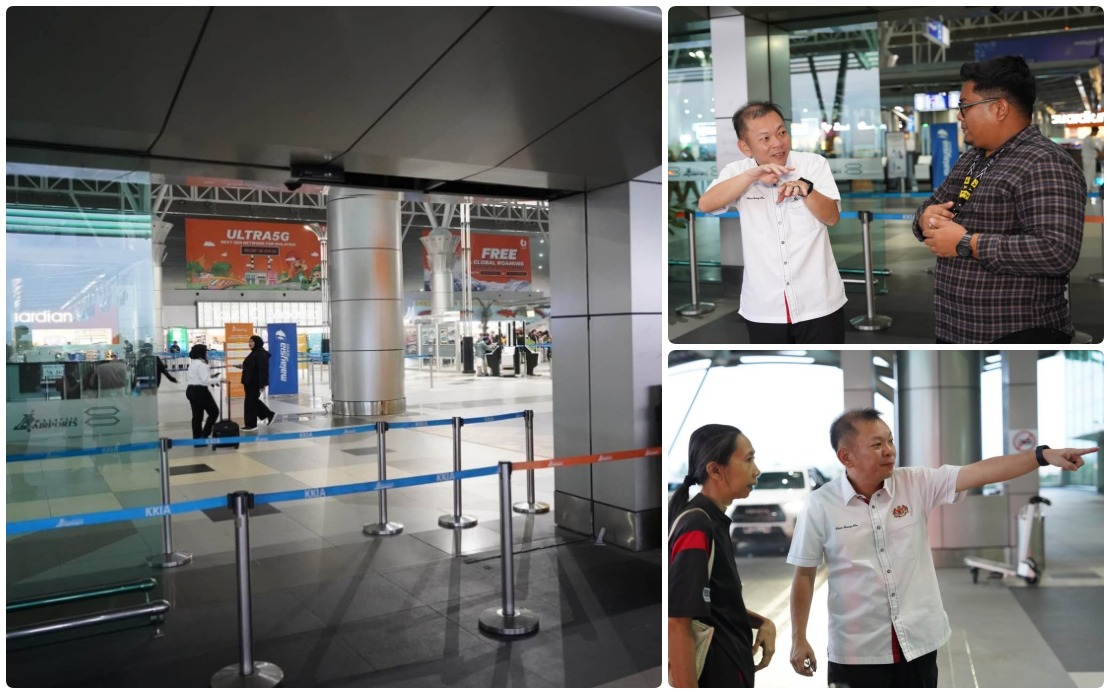
A female driver sustained minor injuries on Wednesday afternoon when her sport utility vehicle veered out of control and struck the glass entrance doors at the departure hall of Kota Kinabalu International Airport. The collision occurred at the Level 3 kerbside entrance of Terminal 1 at approximately 4:20 pm, shattering the glass door structures and causing extensive damage to the front of the vehicle. The injured motorist was transported by ambulance to a nearby medical facility for treatment of her minor injuries.
The incident did not endanger other airport users or staff members, though it temporarily disrupted access through that particular entrance. Kota Kinabalu District Police Chief ACP Shahrudin Mat Husain confirmed the accident and noted that investigators are working to establish the precise circumstances that led to the vehicle losing control. The police inquiry remains ongoing as authorities examine whether mechanical failure, driver error, or other factors contributed to the collision.
Malaysia Airports, the operator managing the facility, mobilised its Aviation Security and Customer Service teams immediately upon the incident. The damaged vehicle and scattered debris were cleared from the scene by 6:00 pm, allowing normal traffic flow to resume through alternative entrance points. The company has commenced repair works on the damaged glass doors and confirmed that replacement automatic entrances remain fully operational, ensuring passengers can move through the terminal without significant disruption.
The swift response by airport personnel drew commendation from Datuk Chan Foong Hin, Deputy Minister of Agriculture and Food Security, who happened to arrive at the airport shortly after the collision. Through a social media post, he praised the KKIA management team for their efficiency in managing the emergency and restoring normal operations. Chan noted that the airport's contingency measures, including the availability of alternative automatic doors, ensured that the incident did not cascade into broader operational problems or create bottlenecks for arriving and departing passengers.
From an operational perspective, the incident highlights the resilience of Malaysia's aviation infrastructure and the readiness of ground personnel to respond to unexpected emergencies. Kota Kinabalu International Airport, which serves as a major gateway for Sabah and eastern Malaysia, processes thousands of passengers daily. The ability of the airport operator to isolate the affected area, redirect passenger flow, and maintain service continuity demonstrates the effectiveness of established emergency protocols in preventing widespread disruption.
The cause of the vehicle's loss of control remains under investigation. Police are examining multiple possibilities, including potential mechanical defects, medical events affecting the driver, or environmental factors at the kerbside area. Such accidents at airport terminals, while rare, raise questions about vehicle safety barriers and entry point design in high-traffic transportation hubs. Airports across the region have increasingly implemented protective measures such as bollards and reinforced barriers to prevent vehicles from penetrating terminal building facades.
Malaysia Airports has pledged full cooperation with the Royal Malaysia Police investigation and will likely conduct its own internal safety review of the incident. The operator's statement indicated that all relevant documentation has been made available to authorities. The comprehensive approach to handling the emergency—from immediate medical response to scene clearance to damage assessment—reflects established procedures for managing vehicular incidents in airport environments.
For Malaysian travellers and the broader aviation sector, this incident underscores the importance of maintaining robust safety standards and emergency response capabilities at critical transportation infrastructure. While the outcome could have been considerably more serious, the quick actions of airport security and customer service personnel prevented potential secondary incidents such as panic or congestion that might have exacerbated the situation.
The restoration of normal operations at Kota Kinabalu International Airport by evening on Wednesday demonstrates that modern airport management systems are well-equipped to absorb isolated incidents without derailing overall service delivery. As investigations continue and repair works proceed, the focus remains on understanding how such an accident can be prevented in the future, whether through enhanced vehicle control measures at entry points or improved driver awareness systems in airport precincts.

