Sustainable finance has transitioned from a niche offering to a core banking strategy across Southeast Asia, driven by surging consumer demand for electric vehicles, renewable energy installations and climate-compatible housing. The shift reflects both genuine market appetite for low-carbon investments and a fundamental reorientation of how financial institutions perceive their role in the energy transition, with traditional lending now expanding into comprehensive advisory relationships centred on climate and sustainability issues.
The momentum is particularly striking in the EV sector. Malaysia's electric vehicle sales doubled in 2025, according to the International Energy Agency, while Indonesia more than doubled its sales year-on-year. These figures underscore a genuine consumer shift toward cleaner transport, not merely speculative interest. This purchasing power translates directly into financing demand, with banks recognising that sustainable lending is no longer countercyclical to profit but rather aligned with market growth. The expansion of EV adoption creates a self-reinforcing cycle: as more consumers buy electric vehicles, banks develop more sophisticated financing products, which in turn makes EV ownership accessible to broader demographics.
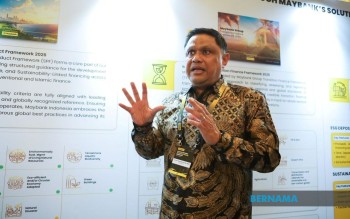
Maybank Group's commitment exemplifies this institutional recalibration. The bank has pledged RM300 billion (US$73 billion) in sustainable finance mobilisation across ASEAN between 2026 and 2030, representing an aggressive scaling of its environmental agenda. Datuk Shahril Azuar Jimin, the group's chief sustainability officer, noted that implementation remains on track less than six months after launch, indicating both execution capability and sustained organisational commitment. Perhaps more tellingly, Maybank's previous five-year programme mobilised RM176 billion by the end of 2025, more than doubling its original RM80 billion target from 2021. This overperformance suggests that demand for sustainable financing has outpaced even internal expectations, challenging the traditional banking assumption that green investments require subsidy or incentive structures to compete with conventional projects.
Malaysia's Net Energy Metering (NEM) Rakyat programme illustrates how policy alignment amplifies private sector momentum. The Energy Transition and Water Transformation Ministry expanded the residential quota by 100 megawatts in May 2025 after the initial allocation was oversubscribed, enabling households to install rooftop solar systems. This rapid exhaustion of available capacity reveals pent-up consumer demand for renewable energy solutions and reflects household-level economics that make solar installation increasingly attractive, particularly as installation costs continue declining and electricity tariffs rise. For banks, this translates into a reliable pipeline of green mortgage and financing applications.
The portfolio of sustainable finance products has expanded substantially beyond traditional green infrastructure. Maybank's framework now encompasses transition finance, EV financing, green homes, green mortgages, social finance and green bonds. This breadth reflects recognition that sustainability encompasses diverse consumer needs and business models. Transition finance, for instance, supports companies moving toward lower-carbon operations rather than purely greenfield renewable projects. Social finance extends sustainable banking into affordable housing and energy access for lower-income communities, addressing equity dimensions of the energy transition. This expansion ensures that sustainable finance reaches beyond affluent early adopters to shape broader market structures.
The transformation has fundamentally altered the banking relationship model. Relationship managers are no longer transactional loan arrangers but rather sustainability advisors who must articulate climate risks, regulatory trajectories and social impacts to clients. This elevated advisory role demands substantial capacity investment. Shahril emphasised that Maybank has invested heavily in sustainability certification programmes and training to equip relationship managers with technical knowledge and communication skills. The challenge, he noted, lies not in loan availability but in ensuring relationship managers can credibly explain climate economics and project impacts to clients who may lack sustainability expertise. This represents a genuine shift in banking culture rather than mere product relabelling.
Indonesia's sustainable finance trajectory mirrors and in some respects exceeds Malaysian momentum. Maybank Indonesia mobilised approximately Rp17 trillion in sustainable financing under its 2021-2025 commitment, establishing a strong foundation for the new five-year programme. Maria Triffany Fransiska, Maybank Indonesia's sustainability head, identified transportation as the strongest sustainable financing segment, reflecting Indonesia's acute air quality challenges in major urban centres and the economic case for EV adoption despite current price premiums. The bank has extended sustainable financing into affordable housing and low-cost electric two-wheelers for lower-income communities, demonstrating how green finance can address everyday transport and housing needs rather than remaining confined to premium segments.
Beyond financing, Maybank is building an integrated sustainable banking ecosystem. Indonesia introduced an ESG deposit product, allowing retail customers to channel savings into sustainable investments while earning competitive returns, with Malaysia expected to follow. This deposit-side initiative complements loan-side products, creating closed-loop sustainable finance where customer savings fund sustainable projects. Maybank Indonesia is also preparing green bond initiatives, tapping capital markets to fund large-scale sustainable infrastructure. These ecosystem developments indicate that sustainable finance is becoming embedded across multiple banking functions rather than concentrated in a single environmental finance department.
The broader strategic implication is that sustainable finance in Southeast Asia is transitioning from compliance-driven or reputational marketing to profit-centre operations. Banks are committing substantial capital precisely because demand is strong and risk-adjusted returns are competitive. This market-driven rather than mandate-driven transition increases sustainability: once sustainable finance is profitable, institutional commitment becomes structurally durable regardless of regulatory pressure or reputational considerations. For Malaysia and Indonesia, this banking sector orientation creates financial system incentives aligned with energy transition objectives, potentially accelerating the region's decarbonisation trajectory beyond what policy alone could achieve.

