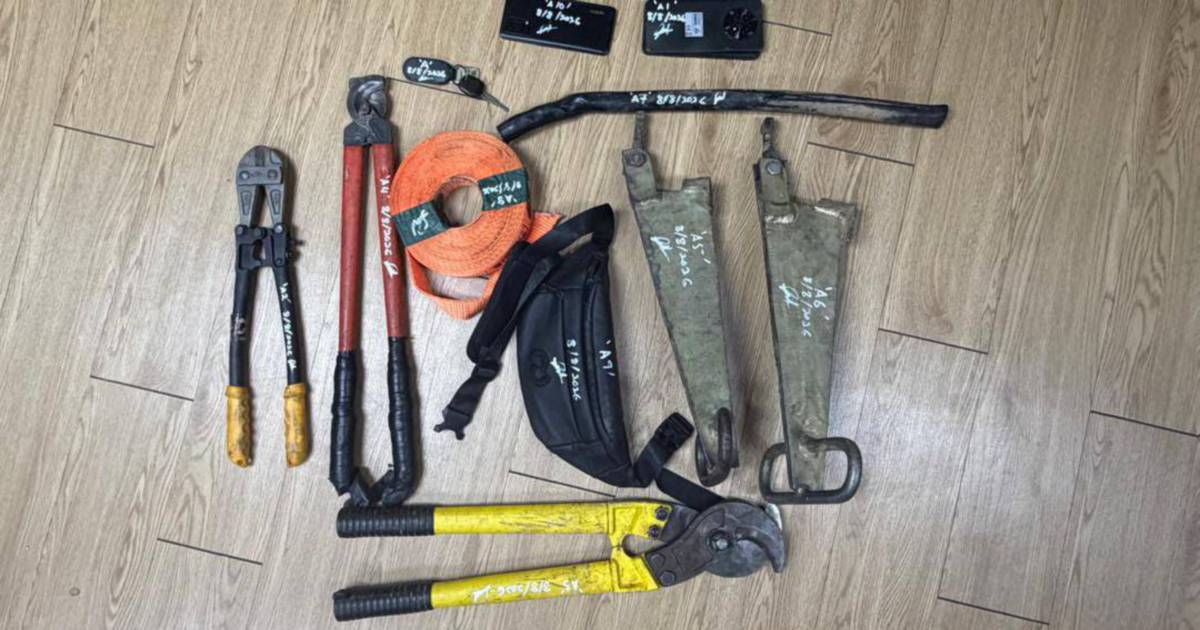
A man believed to be responsible for cable theft was captured by Melaka police following one of the more dramatic pursuits recorded in the state recently. The incident unfolded in the early hours when the suspect attempted to flee from authorities, initiating a chase that would stretch nearly 50 kilometres across the region before finally ending in a collision with a support cable structure in the Sungai Chohong area of Jasin.
The chase represents a notable enforcement action in an ongoing battle against cable theft, a persistent problem affecting infrastructure across Malaysia. The theft of cables—particularly those containing valuable metals—has emerged as a significant concern for utilities and telecommunications providers, with criminals targeting everything from power lines to telecommunications infrastructure. These thefts not only cause economic losses running into millions of ringgit annually but also disrupt essential services that communities depend upon for daily operations and emergencies.
The apprehension comes at a time when authorities in Melaka and across other Malaysian states have intensified efforts to combat the organised networks involved in cable theft. These operations frequently involve sophisticated coordination between those who identify targets, carry out the theft, and fence stolen materials. The involvement of vehicles in such operations often indicates more than opportunistic criminal activity—suggesting instead an organised ring that systematically targets valuable infrastructure.
The circumstances of the pursuit—spanning 50 kilometres before the suspect lost control—underscore both the determination of enforcement officers and the risks inherent in high-speed operations. Police responded to initial intelligence about the suspect and engaged in pursuit, demonstrating the proactive approach being taken by state authorities. The dramatic conclusion, where the fleeing vehicle struck a support cable, suggests the suspect may have lost control while attempting to evade the chase, rather than coming to a controlled halt.
Industry analysts have pointed out that cable theft represents a particularly vexing problem for Malaysia's utilities sector because it requires simultaneous responses across law enforcement, infrastructure management, and supply chain oversight. Stolen cables often move quickly through disposal networks, with organised buyers purchasing materials from thieves without questions. Breaking these chains requires cooperation between police, utilities companies, and scrap metal dealers who can identify suspicious transactions.
The Melaka incident provides valuable operational intelligence for police forces across Malaysia. The successful apprehension, despite the lengthy pursuit, demonstrates that suspects cannot indefinitely evade capture when authorities have proper resources and determination. This may serve as a deterrent to those considering similar crimes in the region, though experts note that poverty and economic desperation continue to drive some involvement in theft regardless of enforcement success.
From an infrastructure perspective, the targeting of support cables carries particular significance. Such cables form critical components of utility infrastructure, and their removal or damage can have cascading consequences. The fact that the suspect's vehicle ultimately crashed into such infrastructure highlights an additional hazard: the collision risks posed by thieves attempting rapid extraction of cables from operational sites.
The apprehension of this individual will likely prompt Melaka police to investigate whether he was connected to other cable thefts in the state. Typically, such investigations expand outward to establish the full scope of criminal activity and identify other members of any organised network. Police have not yet disclosed whether the suspect has provided information about the source of instructions to steal cables or the intended destination of stolen materials.
Utilities and telecommunications companies throughout the region will be monitoring this case closely, as it reflects broader trends in infrastructure crime. Many companies have invested substantially in cable security measures, including enhanced monitoring systems, increased perimeter security, and coordination protocols with law enforcement. Some have also implemented more rapid response mechanisms when cable theft is detected, recognising that swift action in the first hours after a theft significantly improves recovery prospects.
The successful conclusion of this pursuit demonstrates the capability of Malaysian police when equipped with information and operational resources. However, experts suggest that addressing cable theft comprehensively requires a multi-pronged strategy extending beyond law enforcement. This includes reducing the demand for illegally sourced scrap metal through greater transparency in recycling industries, addressing the economic factors that drive individuals toward theft, and improving coordination between private utilities and public security forces.
For Melaka residents, the incident underscores that authorities remain actively engaged in protecting infrastructure critical to community wellbeing. The dramatic nature of this particular chase—with its lengthy pursuit culminating in a spectacular crash—may receive public attention that contributes to general deterrence. However, sustainable reduction in cable theft will require sustained enforcement commitment matched with broader systemic changes to how stolen materials are handled in Malaysia's supply chain.

