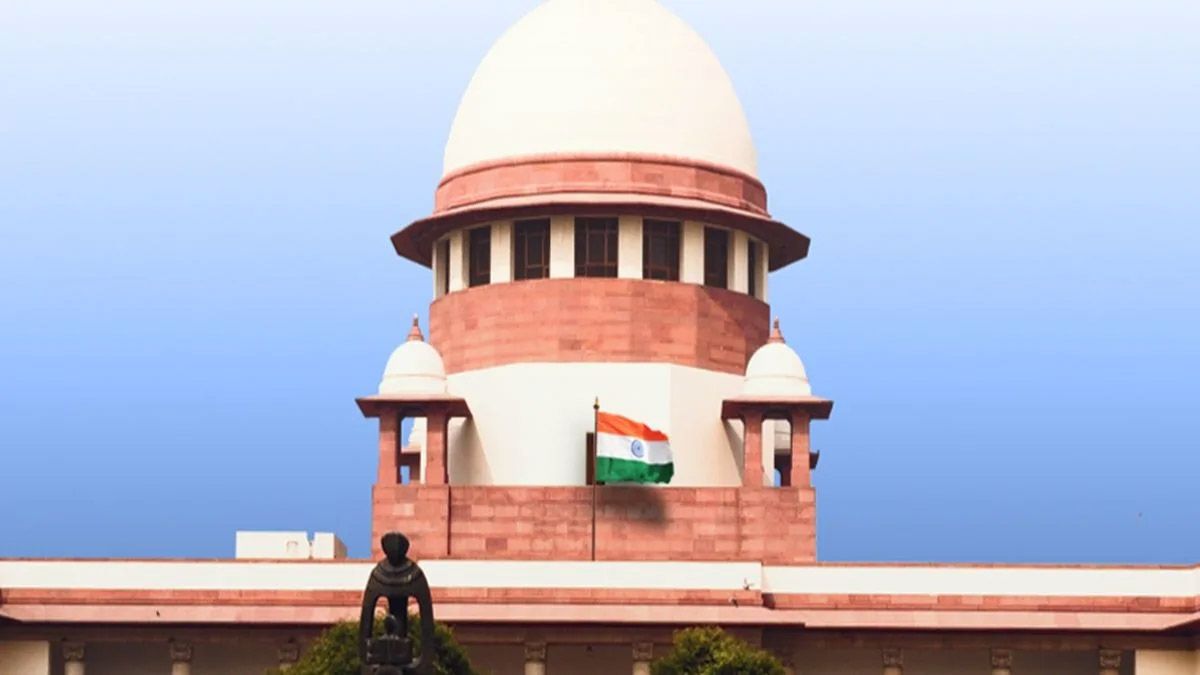
India's Supreme Court has intervened in a contentious animal welfare dispute, temporarily suspending a sweeping Madras High Court directive that prohibited all cow and calf slaughter across Tamil Nadu. A bench comprising Justices Vikram Nath and Sandeep Mehta issued the interim relief on Monday while hearing the Tamil Nadu government's appeal, signalling judicial concern that the lower court may have overstepped its remit. The decision opens a window for further legal arguments before the nation's apex court, which will ultimately determine how strictly livestock protection laws apply to a state with a substantial Muslim population and significant cattle-farming interests.
The dispute centres on whether India's existing legislative framework permits the regulation and licensing of animal slaughter or demands an absolute prohibition. Justice Nath's observation that the impugned order required "correction" suggests the Supreme Court believes the May 27 High Court judgment departed from established legal principles governing the scope of public interest litigation. The Tamil Nadu government had specifically argued that the Madras High Court exceeded its authority by converting a petition about preventing slaughter in public spaces into a blanket prohibition affecting even legally authorised slaughterhouses. This distinction matters considerably: the original petition focused on hygiene and animal welfare concerns related to temporary slaughter sheds erected during Bakrid celebrations, not the legality of regulated slaughter itself.
Tamil Nadu's government contends that multiple state and central statutes establish a regulatory rather than prohibitive framework for livestock management. The Tamil Nadu Animal Preservation Act of 1958, which predates India's current Constitution by decades, sets conditions under which cattle slaughter may be permitted, acknowledging implicitly that such activity can occur within defined parameters. Alongside this, the state government points to the Prevention of Cruelty to Animals Act of 1960, the Prevention of Cruelty to Animals (Slaughter House) Rules of 2001, and the Tamil Nadu Urban Local Bodies Act of 1998 as legislation designed to govern rather than eliminate slaughter. This cascade of legal instruments creates a presumption that lawmakers intended some form of regulated activity, not absolute prohibition.
The Madras High Court's decision drew authority from Article 48 of the Indian Constitution, which directs states to take steps toward prohibiting cow slaughter. However, the High Court went substantially further by treating a 1976 government order banning cow and heifer slaughter in state slaughterhouses as equivalent to constitutional directive, essentially elevating an administrative instruction to quasi-constitutional status. This reasoning troubles judicial federalists, who argue that constitutional provisions stating general policy objectives do not mandate absolute bans when statutory law provides alternative regulatory mechanisms. The High Court also grounded its ruling in the principle that animal slaughter could occur only in designated facilities—a position ostensibly reasonable—but then extended this to mean no designated facilities could lawfully accept cattle, rendering the principle circular.
The original public interest litigation emerged from complaints about temporary structures erected in Coimbatore during Bakrid, the Islamic festival when many Muslim families slaughter livestock for meat and religious observance. The petitioner, K Surya Prasanth, General Secretary of Hindu Makkal Katchi, raised legitimate concerns about informal slaughter sites bypassing hygiene standards and animal welfare protocols. Rather than ordering enforcement of existing slaughterhouse regulations or directing municipalities to prevent unauthorised facilities, the Madras High Court opted for categorical prohibition. This escalation from regulating specific practices to banning an entire category of activity across an entire state represents the kind of judicial activism that higher courts typically correct.
For Malaysian observers, this dispute illuminates ongoing tensions across South Asia regarding how secular constitutional frameworks accommodate religious and cultural practices. Tamil Nadu has a Muslim population of approximately 3.5 million, and many rely on regulated livestock slaughter as both livelihood and religious obligation. When courts impose blanket prohibitions without considering implementation or minority rights, they risk creating laws that cannot be enforced uniformly and that appear targeted at particular communities. Malaysia's own evolution toward balancing Islamic observance with animal welfare standards provides instructive precedent: the country permits and regulates animal slaughter during religious festivals through licensing frameworks rather than outright bans, ensuring both welfare compliance and religious freedom.
The Supreme Court's interim stay means the status quo reverts temporarily, allowing Tamil Nadu's existing regulatory apparatus to function. Slaughterhouses remain operational under the 1958 Act's provisions, even as the court examines whether the High Court correctly interpreted those provisions. This pragmatic approach acknowledges that the state government, not courts, bears responsibility for enforcing animal welfare standards through administrative mechanisms. The Supreme Court's clear intimation that correction is needed suggests the final judgment will substantially limit the High Court's order, restoring a regulatory rather than prohibitive regime.
The implications extend beyond Tamil Nadu's borders. Multiple Indian states have enacted versions of cow-slaughter restrictions, and several courts have addressed similar conflicts between constitutional directives and statutory frameworks. The Supreme Court's reasoning here will likely constrain lower courts from using public interest litigation as a vehicle for constitutional reinterpretation, reasserting the principle that courts should not legislate through judicial orders. This reflects broader concerns about judicial institutional design: when courts bypass the legislative process to impose new prohibitions, they assume regulatory and enforcement responsibilities for which they lack expertise and democratic accountability.
Bakrid observance remains a flashpoint in several Indian states where majority-Hindu legislatures have restricted minority religious practices. While Article 48's cow-protection directive reflects constitutional values, courts must reconcile it with other constitutional commitments to equality, freedom of religion, and minority rights. The Supreme Court's intervention suggests awareness that blanket prohibitions, even when cloaked in animal welfare language, carry implications for religious freedom and communal harmony. The stay preserves space for further argument about how constitutional values can coexist with regulatory frameworks rather than requiring absolute choices.
The case will return to the Supreme Court for substantive hearing, where the government will argue its comprehensive legal framework already addresses animal welfare concerns through licensing, hygiene standards, and veterinary oversight. The state will contend that the High Court's judgment effectively nullifies decades of statute by declaring regulatory provisions unenforceable. The broader question—whether India's constitutional commitment to cow protection permits regulated slaughter or demands prohibition—remains unresolved. However, the Supreme Court's preliminary stance signals that this question will be answered through doctrinal restraint rather than judicial expansion of scope, a principle with significance across multiple jurisdictions grappling with how constitutionalism accommodates religious and cultural practices.

