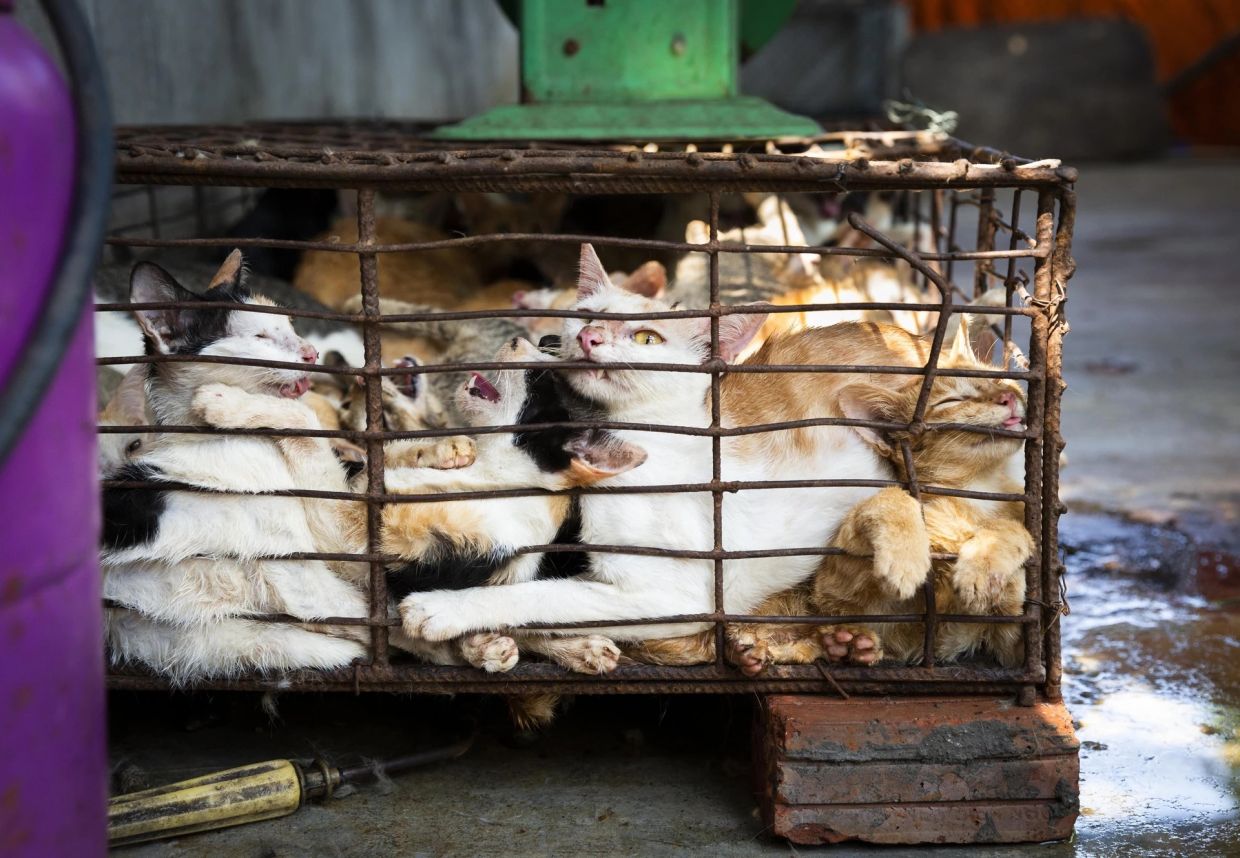
A thriving but largely clandestine trade in cat meat continues to devastate feline populations across Vietnam, Cambodia, and Laos, sustained primarily by cultural beliefs rather than dietary necessity. International animal welfare organisations estimate that approximately one million cats meet brutal deaths each year in Vietnam alone, with smaller numbers trafficked and slaughtered in neighbouring Cambodia and Laos, where beliefs about medicinal and spiritual properties drive demand for the animals.
The persistence of this trade persists despite the fact that cat meat occupies no significant position in the regional diet. Instead, it is consumption rooted almost entirely in superstition and tradition that fuels the market. According to FOUR PAWS, a global animal welfare organisation tracking the trade, demand centres on cultural beliefs linking feline meat to fortune, luck, and healing properties. In Vietnamese communities, certain lunar calendar periods are associated with consuming cat meat to either attract good fortune or reverse periods of bad luck, while other consumers maintain beliefs about purported health and medicinal benefits derived from the flesh.
Jon Rosen Bennett, who leads dog and cat welfare advocacy at FOUR PAWS, emphasises that the trade exists despite decades of efforts by both regional governments and international activists to eliminate it. Vietnam notably lacks any nationwide ban on the slaughter, sale, or consumption of cat meat, a legal vacuum that permits the underground trade to continue with relative impunity. Police operations occasionally disrupt trafficking networks, as occurred recently in Ho Chi Minh City when authorities dismantled a smuggling gang involved in inter-provincial cat trafficking and rescued approximately 500 animals. Nine gang members faced detention following investigations revealing a three-year pattern of cat theft and illegal sales.
The apparent disconnect between trade activity and actual public sentiment reveals a crucial gap between the actions of traders and the preferences of ordinary people. FOUR PAWS research demonstrates that nearly 90 percent of Vietnamese respondents support implementing a ban on the dog and cat meat trade, while more than 90 percent explicitly reject the notion that consuming these animals represents authentic Vietnamese culture. This overwhelming majority position suggests that the practice represents the preferences of a small minority rather than a culturally embedded tradition with broad social acceptance. The data indicates that framing the trade as integral to Vietnamese heritage significantly misrepresents contemporary values within the country.
The economics of the cat meat trade reveal how small-scale profiteering sustains the practice despite limited consumer demand. According to FOUR PAWS investigations conducted in 2020, live cats were bought and sold for approximately US$6 to US$8 per kilogramme, while processed cat meat commanded prices between US$10 and US$12 per kilogramme. Black cats commanded premium prices due to superstitious beliefs about their supposed enhanced luck-bringing or medicinal properties, creating particular targeting of this colour variant. These relatively modest margins suggest that the trade survives through volume rather than high-value transactions, with traffickers exploiting the accessibility of street and domestic cats to generate income.
Beyond animal welfare concerns, the unregulated movement of cats across provincial and national borders presents significant public health risks to human populations throughout the region. The mass undocumented trafficking of live animals creates conditions enabling the rapid spread of zoonotic diseases, particularly rabies and other pathogens capable of jumping to human hosts. The clandestine nature of the trade means that transported animals typically receive no veterinary inspection or disease screening, transforming each smuggling operation into a potential biological hazard. Bennett explicitly links the trade to public health threats, arguing that the suffering inflicted on animals represents only part of the broader damage caused by these unregulated operations.
The broader Southeast Asian context reveals that cats represent only a portion of the regional wildlife being exploited for meat consumption. Estimates suggest that more than 10 million dogs are slaughtered annually across Southeast Asia, a scale that dwarfs the cat trade but similarly contradicts public sentiment in most jurisdictions. However, dog meat consumption has generated more visible public campaigns and shifting attitudes across several countries, with growing majorities in most Southeast Asian societies opposing the practice. The fact that cat meat consumption has received comparatively less international attention despite its scale suggests a significant gap in global animal welfare advocacy, where dog welfare campaigns have achieved greater prominence in media and policy discussions.
Recognising this advocacy gap, FOUR PAWS launched an online public reporting platform in early June specifically targeting the dog and cat meat trade in Cambodia. This digital approach aims to harness public opposition by enabling concerned citizens to report suspected trafficking activities, potentially converting widespread public disapproval into actionable intelligence for authorities and animal welfare responders. The initiative acknowledges that in societies where the practice lacks cultural legitimacy among the majority, information from ordinary people may represent the most effective tool for disrupting supply networks that operate through stealth and intimidation.
The persistence of these trades across multiple countries and decades of activist campaigns suggests that legal prohibition alone will prove insufficient without corresponding economic alternatives and enforcement capacity. Vietnam's absence of national legislation criminalising cat meat slaughter differs markedly from some neighbouring jurisdictions with stricter animal welfare protections, creating incentives for traffickers to source animals where regulations remain weak. Additionally, the relatively low profit margins indicate that traffickers typically operate as part of broader meat trading networks rather than specialising exclusively in cats, meaning disrupting the broader informal meat economy remains essential to eliminating this particular exploitation chain.
For Malaysian readers and policymakers, the Indochinese experience offers cautionary lessons about how superstition-driven animal exploitation can flourish even when public opposition proves overwhelming and when the targeted species holds no genuine dietary or economic importance. Malaysia's own history with animal welfare challenges, from the dog meat trade to exotic animal trafficking, demonstrates how cultural and traditional justifications frequently mask commercial opportunism rather than reflecting genuine community values. The gap between what public opinion surveys reveal and what illegal traders continue to practise underscores the necessity for comprehensive legislative frameworks combined with active enforcement and public engagement strategies that channel popular opposition into concrete protection mechanisms for vulnerable animals.

