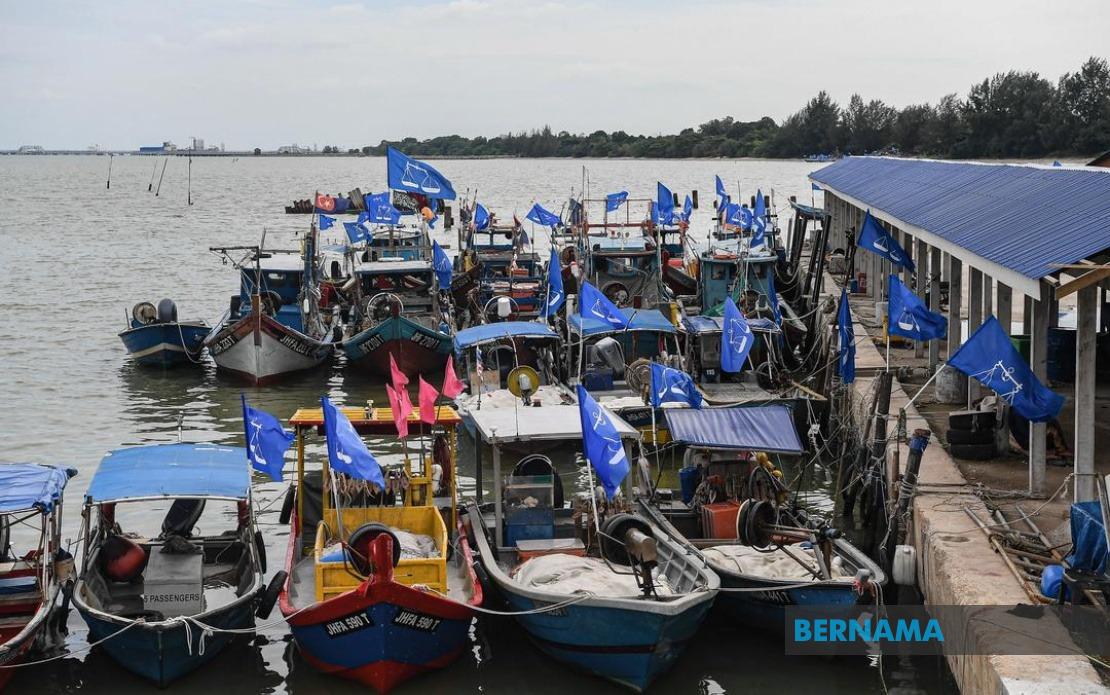
The community operating at Medan Selera Sungai Rengit in Kota Tinggi faces an uncertain future, having spent almost a decade at a makeshift location as the newly elected representative for the Tanjung Surat state constituency takes office following the July 11 polling. The waterfront town, which serves as a crucial commercial hub for workers at the Pengerang Integrated Petroleum Complex, has become a flashpoint of frustration where both traders and fishing communities are desperate for political intervention to break an impasse that has stalled progress and compromised their business viability.
The circumstances that created this predicament trace back to a displacement triggered by an earlier development initiative. When traders were relocated from their original premises, authorities promised a temporary arrangement of approximately eighteen months at the current site, near which a new location was supposedly being prepared. Yet what was meant to be a brief interlude has stretched indefinitely, leaving stall operators in a state of limbo without clarity on the implementation timeline or the actual obstacles delaying the transition. This prolonged uncertainty has morphed temporary inconvenience into permanent hardship for people whose enterprises depend on stability and predictability.
The physical conditions at the existing food court underscore why relocation remains a pressing concern despite the complications it entails. Traders operate from structures with only canvas canopies and plywood partitions, offering minimal protection against Johor's tropical climate and creating security vulnerabilities that extend far beyond mere discomfort. Beverage seller Lai Swee Hong, who has invested three decades building her business, emphasises that the absence of proper doors and walls leaves merchandise exposed to both weather and opportunistic thieves, a situation rendered more intolerable by the knowledge that basic improvements remain within reach if authorities chose to prioritise them. Her frustration is compounded by acknowledgment that while a new site exists, its location near a one-way road with severely limited parking transforms what officials present as a solution into an impractical alternative.
The security dimension of this crisis has intensified during the past year, with multiple theft incidents eroding trader income and morale. Food operator Wini Fasiha Zawawi describes how despite police patrols and formal complaints to local government bodies, criminal activity continues virtually unchecked. The losses, while individually modest, accumulate into significant revenue leakage for small operators whose margins are already tight in an environment of rising input costs. The fact that authorities have acknowledged the problem through police reports and official channels without translating awareness into tangible protective measures represents a form of institutional neglect that compounds the sense of abandonment felt by these business people.
Beyond the trading community, Sungai Rengit's fishing sector confronts its own set of escalating pressures that extend beyond infrastructure into the realm of economic survival. Fishermen operating from Kampung Sungai Rengit face mounting operational expenses as fuel, equipment, and supply costs surge, cutting into profit margins even as they navigate the inherent unpredictability of maritime work. The existing fuel subsidy programme represents a lifeline rather than a convenience, allowing these workers to maintain viable operations during periods when global commodity prices threaten to render fishing economically unviable. Sin Hock Hwee, a veteran fisher with fifty years of experience dating to his adolescence, underscores how crucial continued and potentially expanded subsidisation remains to preserving a livelihood that has sustained his family across generations.
Younger fishermen articulate a broader vision for community development that extends beyond economic assistance to encompass structural upgrades that would enhance their operational capacity. Hidayat Isa, representing the generation inheriting these maritime traditions, advocates for modernisation of jetty facilities that would improve safety, efficiency, and the ability to land and process catches more effectively. His emphasis on ensuring that the voices of emerging maritime workers receive serious consideration from elected representatives reflects a generational concern that coastal development planning often overlooks the input of those whose daily work depends on these facilities. The implicit request that the incoming assemblyman designate Kampung Sungai Rengit as an adopted constituency reflects aspiration that formalising such a relationship would secure consistent attention to community priorities beyond election cycles.
The political dimension of this situation acquired concrete form with the Tanjung Surat constituency contest between Pakatan Harapan candidate Faizul Abdul Ghani and Barisan Nasional incumbent Aznan Tamin. As the broader 16th Johor state election unfolded across 56 constituencies with 172 candidates competing on July 11, Sungai Rengit's specific grievances became leverage points in localised campaigning. For residents whose frustrations span multiple election cycles without meaningful resolution, the electoral contest presents both opportunity and scepticism—a moment to articulate demands directly to aspiring representatives while maintaining awareness that previous administrations have similarly pledged action that materialised only in rhetoric.
The infrastructure stagnation at Medan Selera Sungai Rengit exemplifies how operational bottlenecks in secondary urban centres can accumulate into sustained economic drag if bureaucratic systems fail to prioritise implementation of agreed plans. The temporary site now encompassing traders' entire operational world was never designed for indefinite use, yet its continuation reflects either resource constraints, competing budgetary priorities, or institutional inertia within local government structures. For traders and fishermen, distinguishing between these explanations matters less than achieving visible progress toward promised improvements, a sentiment that likely influenced many voters' choices in the July election.
The convergence of trader and fishing community concerns around infrastructure and economic assistance highlights how coastal towns like Sungai Rengit remain dependent on policy decisions made in distant administrative centres. The Pengerang Integrated Petroleum Complex's presence should theoretically elevate the town's development priority, yet the persistence of makeshift trading conditions and aging fishing infrastructure suggests that industrial development does not automatically translate into supportive community investment. This disconnect between regional economic importance and local service provision represents a recurring tension in Malaysian development patterns, where extraction-based industries generate revenue and employment without necessarily catalysing broader community advancement.
Looking forward, the newly elected Tanjung Surat representative faces an immediate test of whether campaign commitments to address these long-standing issues translate into executive action. The credibility of elected representatives in constituencies like this depends substantially on demonstrable progress on tangible grievances rather than rhetorical flourishes about community welfare. Traders awaiting relocation decisions and fishermen hoping for sustained subsidies represent groups whose support can be mobilised or alienated based on whether political representatives convert electoral victory into concrete improvements to working conditions and economic viability. The symbolic weight attached to designating Kampung Sungai Rengit as an adopted constituency reflects community desire for sustained visibility and priority within the political apparatus, a reminder that local governance effectiveness ultimately hinges on translating constituent demands into implemented solutions rather than deferred promises.

