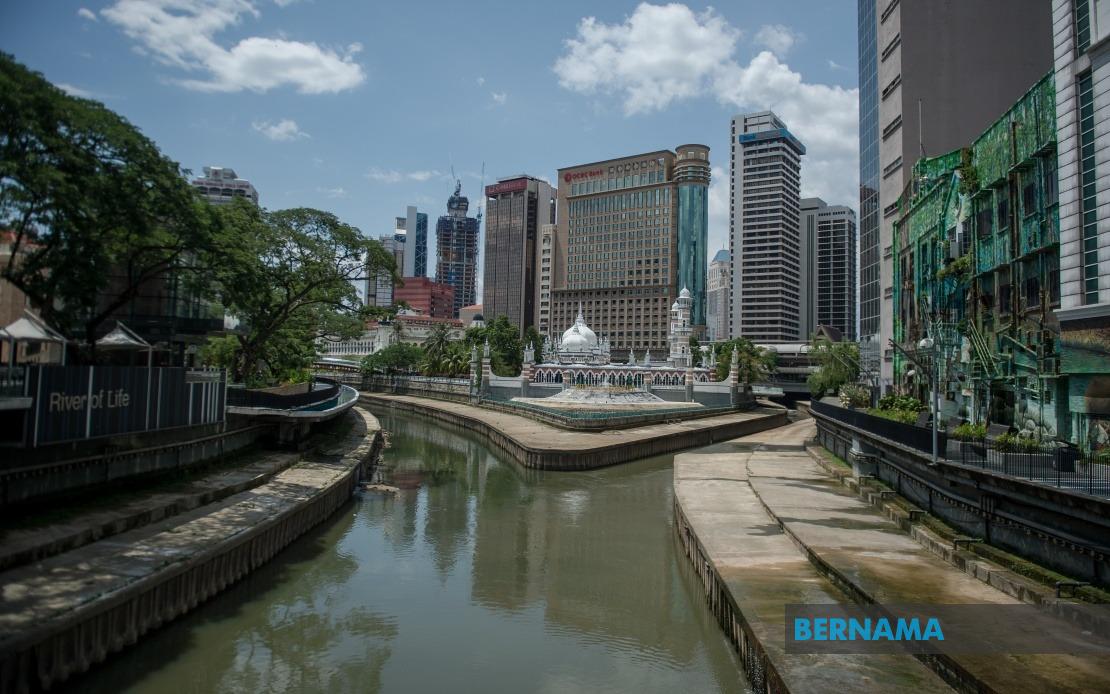
Sungai Klang's water-carrying capacity has jumped dramatically to 22 per cent from less than five per cent, marking a watershed moment in Selangor's long struggle against seasonal flooding. The leap comes as a major intervention by Landasan Lumayan Sdn Bhd nears two-thirds completion along a 56-kilometre stretch, fundamentally reshaping how the state's most critical waterway manages runoff during monsoon seasons. Managing director Syaiful Azmen Nordin revealed the transformation during a media briefing in Shah Alam on Monday, underscoring how intensive dredging and embankment reinforcement have transformed vulnerable zones into more resilient flood barriers.
The river improvement scheme represents a tangible response to the catastrophic 2021 floods that devastated parts of Selangor and exposed infrastructure weaknesses across multiple drainage systems. By removing 1.2 million cubic metres of silt, sand, and accumulated sediment since 2017, authorities have methodically widened the channel and expanded its ability to contain water surges. This targeted excavation has been especially concentrated in flood-prone areas such as Taman Sri Muda, where overflow events previously inundated residential neighbourhoods with alarming regularity. The sheer volume of material extracted underscores the scale of silting that had gradually strangled the river's natural flow capacity over decades of urban development upstream.
Critically, Syaiful Azmen distinguished between different sources of recent inundation, clarifying that flooding in recent months did not stem from Sungai Klang itself breaching its banks. Rather, internal drainage systems—the network of smaller channels, culverts, and retention ponds that feed into the main river—have struggled to cope with intense rainfall. This distinction matters greatly for policymakers, as it suggests the broader problem extends beyond river capacity alone to encompass stormwater infrastructure across cities like Kuala Lumpur and surrounding municipalities. The nuance also reflects how modern urban flooding often results from cascading failures in interconnected systems rather than a single point of rupture.
Beyond excavation alone, a comprehensive river-cleaning initiative has removed more than 98,000 tonnes of waste since 2017, consuming RM19.6 million in dedicated resources. Illegal dumping, discarded construction materials, and household refuse had accumulated along the riverbed and embankments, forming obstructions that impeded water movement and triggered localized backups. Annual waste volumes have plummeted from 16,000 tonnes to between 5,000 and 6,000 tonnes, suggesting that public awareness campaigns and enforcement measures have gradually shifted disposal practices. Concurrent improvements in water quality—from Class 5, the lowest designation, to Class 3 and 4—indicate that sediment removal and litter collection have simultaneously enhanced ecological conditions, potentially supporting aquatic life and reducing contamination.
The project timeline shows Landasan Lumayan expects to complete its dredging component by the end of 2025, at which point Sungai Klang's capacity should reach the target threshold of 40 per cent. This represents a roughly fivefold increase from baseline conditions, a transformation that would substantially mitigate overflow risks during extreme weather events. However, a separate federal initiative focusing on the Shah Alam to Mid Valley corridor remains undefined regarding completion date or funding allocation, introducing uncertainty around how seamlessly improvements upstream will translate into flood protection further downstream. The bifurcation of responsibility between state and federal authorities raises questions about coordination mechanisms and whether the downstream section will receive equivalent priority and investment.
For Malaysian policymakers, the Sungai Klang experience offers a cautionary lesson about the long lead times required to reverse decades of environmental degradation. Commencing dredging operations in 2017 but achieving only 22 per cent capacity enhancement eight years later illustrates how infrastructure remediation proceeds incrementally rather than explosively. Urban sprawl, upstream development, and climate-driven rainfall intensification have all accelerated sediment generation and stormwater volumes, essentially moving the goalposts even as authorities work to expand river channels. Selangor's situation also reflects a broader Southeast Asian pattern whereby rapid industrialization and urbanization have outpaced the expansion of drainage and flood-control infrastructure.
The implications extend beyond Selangor to neighbouring states and the wider region. As cities across Malaysia experience intensifying rainfall patterns consistent with climate change projections, the cost-benefit calculus of preventive dredging and embankment work will shift in favour of early intervention. Communities in Johor, Perak, and Terengganu that face comparable flood pressures will be watching Sungai Klang's trajectory closely, seeking evidence that sustained investment in river management can meaningfully reduce disaster frequency. The messaging from Landasan Lumayan's project—that degraded waterways can be rehabilitated through systematic effort—carries political and social weight in state capitals where flooding has eroded public confidence in governance.
Public communication around the distinction between river-capacity problems and internal-drainage failures also assumes strategic importance. Citizens historically blame rivers for floods, yet modern urban inundation often reflects municipal stormwater system inadequacies rather than main-channel overflow. By transparently explaining that recent Selangor flooding originated in secondary systems rather than Sungai Klang itself, authorities create an opportunity to redirect investment and public pressure toward comprehensive stormwater infrastructure upgrades. The counternarrative risks, however—that citizens perceive the river-improvement project as irrelevant to their immediate flood concerns—unless coupled with visible progress on drainage systems affecting residential areas.
Looking ahead, the trajectory of Sungai Klang hinges on whether the federal Shah Alam to Mid Valley component advances with comparable vigour and funding. A stalled or poorly resourced downstream initiative would undermine the upstream gains, creating bottlenecks that paradoxically worsen flooding in central Selangor even as northern sections handle water more efficiently. Inter-agency coordination becomes critical, particularly as rainfall events do not respect state or federal jurisdictional boundaries. The experience also highlights the importance of continuous maintenance: sediment will accumulate anew, debris will lodge in channels, and water quality will degrade unless cleaning programs persist indefinitely. Budget allocations for such unglamorous but essential maintenance often face political competition from headline-grabbing infrastructure projects, yet the Sungai Klang precedent demonstrates their centrality to flood resilience.

