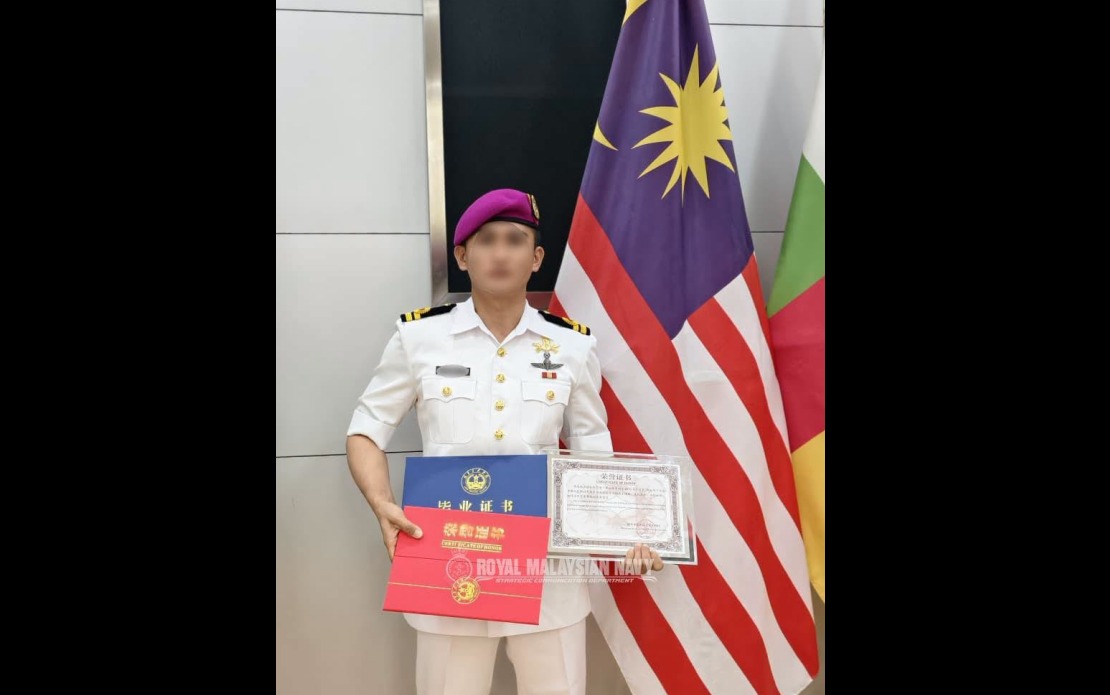
Sultan Sharafuddin Idris Shah, who holds the ceremonial position of Captain-in-Chief of the Royal Malaysian Navy, has publicly recognised the exceptional accomplishment of a PASKAL commando who emerged as the leading student in an elite sniper training programme conducted at the PLA Infantry Academy's Shijiazhuang Campus in Hebei province.
The distinction underscores growing military cooperation between Malaysia and China, particularly in elite combat training. The officer's success represents a significant milestone for the Royal Malaysian Navy's Special Naval Forces division, which operates as one of the country's most operationally demanding and selective units. PASKAL personnel are extensively trained for maritime counter-terrorism, amphibious operations, and reconnaissance missions, making admission to advanced international courses a mark of exceptional capability and commitment.
The training course, which ran from March 1 through July 31, drew 131 military students representing more than two dozen nations, making the competitive environment particularly demanding. The Malaysian officer's first-place finish amongst this internationally diverse cohort speaks to both individual excellence and the quality of foundational training provided by the Royal Malaysian Navy. His achievement of the Excellent Student Award, coupled with both the Certificate of Honors for Excellent Cadre and Silver Badge Medal recognitions, reflects consistent superior performance across multiple assessment dimensions throughout the five-month programme.
The Sultan's statement carries particular weight given his formal constitutional role within Malaysia's defence establishment. By publicly acknowledging the achievement, the sovereign has elevated the officer's personal accomplishment into a matter of national pride and institutional validation. Such royal recognition traditionally serves to motivate personnel throughout the military hierarchy and signals official confidence in the quality and dedication of the nation's armed forces.
The decision to send PASKAL personnel abroad for advanced specialist training reflects Malaysia's sophisticated approach to military modernisation. By engaging with international training partnerships, particularly with China's highly regarded military institutions, Malaysia gains access to cutting-edge tactical doctrines and operational methodologies. The PLA Infantry Academy, among China's most prestigious military educational institutions, offers specialised training in infantry tactics and sniper operations that incorporates decades of operational experience. For Malaysia's elite forces, participation in such programmes provides competitive advantage and demonstrates commitment to professional military excellence.
Admiral Tan Sri Dr Zulhelmy Ithnain, who leads the Royal Malaysian Navy, also received the Sultan's commendation for the achievement, recognising that institutional support and personnel selection are crucial to international military success. The Naval Chief's role encompasses ensuring that capable officers gain opportunities for professional development, directly contributing to the navy's operational readiness and technical competence. The acknowledgement reflects the collaborative nature of modern military advancement, where individual achievement depends upon institutional structures and leadership vision.
For PASKAL as an organisation, this recognition carries implications beyond ceremonial appreciation. The unit's international reputation influences recruitment, morale, and recruitment of high-calibre personnel who view service in the command as a pathway to global professional recognition. The officer's achievement will likely inspire colleagues within PASKAL and other Royal Malaysian Navy divisions to pursue similar advanced training opportunities, creating a culture of continuous skill enhancement and operational excellence.
The international nature of the training programme underscores Malaysia's position within regional security networks. While specific partnership details remain classified for operational security reasons, the visible presence of Malaysian military personnel at premier Chinese military institutions signals both the reality of defence cooperation and Malaysia's pragmatic approach to security relationships. Countries across Southeast Asia increasingly recognise that advanced military training transcends Cold War-era ideological boundaries; professional military cooperation based on shared security interests has become standard practice in contemporary geopolitics.
The achievement arrives amid broader discussion of defence spending and military modernisation across Southeast Asia. Nations in the region, including Malaysia, face evolving maritime security challenges, regional instability, and the need for highly trained personnel capable of operating sophisticated equipment and conducting complex operations. Excellence in specialised training like sniper operations translates directly to enhanced capability in counter-terrorism operations, offshore security missions, and maritime law enforcement activities that protect Malaysia's extensive maritime domain.
Further integration of PASKAL personnel into international training networks will likely continue, given the unit's specialised role and the region's security environment. As maritime challenges intensify across Southeast Asia—including piracy concerns, illegal fishing operations, and the need for effective exclusive economic zone protection—elite naval commando forces become increasingly valuable. The officer's achievement demonstrates that Malaysian military personnel can compete and excel at the highest international standards, potentially encouraging future participation in advanced programmes with allies and partners globally.
The Sultan's commendation also reinforces the symbolic importance of the monarchy in Malaysia's defence framework. Constitutional monarchs in Malaysia maintain ceremonial military roles that, while primarily formal, carry genuine significance in military culture and institutional legitimacy. Public recognition from the Sultan regarding military achievements adds ceremonial gravitas and demonstrates continuity between Malaysia's traditional institutions and modern professional military development.
Looking forward, this achievement may influence how Malaysian defence planners approach training partnerships and personnel development strategies. Success stories circulate throughout military establishments, shaping recruitment messaging and organisational priorities. The publicity surrounding this officer's accomplishment will likely prompt increased applications from capable personnel seeking international training opportunities, ultimately strengthening the talent pipeline within the Royal Malaysian Navy and PASKAL specifically.

