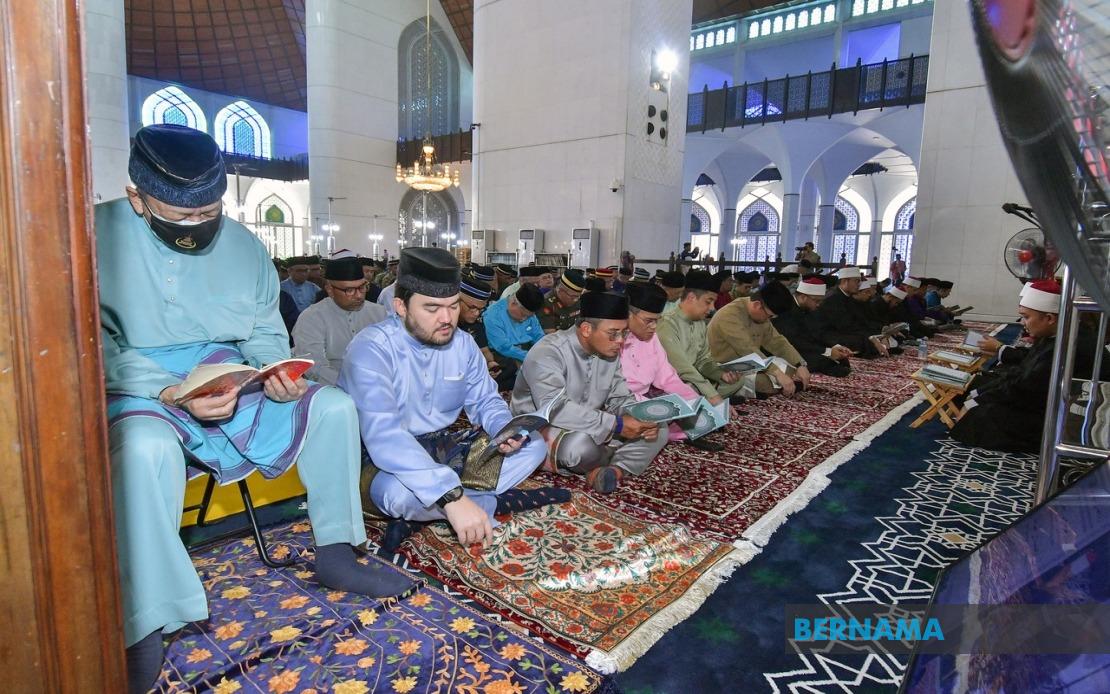
Sultan Sharafuddin Idris Shah, the reigning Sultan of Selangor, joined a congregation for Surah Yassin recitation and congregational prayers on Wednesday in the lead-up to Malaysia's National Day celebrations. The spiritual gathering took place at Masjid Sultan Salahuddin Abdul Aziz Shah in Shah Alam, reflecting a tradition of religious observance that precedes the nation's annual commemoration of independence. The occasion brought together members of the royal household, state officials, and community members in a show of unity centred on faith and national reflection.
Accompanying the Sultan was Tengku Amir Shah Sultan Sharafuddin Idris Shah, the Raja Muda of Selangor, underscoring the importance placed by the state's leadership on the religious observance. Their presence signalled the close alignment between the monarchy and Islamic affairs in Selangor, a relationship that has historically been central to the state's governance framework. The attendance of senior royalty at such events carries symbolic weight, demonstrating the integration of spiritual practice within the state's institutional life.
The mosque reception was marked by formal protocol, with Selangor Menteri Besar Datuk Seri Amirudin Shari greeting the Sultan upon arrival alongside Dr Mohammad Fahmi Ngah, chairman of the State Islamic Affairs and Innovation Culture Committee. These officials represented the executive and religious administrative layers of state government, reflecting the administrative structure through which Islamic affairs are managed in Selangor. Their coordinated presence illustrated how the state apparatus mobilises around significant religious and civic moments.
Key figures from Selangor's Islamic institutions were also present, including Datuk Mohd Shahzihan Ahmad, director of the Selangor Islamic Religious Department (JAIS), and Datuk Salehuddin Saidin, chairman of the Selangor Islamic Religious Council (MAIS). These individuals oversee the framework through which Islamic law, education, and administration function within the state. Their participation underscored the occasion's official nature and the coordination between different tiers of religious governance in preparing the state for its National Day observance.
The gathering drew approximately 1,000 worshippers, a substantial congregation that included members of Selangor's security forces and military personnel stationed within the state. The inclusion of uniformed services at the recitation ceremony demonstrates how Malaysia's armed and police forces participate in civil-religious events, blending their roles as both protectors of national sovereignty and participants in the nation's spiritual fabric. This integration reflects Malaysia's approach to national identity, where defence personnel are seen as integral to both the security and moral fabric of the nation.
Following the Surah Yassin recitation, Sultan Sharafuddin led the congregation in Friday prayers. The sermon, titled "Merdeka Daripada Belenggu Kerakusan" (Freedom from the Shackles of Greed), was delivered by Muhammad Farhan Wijaya, the mosque's Grand Imam. This thematic choice carries resonance beyond purely spiritual instruction, engaging with concepts of liberty and moral restraint that align with the broader national message being promoted ahead of Merdeka Day. The sermon's focus on freedom from avarice speaks to contemporary social challenges and the values the state wishes to emphasise during its independence commemoration.
The timing of this religious observance reflects established practice in Malaysian governance, where significant national moments are prefaced by spiritual reflection and prayer. National Day, celebrated on August 31st, commemorates Malaysia's independence and represents a moment of national reckoning. By convening a major religious gathering days before the official celebration, Selangor's leadership frames the national holiday within a spiritual context, suggesting that independence and national progress are inseparable from moral and religious grounding.
Selangor's state-level National Day celebrations are scheduled for Sunday, August 30th, at Kajang Stadium, operating under the national theme "Malaysia MADANI: Kesejahteraan Dinikmati" (Malaysia MADANI: Enjoying Shared Prosperity). This theme represents the current administration's policy framework emphasising inclusive development and improved quality of life across the population. The pre-celebration prayers serve as a spiritual prelude to this policy messaging, anchoring development aspirations within religious values and national consciousness.
The choice of Masjid Sultan Salahuddin Abdul Aziz Shah as the venue carries its own significance, as this mosque represents one of Selangor's most prominent religious landmarks. Hosting the Sultan and senior officials at this location amplifies the gathering's profile and connects the event to Selangor's institutional memory and religious heritage. The mosque's grandeur and capacity to accommodate large congregations made it an appropriate venue for this pre-Merdeka observance.
For Malaysian observers, the event exemplifies how the nation's institutional leadership integrates religious practice with civic life and national commemoration. Unlike secular democracies that maintain strict separation between religious and state functions, Malaysia's constitutional framework and political culture permit and indeed encourage such integration, particularly in a Muslim-majority state like Selangor. This approach reflects the Federation's unique positioning of Islam as the federal religion while maintaining the multi-faith character of the nation.
The gathering also illustrates the role of state-level initiatives in shaping national consciousness. While Malaysia's federal government sets the overarching theme and parameters for Merdeka Day, individual states like Selangor contribute their own ceremonial and spiritual dimensions to the national celebration. These state-level preparations create multiple entry points through which citizens engage with national identity, whether through religious observance, official ceremonies, or community participation.
For Selangor specifically, as Malaysia's most economically significant and densely populated state, such official events serve broader functions beyond ceremonial obligation. They demonstrate administrative competence, inclusive governance, and the state's commitment to balancing rapid development with moral and religious foundation. As Selangor continues to attract migration and investment, these moments of collective spiritual reflection help ground rapid social change within continuity of values.
The pre-Merdeka prayers in Selangor thus function simultaneously as religious observance, civic ritual, and political statement. They affirm the monarchy's role in spiritual leadership, validate the state administration's stewardship of religious affairs, and invite the broader population to view national independence and progress as rooted in faith and moral principles. In the context of Southeast Asia's broader political landscape, where rapid development and social change create tensions, Malaysia's approach of consciously integrating spiritual practice with national commemoration offers one model for negotiating modernity while maintaining cultural and religious continuity.

