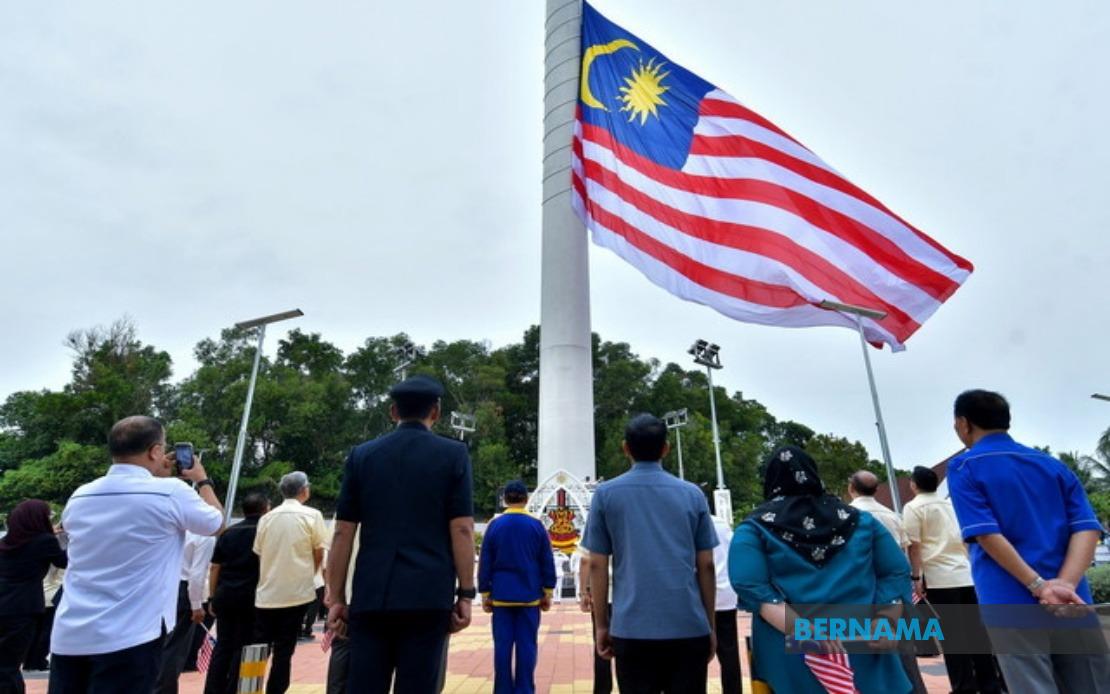
Sultan Sharafuddin Idris Shah, the Sultan of Selangor, has emphasized that the Jalur Gemilang transcends its ceremonial role during Independence festivities to represent something far more profound: a unifying emblem embraced equally by every Malaysian. His remarks, delivered on August 26 in Shah Alam, arrived as the state commenced its month-long flag-flying observance at Dataran Selangor, which will continue through September 17 to mark both National Day and Malaysia Day celebrations.
The Sultan's message strikes at a critical juncture in Malaysia's national discourse, where questions of identity and belonging have occasionally become fractious along communal lines. By reaffirming that the Jalur Gemilang belongs collectively to Malaysians regardless of their ethnic composition, religious convictions, linguistic preferences, or political leanings, the Ruler articulated a foundational principle of the nation's social contract. The flag, he suggested, serves as a tangible reminder of shared citizenship that binds together a diverse population within a single political entity.
Central to Sultan Sharafuddin's appeal is the distinction between symbolic gestures and substantive commitment to national cohesion. He acknowledged that displaying thousands of Jalur Gemilang throughout the National Month represents a straightforward logistical exercise, yet cautioned that the genuine challenge lies in constructing a Malaysian society where individuals from every background genuinely experience acceptance, respect, and pride in their national identity. This observation carries particular weight for regional observers, as Southeast Asia watches Malaysia navigate the perpetual tension between formal expressions of unity and the lived experiences of communities from diverse backgrounds.
The Sultan's articulation extends beyond a passive tolerance of difference to advocate for active respect and understanding across communal boundaries. He specifically called for the younger generation to receive education emphasizing respect for adherents of different faiths, races, and cultural traditions. This emphasis on intergenerational transmission of values suggests recognition that sustainable national unity cannot depend solely on public ceremonial displays or the pronouncements of political elites, but requires deepening pluralistic values among citizens who will inherit the nation.
Particularly noteworthy is the Sultan's direct address to national leadership, urging politicians and public figures to embody the virtues of moderation, tolerance, and compassion in their conduct. He cautioned explicitly against weaponizing political, ethnic, or religious distinctions as instruments to fracture public opinion and social cohesion. For Malaysia, where periodic episodes of communal tension have coincided with particularly charged political moments, such guidance from a respected constitutional figure carries institutional weight and moral authority that transcends ordinary political commentary.
The Ruler further emphasized that the Jalur Gemilang has historically remained indifferent to Malaysia's demographic categories, never distinguishing between Malays, Chinese, Indians, Kadazan-Dusuns, Ibans, or other ethnic communities. Similarly, the flag extends equal recognition to Muslims, Buddhists, Christians, Hindus, and practitioners of other faiths. This historical observation reframes the flag not merely as an administrative symbol but as a testimony to an original political bargain in which diverse communities agreed to constitute themselves as a single nation-state. The Sultan's invocation of this historical principle suggests that contemporary efforts to leverage such categories for divisive purposes represent departures from, rather than continuations of, Malaysia's foundational compact.
The flag-hoisting ceremony itself, conducted at Dataran Selangor on the morning of August 26, served as more than ritual pageantry. It constituted a performative reinforcement of the principles the Sultan articulated, demonstrating that devotion to country and cultivation of patriotic sentiment need not depend on narrower communal affiliations. For Malaysian observers and regional analysts alike, the staging of such ceremonies carries significance insofar as they establish visible demonstrations of official commitment to inclusive nationalism, particularly during moments when political rhetoric might otherwise emphasize divisions.
Sultan Sharafuddin's framing introduces an important conceptual move: decoupling independence as an achievement from independence as an ongoing practice. Rather than treating Independence Day solely as commemoration of a historical accomplishment, he repositions it as an annual opportunity to assess and recommit to the work of maintaining a pluralistic nation-state. This interpretation proves especially relevant for Southeast Asian democracies, several of which similarly grapple with reconciling diverse populations within unified political frameworks while managing competing identity narratives.
The Sultan's remarks also implicitly address a recurring challenge in Malaysian public discourse: the conflation of patriotism with particular ethnic or religious identity. By steadfastly asserting that national symbols belong equally to all citizens and that pride in the nation need not entail assimilation to any single communal tradition, he articulates a civic rather than ethnic conception of Malaysian identity. This distinction, while conceptually straightforward, assumes particular importance given historical moments when public figures have suggested that authentic patriotism requires adherence to specific cultural practices or religious observances.
For government institutions and civil society organizations, the Sultan's emphasis on leaders setting exemplary standards through practicing moderation and restraint offers a template for institutional conduct during periods of heightened political competition. The suggestion that such exemplary leadership constitutes an essential component of national unity, equivalent in importance to formal constitutional structures or legislative enactments, elevates the ethical and behavioral dimensions of governance to prominent consideration.
The broader regional context amplifies the relevance of the Sultan's message. Throughout Southeast Asia, several nations confront recurring tensions between national unity objectives and the affirmation of distinct communal identities within plural societies. Malaysia's experience navigating these tensions, reflected through the pronouncements of its constitutional monarchs, offers instructive examples for neighboring countries similarly invested in maintaining cohesive nation-states while respecting constituent communities' particular traditions and preferences.
Ultimately, Sultan Sharafuddin's intervention during the National Month serves to remind Malaysians that independence as a political condition remains incomplete without concurrent dedication to the intellectual, social, and ethical work of building a nation where citizens from diverse backgrounds experience genuine belonging. The Jalur Gemilang, in this formulation, represents not merely a historical achievement to be commemorated annually but an ongoing challenge to construct institutions, practices, and mindsets capable of sustaining a genuinely inclusive political community.

