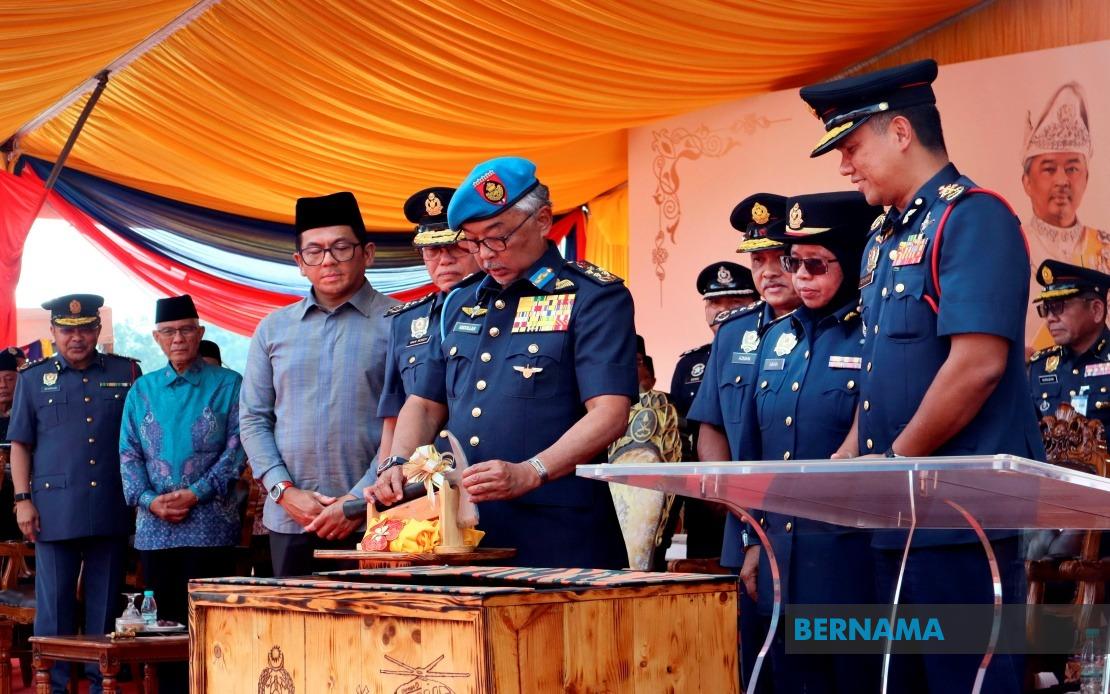
The Sultan of Pahang, Al-Sultan Abdullah Ri'ayatuddin Al-Mustafa Billah Shah, has publicly acknowledged the combined efforts of federal and state authorities in directing resources towards infrastructure development that directly benefits Pahang residents. Speaking at the opening of the Sungai Lembing Fire and Rescue Station in Kuantan on July 2, His Royal Highness highlighted the significance of sustained government investment in projects aimed at protecting communities from natural disasters and improving public safety infrastructure.
Flood mitigation emerged as a particular focus of the Sultan's remarks, reflecting the acute vulnerability of certain parts of Pahang to seasonal inundation. Sungai Lembing, a township in Pahang's Kuantan district, occupies a strategically important position in the state's hydrology—it frequently experiences flooding during the monsoon season and serves as an early indicator of broader flood risk throughout the Kuantan region. The designation of Sungai Lembing as a bellwether for regional flood patterns underscores why targeted investment in mitigation infrastructure there carries significance beyond the immediate locality, offering crucial warning signs for downstream communities.
The Sultan's recognition of government spending on flood defence projects acknowledges a growing reality across Southeast Asia: as climate variability intensifies and urban development continues, flood resilience has become a core component of responsible governance. Pahang, positioned along the east coast of Peninsular Malaysia and exposed to both monsoonal rains and occasional tropical storms, faces particular exposure to water-related disasters. The financial commitments made by both federal and state authorities represent a substantial ongoing drain on budgets, yet remain essential given the documented economic and social costs of major flood events. By publicly commending these expenditures, the Sultan legitimised the difficult budgetary choices that governments must navigate when balancing competing priorities.
Beyond merely expressing appreciation, Al-Sultan Abdullah issued a directive that carries operational implications for water management strategy across Pahang. He instructed that rivers positioned near residential zones should undergo deepening and related engineering work to reduce the probability of overflow during intense rainfall periods. This order reflects a proactive rather than purely reactive approach to flood management, suggesting that traditional passive coping mechanisms are being supplemented by structural interventions designed to expand river capacity and drainage efficiency. Such measures typically require substantial planning, environmental assessment, and capital investment, yet represent the kind of concrete action that residents in flood-prone areas demand from their leadership.
The gathering also served as a platform to recognise the contributions of fire and rescue personnel operating across Pahang. The Sultan noted the constant flow of news reports detailing emergency response efforts—from structural fires to road accidents to disaster relief operations—that characterise the daily work of these front-line services. His observation that such updates appear regularly in his own communications reflects both the frequency of emergencies requiring professional response and the broader public interest in understanding how emergency services function. The commendation of Fire and Rescue personnel's dedication acknowledged the often-invisible labour that underpins community safety and disaster response.
A notable dimension of the Sultan's engagement involves his stated intention to continue visiting fire and rescue scenes and disaster sites whenever circumstances permit. This hands-on approach to royal duties has become a recognised pattern in how Al-Sultan Abdullah conducts his reign—moving beyond ceremonial functions to directly observe conditions faced by affected communities and the personnel responding to emergencies. Such ground visits carry symbolic weight, signalling that leadership at the highest level remains cognisant of challenges that ordinary residents face, and can provide opportunities for direct feedback about system failures or unmet needs.
The Sultan also raised a specific concern regarding emergency service coverage in remote areas. He expressed interest in establishing a volunteer fire brigade in Kampung Bantal, an area within Ulu Tembeling in Jerantut district, citing the remoteness of the location as a factor that creates unacceptable delays in emergency response times. This observation points to a persistent challenge across rural and semi-rural Malaysia: the difficulty of maintaining adequate professional emergency service coverage in areas of low population density. Volunteer-based models represent one means of addressing this gap, though they require community participation, basic training capacity, and ongoing organisational support. The Sultan's public backing for such an initiative may help accelerate its realisation by signalling royal endorsement and potentially attracting budget allocations or philanthropic support.
Several government figures participated in the ceremony, including Pahang Menteri Besar Datuk Seri Wan Rosdy Wan Ismail, representing the state administration. Also present were Deputy Housing and Local Government Minister Datuk Aiman Athirah Sabu and Deputy Economy Minister Datuk Mohd Shahar Abdullah, who represents the Paya Besar constituency in parliament. The assembly of these officials underscored the multi-level governmental interest in flood mitigation and emergency services development in Pahang, reflecting how infrastructure challenges often require coordination across federal departments and state administrations.
For Malaysian observers, the Sultan's statement carries relevance beyond Pahang's borders. As climate scientists project increased precipitation volatility and more intense rainfall events across the region, flood resilience has become a shared concern for most Southeast Asian nations. The approach being developed in Pahang—combining structural interventions like river deepening with expanded emergency service capacity and volunteer programme development—represents a practical model that other flood-prone regions may study. Additionally, the emphasis on ensuring equitable emergency service coverage in remote areas resonates with broader Malaysian development priorities aimed at reducing urban-rural disparities in service quality.

