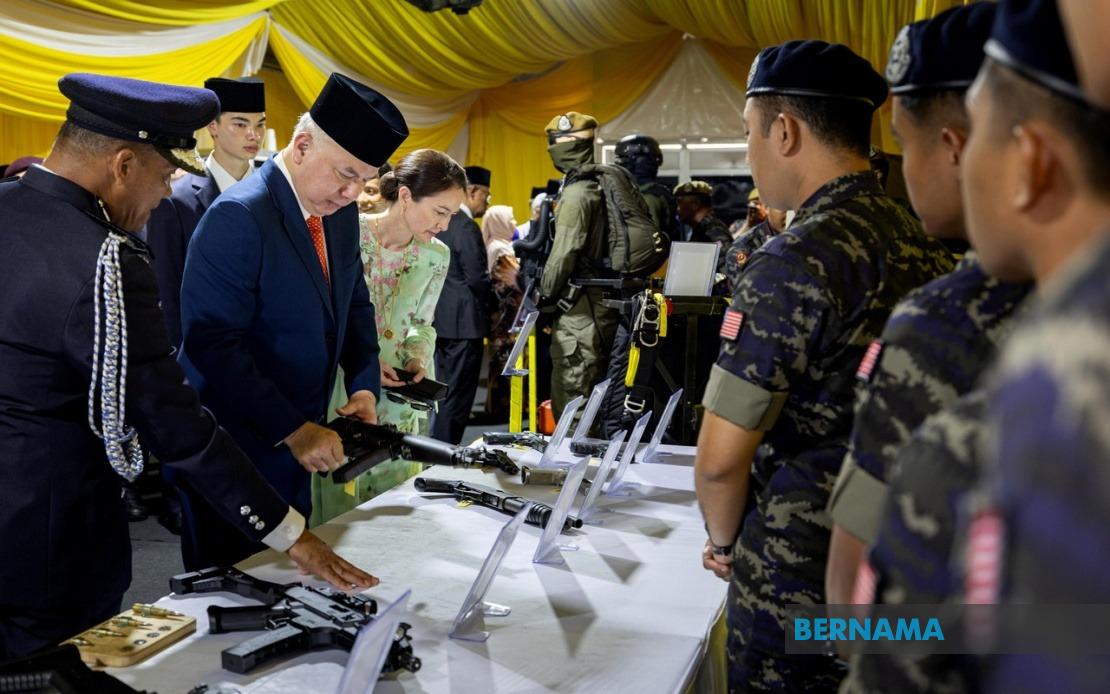
The Sultan of Perak, Sultan Nazrin Shah, formally inaugurated the Sultan Nazrin Shah 69 Commando Camp in Ulu Kinta on July 7, marking a significant milestone for Malaysia's security infrastructure. The ceremony drew senior government and royal officials, including Home Minister Datuk Seri Saifuddin Nasution Ismail and Inspector-General of Police Tan Sri Mohd Khalid Ismail, underscoring the national importance attributed to the facility's opening. The attendance of the Raja Permaisuri, Raja Muda, and Raja DiHilir alongside Menteri Besar Datuk Seri Saarani Mohamad reflected both state and federal commitment to the project.
The new base represents a cornerstone of the MADANI Government's strategic vision for bolstering Malaysia's defence and security apparatus. According to Saifuddin Nasution, the camp embodies the administration's dedication to equipping the nation's security forces with cutting-edge facilities and training infrastructure capable of addressing contemporary threats. In an era of increasingly sophisticated security challenges—from terrorism to cross-border incursions—having a purpose-built facility reflects a deliberate policy choice to invest in preparedness rather than reactive responses. The Home Minister emphasised that such infrastructure ensures Malaysia's security personnel maintain operational readiness across multiple threat domains.
Malaysia's standing in global security metrics provides context for this investment. The country currently ranks 12th among 163 nations in the Global Peace Index, a distinction Home Minister Saifuddin Nasution identified as a source of national pride. This ranking reflects decades of security force professionalism and institutional capacity-building, though it also carries expectations of sustained excellence. The opening of a modern commando facility signals confidence in maintaining—and improving—this position amid regional and global security dynamics that continue evolving unpredictably.
The 69 Commando unit itself carries a distinguished operational history spanning over five decades since its establishment in 1969. The unit's operational resume encompasses some of Malaysia's most critical security operations, from sustained counter-insurgency campaigns against communist elements to high-profile interventions in contemporary crises. The Al-Maunah incident in 2000, which involved armed militants attempting to seize weapons and attack a government establishment, tested the unit's counter-terrorism protocols. Later, the unit deployed to Lahad Datu, Sabah, during Ops Daulat in 2013, confronting armed incursion and reinforcing sovereignty over disputed maritime boundaries. The unit's involvement in securing the MH17 investigation site in 2014 demonstrated its versatility beyond traditional combat roles.
Beyond headline operations, the 69 Commando has developed specialised expertise in hostage rescue, counter-terrorism intelligence operations, and responding to high-risk security incidents demanding precision and tactical sophistication. This institutional knowledge, accumulated through real-world deployments and training, makes the unit a critical asset in Malaysia's security architecture. The decision to honour the unit with a purpose-built facility named after the reigning Sultan underscores official recognition of these contributions and the sacrifices personnel have endured.
The Sultan Nazrin Shah Camp itself represents substantial public investment. Constructed at a cost exceeding RM206 million across a 338-hectare site in Perak's Ulu Kinta region, the facility incorporates comprehensive planning to address operational, training, and administrative requirements identified through consultation with security professionals. The scale of land allocation—338 hectares—allows for diversified training environments simulating varied operational scenarios, from jungle operations to urban tactical engagements. The facility's formal handover to the Royal Malaysia Police in 2024 establishes clear operational stewardship and integration within the broader police command structure.
For Southeast Asian observers, this development carries broader implications regarding Malaysia's security posture and strategic priorities. The region faces persistent challenges ranging from maritime piracy and human trafficking to terrorism and transnational crime. A modernised, well-equipped commando unit enhances Malaysia's capacity to address these threats independently while contributing to regional security cooperation frameworks. The camp's existence strengthens ASEAN's collective security capabilities by ensuring one of the bloc's economically significant members maintains robust internal security.
The facility also represents strategic thinking about personnel retention and capability development. A modern base with contemporary training infrastructure, recreational amenities, and professional working conditions enhances recruitment and retention of skilled personnel. Security force professionalism depends fundamentally on attracting capable individuals willing to pursue demanding careers in challenging environments. By providing world-class facilities, Malaysia signals commitment to valuing its security personnel, potentially improving competitiveness in attracting talent competing against private sector opportunities.
Home Minister Saifuddin Nasution framed the camp as more than infrastructure, describing it as symbolic recognition of accumulated sacrifice by generations of commando personnel. This characterisation carries weight in organisational cultures where institutional memory and esprit de corps prove essential to mission success. The naming convention honouring Sultan Nazrin Shah elevates the facility's symbolic significance within Malaysian civil-military relations, embedding it within traditions of royal patronage toward security institutions.
Looking forward, the facility's role extends beyond current operational requirements. Saifuddin Nasution identified the camp as a platform for nurturing successive generations of commando personnel capable of perpetuating institutional excellence. This generational perspective proves crucial for organisations dependent on knowledge transfer and cultural continuity. Training infrastructure shapes how personnel conceptualise problems, develop solutions, and adapt doctrine to emerging circumstances. A modern facility facilitates advanced training methodologies, potentially including simulation technologies and multinational exchange programmes.
The camp's operational footprint across 338 hectares also accommodates future expansion and adaptation as security challenges evolve. Flexibility in facility design allows incorporation of emerging training technologies—whether unmanned systems, cyber-physical defence, or advanced intelligence analysis tools. This forward-thinking approach distinguishes the investment from merely constructing static infrastructure, positioning it instead as a platform for continuous capability evolution.
The convergence of royal patronage, government investment, and military modernisation evident at the opening ceremony underscores Malaysia's institutional commitment to professionalising security forces. As regional security dynamics shift and transnational threats proliferate, nations increasingly recognise that security depends on sustained investment in personnel, equipment, and infrastructure. The Sultan Nazrin Shah Camp embodies this recognition, providing tangible evidence that Malaysia's leadership prioritises security preparedness as foundational to broader development objectives.

