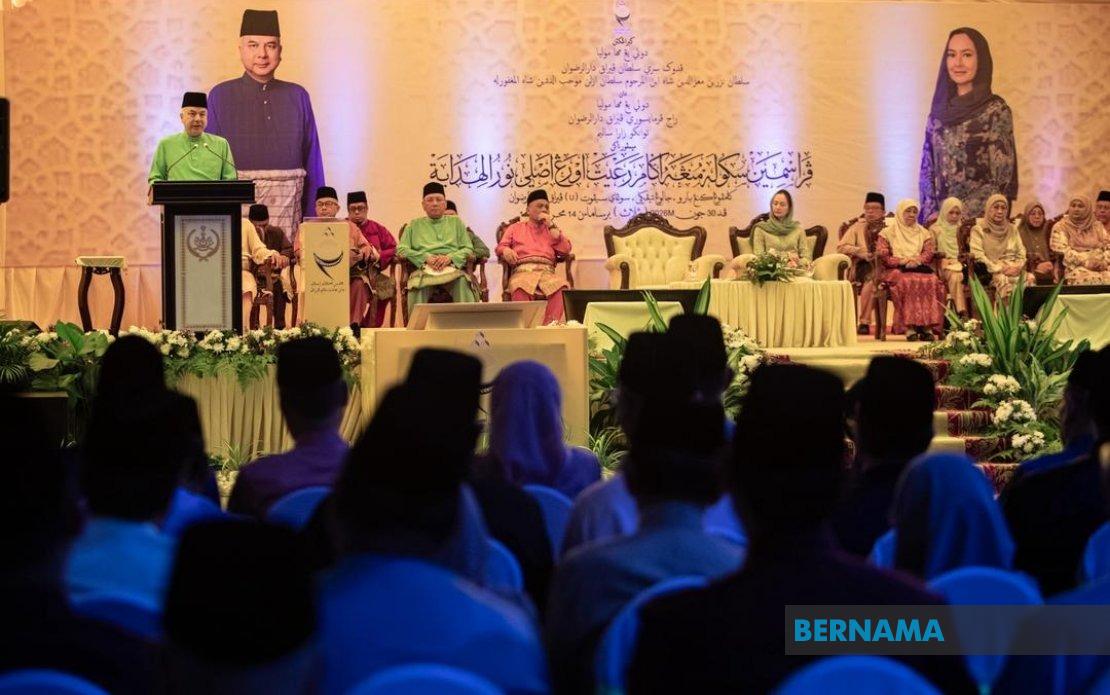
Sultan Nazrin Shah, the Sultan of Perak, formally inaugurated Sekolah Menengah Agama Rakyat (SMAR) Orang Asli Nurul Hidayah in Kampung Kenang, Sungai Siput Utara on June 30, recognising the institution as a watershed moment in advancing educational opportunities and human resource development specifically tailored for the state's Orang Asli population. The ceremonial opening underscores the Malaysian monarchy's continued engagement with marginalised communities and reflects broader state-level initiatives aimed at narrowing educational gaps among indigenous groups.
The royal delegation extended beyond the Sultan, encompassing Raja Jaafar Raja Muda Musa and Raja Iskandar Dzurkarnain Sultan Idris Shah, signalling the significance of the occasion within Perak's administrative hierarchy. State leadership including Menteri Besar Datuk Seri Saarani Mohamad attended alongside religious and educational officials. This multi-layered official presence demonstrates institutional commitment to the school's mission and the underlying policy framework supporting indigenous education advancement.
SMAR Orang Asli Nurul Hidayah holds the distinction of being Malaysia's inaugural Islamic secondary school specifically established for Orang Asli learners, representing a strategic pivot in addressing educational disparities within indigenous communities. The institution emerged from more modest origins, initially functioning as a dakwah and fardu ain learning centre before evolving into a comprehensive educational establishment combining academic curriculum with Islamic religious instruction. This developmental trajectory reveals deliberate institutional expansion driven by demonstrated community demand and recognisable educational outcomes.
Sultan Nazrin articulated education's transformative potential beyond conventional classroom parameters, framing the school's existence as a substantial long-term investment securing generational advancement for Orang Asli families. His characterisation of the initiative as transcending mere infrastructure construction reflects deeper philosophical positioning regarding education's role in facilitating social mobility and community development. This rhetorical emphasis aligns with Malaysia's broader national education agenda, which increasingly emphasises equitable access regardless of geographical or socioeconomic location.
The Perak Islamic Religious and Malay Customs Council (MAIPk) emerges as the institutional custodian of this educational mission, demonstrating religious organisations' expanding involvement in targeted community development. The council's commitment extends to implementing the national aspiration of universal educational access, positioning religious institutions as vehicles for addressing systematic inequality affecting marginalised populations. This institutional approach reflects Malaysia's complex governance ecosystem wherein religious bodies assume complementary roles alongside conventional government education systems.
After more than three decades of operation, SMAR Orang Asli Nurul Hidayah has established a documented track record of measurable community impact, with former students returning to serve their communities in educational and awareness-raising capacities. This alumni engagement pattern suggests successful outcomes in both academic achievement and community consciousness development, indicating the school's effectiveness in producing graduates committed to indigenous advancement. The demonstration effect of such educational success models remains particularly significant across Southeast Asia, where indigenous educational outcomes frequently lag national averages.
Sultan Nazrin emphasised that the school's achievements extend across multiple dimensions beyond standardised academic metrics, specifically highlighting students' preservation of Islamic values, character development and moral formation. This holistic educational framework reflects Malaysian Islamic pedagogical philosophy, wherein intellectual development remains inseparable from spiritual and ethical dimension cultivation. The Sultan's particular recognition of students' demonstrated character qualities acknowledges education's formative role in shaping future community leaders and responsible citizens within Orang Asli societies.
The Sultan articulated a comprehensive educational philosophy positioning knowledge acquisition within integrated frameworks encompassing intellectual, spiritual, emotional and physical development. This multidimensional conceptualisation departs from narrower knowledge-transfer models, instead emphasising education's capacity to cultivate informed, values-grounded individuals capable of meaningful societal contribution. His articulation reflects contemporary educational discourse emphasising holistic human development, increasingly influential across Southeast Asian education policy spheres.
Education's positioning as the fundamental mechanism for unlocking societal progress carries particular salience within indigenous development contexts, where educational attainment correlates strongly with economic opportunity, health outcomes and social capital accumulation. The Sultan's emphasis on education strengthening identity and elevating societal dignity acknowledges education's significance for historically marginalised populations, whose advancement often requires simultaneous cultural preservation and contemporary skill development. This balance remains central to ethical indigenous development policy throughout the region.
The new infrastructure investments supporting SMAR Orang Asli Nurul Hidayah represent tangible governmental commitment extending beyond rhetorical commitments toward indigenous populations. Enhanced educational facilities potentially improve teaching quality and student learning experiences, with facilities commonly correlating with educational outcomes. For Malaysian policymakers and neighbouring Southeast Asian governments wrestling with indigenous educational equity challenges, the Perak initiative offers evidence-based demonstration of systematic investment potential.
The school's integrated curriculum combining religious education with academic subjects addresses a particular gap within Malaysia's educational landscape, wherein indigenous students historically encountered tension between maintaining cultural-spiritual identity and pursuing mainstream academic advancement. SMAR Orang Asli Nurul Hidayah's institutional model suggests possible pathways for culturally-responsive education that neither marginalises indigenous students nor compromises rigorous academic standards, a reconciliation many indigenous populations worldwide continue pursuing.
Looking forward, the Sultan's hopeful projections regarding the school's continued development suggest sustained institutional support and resource allocation. His emphasis on nurturing academically excellent yet morally grounded future generations provides institutional direction whilst establishing measurable success criteria beyond examination performance. For the Orang Asli communities of Kampung Kenang and surrounding areas, SMAR Orang Asli Nurul Hidayah represents tangible embodiment of educational opportunity previously unavailable within their immediate geographical and cultural context, potentially catalysing broader community advancement and generational trajectory improvement across multiple development indicators.

