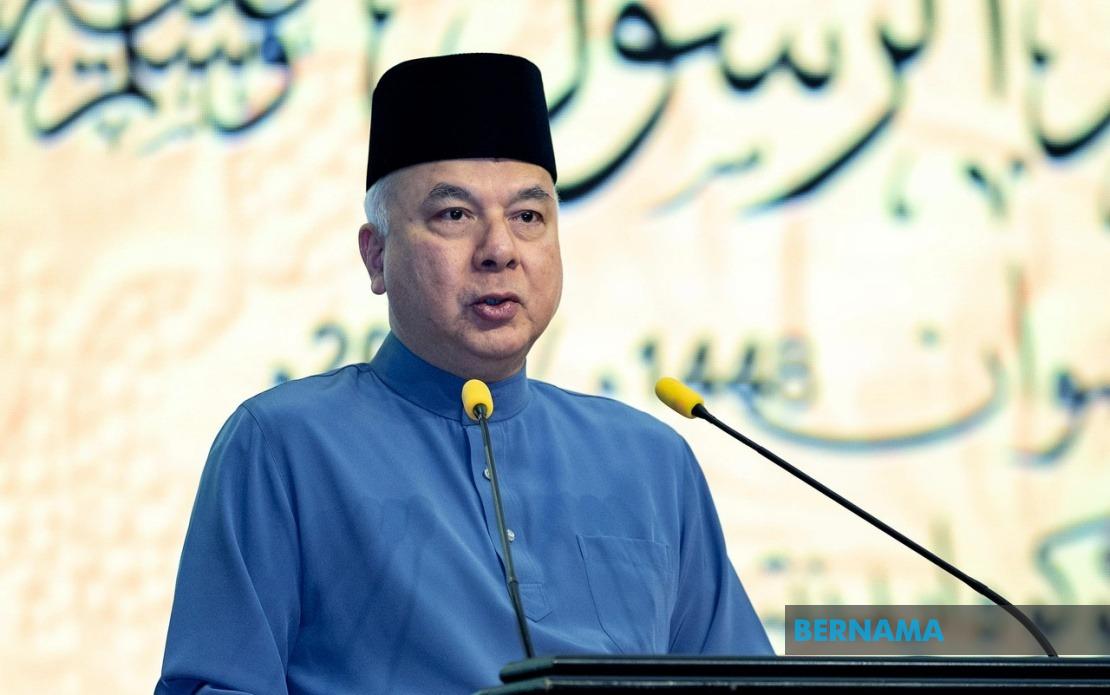
The Sultan of Perak, Sultan Nazrin Shah, has issued a pointed call for greater cohesion within the Muslim community, warning that internal fractures along political, sectarian, and personal lines are weakening the foundations of Islamic unity. Speaking at the Perak-level Maulidur Rasul celebration in Ipoh on August 25, the Sultan articulated concerns that resonate beyond Perak's borders, touching on tensions affecting Muslim-majority societies throughout Southeast Asia where competing interests frequently overshadow collective wellbeing.
According to Sultan Nazrin, the contemporary Muslim world faces multifaceted pressures that exploit existing fissures. Beyond the traditional challenges arising from theological differences between Islamic schools of thought and ethnic considerations, the Sultan identified the pursuit of material advancement, political influence, and hierarchical position as particularly corrosive forces. These material preoccupations, he suggested, have gradually eroded the foundational Islamic principle of brotherhood, replacing it with a transactional worldview where individual gain takes precedence over communal welfare.
The Sultan's diagnosis extends to the structural level, where he specifically addressed Muslim leaders, Islamic organisations, and religious movements. His admonition against "unnecessary disputes" and the minimisation of political rivalry carries significant weight given Malaysia's experience with intra-Muslim political competition and the tension between secular governance and religious authority. The call represents a subtle but significant intervention into the Malaysian political landscape, where Muslim-majority parties frequently contend for dominance while claiming to speak for Islam.
Importantly, Sultan Nazrin did not frame his address as a pessimistic indictment but rather as an appeal to redirect energy toward constructive endeavours. He highlighted existing positive developments that merit expansion and deeper implementation. Islamic economics and finance represent particularly noteworthy examples, as these fields offer frameworks for integrating religious principles with contemporary commerce—an approach increasingly vital as Southeast Asian economies grow more complex. The Sultan's mention of the halal industry acknowledges both its economic significance and its role as a bridge between Islamic identity and global commerce.
The reference to waqf—Islamic charitable endowments—indicates recognition of mechanisms that historically sustained Muslim communities and continue to offer sustainable models for social welfare independent of political structures. Similarly, his emphasis on digital dakwah (Islamic outreach) acknowledges that contemporary religious engagement must operate within the technological ecosystems where younger Muslims increasingly congregate. These specific examples suggest the Sultan's perspective transcends reactionary nostalgia, instead proposing that Islamic identity and modern progress need not be incompatible.
Family institution strengthening emerges as another priority the Sultan identified. This focus carries particular relevance for Malaysia and the broader region, where rapid urbanisation, economic pressures, and social media penetration have disrupted traditional family structures. By positioning family reinforcement alongside digital and financial innovation, the Sultan presents a holistic vision where modernisation enhances rather than replaces established Islamic social architecture.
The second major theme of Sultan Nazrin's address concerns the relationship between Islamic identity and globalisation. He articulated concern that exposure to international popular culture, entertainment, and contemporary lifestyles—facilitated by social media and digital technology—poses genuine threats to Muslim self-conception and adherence to Islamic principles. This concern reflects anxieties widespread among religious leaders across Southeast Asia, where younger generations navigate multiple cultural identities and value systems simultaneously.
However, the Sultan rejected a binary choice between preservation and progress, instead advocating for strategic balance. His formulation—that modernisation should not erode Islamic principles, yet progress should not be abandoned—reflects mature statecraft. This position acknowledges that isolation from global developments is neither feasible nor desirable, while insisting that engagement with modernity requires deliberate, thoughtful strategies to maintain cultural and religious coherence.
The Sultan's assertion that "wise approaches and strategies" are necessary represents an implicit critique of both reactionary rejection of modernity and uncritical embrace of Western cultural frameworks. For Malaysian policymakers and religious authorities, this represents a sophisticated acknowledgment that countering Western cultural dominance requires not prohibition but the development of compelling Islamic alternatives in education, entertainment, economics, and social life. The region's growing Islamic fintech sector and halal product innovation demonstrate how this philosophy translates into practical action.
The presence of high-ranking state officials including Raja Permaisuri Tuanku Zara Salim, Raja Muda Raja Jaafar, and Menteri Besar Datuk Seri Saarani Mohamad underscored the institutional weight behind the Sultan's message. In Malaysia's constitutional monarchy system, such ceremonial presence alongside substantive royal address carries political significance, signalling that religious and secular state authorities align on the importance of Muslim unity and strategic modernisation.
Sultan Nazrin's intervention arrives at a moment when Muslim societies across Southeast Asia face mounting pressures from political fragmentation, ideological competition, and rapid social change. His prescription—concentrating leadership attention on shared Islamic projects rather than political competition, while deliberately cultivating Islamic responses to modern challenges—offers a framework applicable beyond Perak. For Malaysia particularly, where political Islam remains contested territory and Muslim-majority parties compete for religious legitimacy, the Sultan's emphasis on substance over sectarian rivalry carries implicit commentary on contemporary political divisions.
The challenge, as Sultan Nazrin implicitly acknowledged, lies not in articulating these principles but in operationalising them. Political leaders must genuinely subordinate factional interest to communal benefit—a requirement that runs counter to competitive democratic logic. Religious organisations must coordinate initiatives across traditional boundaries of doctrine and ethnicity. Families must consciously transmit Islamic values within digitally-mediated environments. These represent formidable undertakings requiring sustained commitment and structural innovation, not merely rhetorical agreement on principles.

