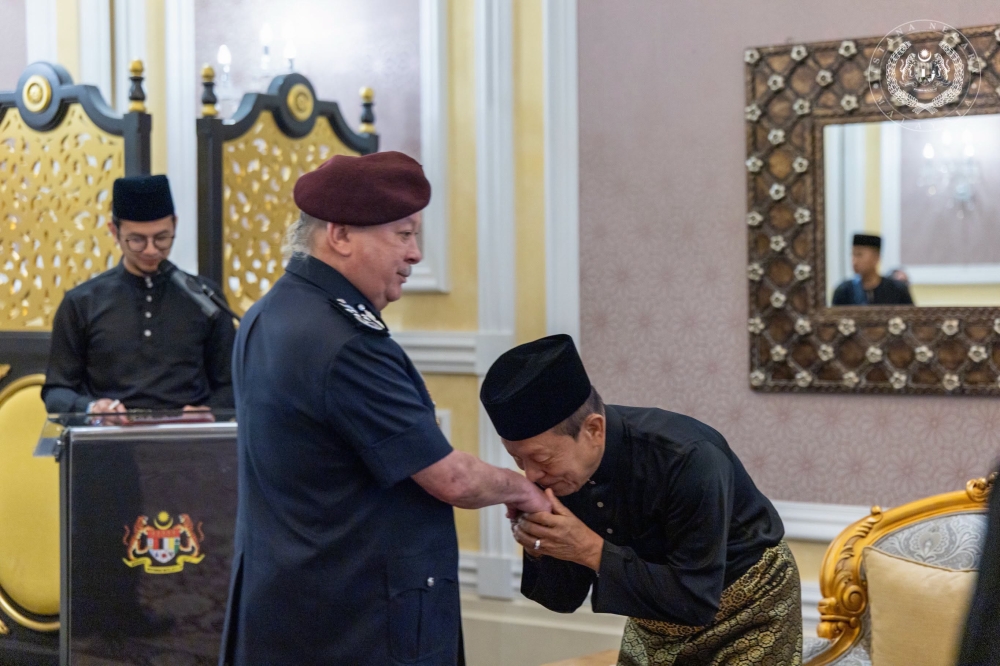
His Majesty Sultan Ibrahim, King of Malaysia, received a comprehensive briefing from Malaysian Anti-Corruption Commission chief Abdul Halim Mustapha on July 14, marking a significant moment of direct engagement between the monarchy and the nation's premier anti-graft agency. The audience, granted at Istana Negara, underscores the royal institution's continued interest in the country's fight against corruption and institutional accountability at the highest levels of governance.
The MACC chief's presentation to the King focused on the commission's recent operational milestones and strategic initiatives designed to strengthen Malaysia's anti-corruption framework. Such briefings represent an important channel through which the royal institution maintains oversight of critical national institutions and their progress in fulfilling their mandates. The meeting reflects the systematic way in which the King engages with heads of major constitutional bodies to stay informed about governance and institutional performance.
For Malaysian readers, this audience carries particular significance in the context of broader institutional reform and public confidence in anti-corruption mechanisms. The MACC has long operated at the intersection of public expectations and political sensitivities, tasked with investigating high-level misconduct while navigating the complex landscape of Malaysian politics. Regular engagement with the monarchy signals institutional independence and the separation of powers that are foundational to effective governance.
The timing of this briefing, occurring mid-July, suggests the MACC may have been sharing quarterly updates or recent developments from ongoing investigations and compliance initiatives. While specific details of the discussion remain confidential, such audiences typically cover enforcement statistics, investigation outcomes, strategic challenges faced by the commission, and resource requirements. These interactions allow the King to discharge his constitutional role as guardian of institutional integrity without interfering in operational matters.
The MACC's position as an independent constitutional body has been strengthened over successive administrations, though questions about its operational autonomy have periodically surfaced in public discourse. Direct access to the King provides the commission with a mechanism to communicate concerns or requirements at the highest level of the state, separate from political or executive channels. This institutional arrangement reflects Malaysia's constitutional separation between the monarchy and the government of the day.
From a regional perspective, Malaysia's anti-corruption infrastructure continues to be a reference point for governance standards in Southeast Asia. The MACC's effectiveness influences international perceptions of Malaysia's commitment to transparency and rule of law, factors that affect foreign investment confidence and diplomatic relationships. The King's active engagement with the commission sends a signal about the seriousness with which Malaysia's highest institution views the fight against corruption.
The briefing also comes against a backdrop of evolving challenges to anti-corruption enforcement, including increasingly sophisticated methods of graft, cross-border financial flows, and the need to adapt to digital-age corruption schemes. The MACC has had to develop capacity in forensic accounting, digital investigation, and international cooperation. Updates on these areas would naturally form part of a comprehensive briefing to the King about the commission's operational landscape.
Stakeholders in civil society, business, and governance spheres have long advocated for strengthened institutional independence and resources for anti-corruption bodies. The visibility of the MACC chief directly engaging with the monarchy at such a formal level provides reassurance to these constituencies that the anti-corruption framework remains a priority at the apex of the state. Public consciousness of such institutional engagements contributes to the perception of integrity within government structures.
The audience demonstrates the constitutional monarchy's continuing role in Malaysia's governance architecture beyond ceremonial functions. The King's engagement with heads of constitutional institutions, including the MACC, reflects a substantive dimension to the monarchy's role as keeper of the Constitution and guardian of institutional welfare. These meetings, while not driving day-to-day policy, provide a mechanism for institutional accountability that sits outside the normal executive chain of command.
Looking ahead, the MACC faces ongoing demands to enhance its investigative capacity while maintaining public confidence in its impartiality. The commission's ability to pursue high-profile cases effectively while avoiding perceptions of political bias remains central to its credibility. Regular engagement with the King helps ensure that the commission's independence is recognized and protected at the highest level, regardless of which political administration holds office at any given moment.
The briefing underscores that Malaysia's anti-corruption efforts remain a matter of state importance, engaging not only the executive and judicial branches but also the royal institution. This multi-layered institutional engagement reflects the constitutional design of checks and balances that characterize Malaysia's system of governance. As the country continues to navigate complex economic and social changes, maintaining robust anti-corruption mechanisms and ensuring their institutional protection remains essential to building sustained public trust in governance.

