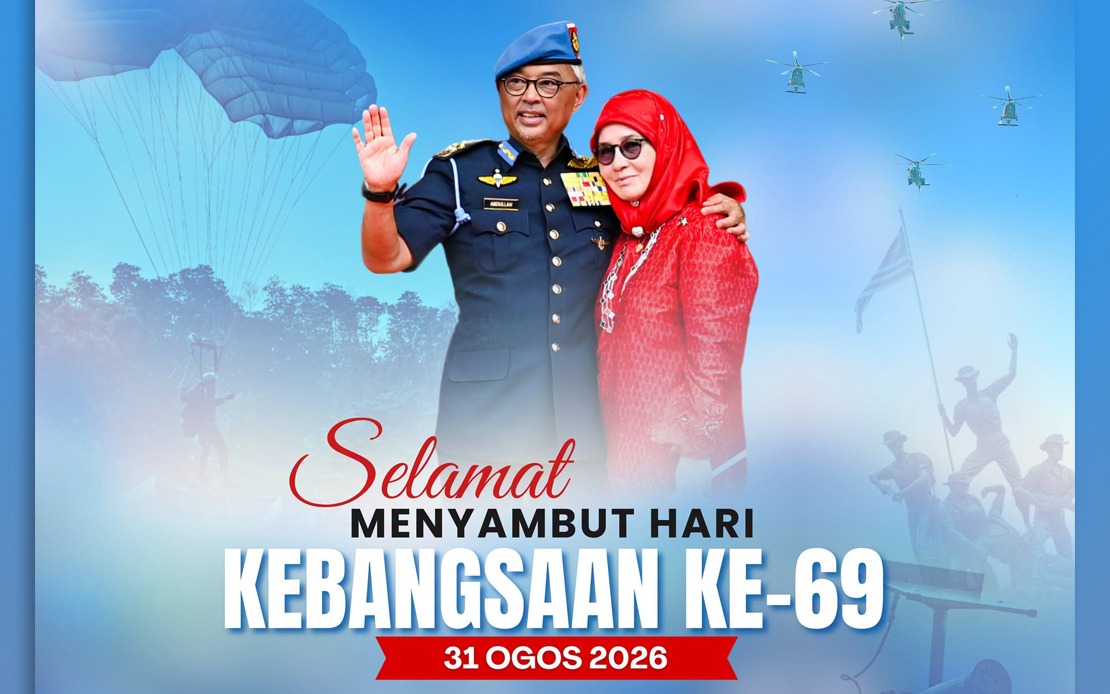
The Sultan of Pahang Al-Sultan Abdullah Ri'ayatuddin Al-Mustafa Billah Shah and Tengku Ampuan Pahang Tunku Azizah Aminah Maimunah Iskandariah have extended their warm wishes to the people of Pahang on Malaysia's 69th National Day, calling for continued commitment to the principles that have sustained the nation since independence. Their message, released through the Pahang Sultanate's official social media channels, underscores the importance of preserving the nation's hard-won sovereignty while strengthening the bonds of unity among its citizens.
In their statement, the royal couple expressed profound gratitude to Allah for bestowing upon the Malaysian people nearly seven decades of peace, prosperity, and social cohesion. This framing reflects a common theme in Malaysian National Day messaging, where rulers emphasize divine blessing alongside human effort in sustaining the nation's stability. For Pahang specifically, the acknowledgement of these blessings carries particular weight given the state's role in Malaysia's political landscape and its historical significance to the federation.
The Sultan and Tengku Ampuan stressed that Malaysia's independence and national sovereignty represent sacred responsibilities that require collective stewardship across all segments of society. This articulation moves beyond ceremonial rhetoric to address a fundamental tension in Malaysian governance: the need to balance individual freedoms with collective national interest. By framing sovereignty as a "great trust," the royal message invokes both accountability and shared ownership, concepts that resonate deeply within Malaysia's constitutional monarchy framework.
Central to their appeal is an emphasis on the triumvirate of unity, mutual respect, and tolerance as the bedrock upon which national stability rests. These principles, the couple noted, must inform how Malaysians interact across the lines of ethnicity, religion, and socioeconomic status. For a nation as diverse as Malaysia, and particularly for Pahang with its own multicultural communities, this message carries practical implications for how citizens navigate daily coexistence and civic participation.
The royal pair explicitly encouraged all residents of Pahang to internalize and practise the Rukun Negara—the five national principles enshrined in Malaysia's constitution: belief in God, loyalty to the monarchy, upholding the constitution, rule of law, and good conduct. By tying patriotic sentiment to these foundational pillars, the message bridges ceremonial expression with constitutional governance. This approach underscores how Malaysia's rulers view their role not merely as symbolic figureheads but as custodians of the constitutional order.
Significantly, the Sultan and Tengku Ampuan directed their call toward younger generations, urging them to develop deeper appreciation for the historical struggles that preceded independence. This generational emphasis reflects growing concern among Malaysia's leadership about whether successive cohorts maintain connection to the narratives and sacrifices that shaped the nation. For younger Malaysians, particularly in Pahang, this message invites engagement with heritage preservation as an active, ongoing responsibility rather than passive inheritance.
The couple's hopes extended to the broader cultural and social dimensions of the nation, calling for continued vigilance in safeguarding Malaysia's diverse heritage and fostering intercommunal harmony. In the context of contemporary Southeast Asia, where several nations grapple with ethno-religious tensions, Malaysia's royal institutions have positioned themselves as advocates for pluralism and coexistence. This positioning reinforces Malaysia's international reputation as a multicultural success story, though domestic challenges persist.
The message concluded with a prayer for Pahang's continued blessing with peace, prosperity, and general wellbeing under divine protection. This closing invocation completes a rhetorical arc from gratitude for past blessings to appeal for sustained virtues in the present to hope for future flourishing. Such formulations appear regularly in official state communications across Malaysia and reflect the deep integration of Islamic concepts into the monarchy's public communications, a constitutional feature particular to Malaysia's system.
For Malaysian and regional observers, this National Day message from Pahang's royal leadership encapsulates broader themes preoccupying the nation at its current juncture. As Malaysia navigates post-pandemic recovery, managing an increasingly complex political landscape, and addressing socioeconomic disparities, the emphasis on unity and patriotic renewal serves as a reminder of the constitutional frameworks and civic virtues upon which the nation depends. The specific focus on intergenerational responsibility also signals awareness that Malaysia's stability and prosperity cannot be assured without active engagement from younger citizens in both understanding and advancing national values.

