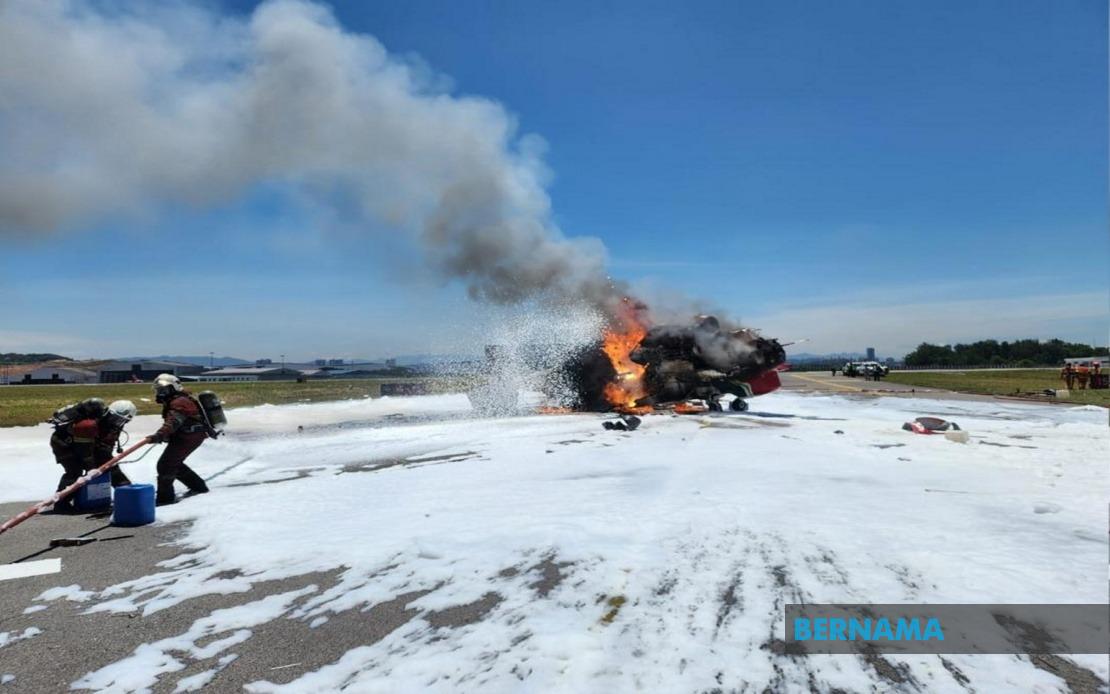
The runway at Sultan Abdul Aziz Shah Airport in Subang resumed normal air traffic operations on Thursday afternoon, roughly two and a half hours after a helicopter fire forced officials to shut down the facility. The incident, which unfolded during routine maintenance work, prompted authorities to suspend all departures and arrivals as a precautionary measure while emergency response teams assessed the situation and cleared the taxiway.
According to Malaysian Civil Aviation Authority (CAAM) chief executive officer Capt Datuk Norazman Mahmud, the runway reopened for scheduled traffic at 2.57 pm following a comprehensive inspection of the affected area. Passengers caught up in the disruption were advised to liaise directly with their carriers for the most current information regarding their journey status and any necessary rebooking arrangements.
The explosive incident involved a Kamov KaV-32S helicopter registered to a Ukraine-based operator. The aircraft ignited during a ground-based engine run-up test—a critical maintenance procedure designed to verify helicopter systems and engine performance before flight operations. The fire erupted at 12.28 pm in the afternoon at Taxiway Victor, a designated aircraft movement area within the airport's operational zone.
The helicopter was being serviced as part of routine maintenance activities when the engine malfunction triggered the explosion. Four Ukrainian nationals, including the pilot and co-pilot along with two additional crew members, were present during the testing phase. The incident resulted in one crew member sustaining minor injuries from debris that became airborne during the blast, though all personnel were safely evacuated from the immediate vicinity.
The temporary runway closure, though relatively brief in operational terms, created noticeable disruptions to regional air traffic. CAAM records indicated that eight aircraft scheduled to land at Subang were diverted to alternative airports in the vicinity, while three flights preparing for departure were held at their gates pending runway availability. These diversions and delays reflected the critical importance of Sultan Abdul Aziz Shah Airport as a regional aviation hub serving the Klang Valley metropolitan area.
The airport's electronic flight information displays were updated throughout the afternoon to reflect revised arrival and departure schedules as operations gradually normalized. Airlines operating from the facility proactively communicated schedule changes to affected passengers, though the relatively swift resumption of operations minimized prolonged passenger inconvenience.
The incident at Subang highlights ongoing safety considerations in aviation maintenance operations across Southeast Asia's busy airspace. Helicopter maintenance, particularly engine run-up procedures, involves inherent risks that require strict adherence to international safety protocols and regular equipment inspections. The presence of foreign operators conducting maintenance at Malaysian airports underscores the region's role as an international aviation service hub.
CAMM's rapid response in both securing the area and authorizing runway reopening demonstrated established emergency procedures at the facility. The authority's coordination with airport operations teams and airlines ensured that traffic flow resumed without extended gridlock, a critical concern for an airport serving both commercial and general aviation interests.
The incident comes as Malaysian aviation authorities continue monitoring compliance with international maintenance standards across all registered operators using domestic facilities. While such engine-related incidents during ground testing remain relatively uncommon, they underscore the importance of comprehensive pre-flight verification procedures and robust safety protocols that protect both personnel and airport infrastructure.
For regional aviation stakeholders, the Subang incident serves as a reminder of the complex safety ecosystem required to maintain seamless operations at busy metropolitan airports. The rapid containment and resolution of this situation reflected established coordination mechanisms between civil aviation authorities, airport management, emergency services, and individual carriers operating from the facility.

