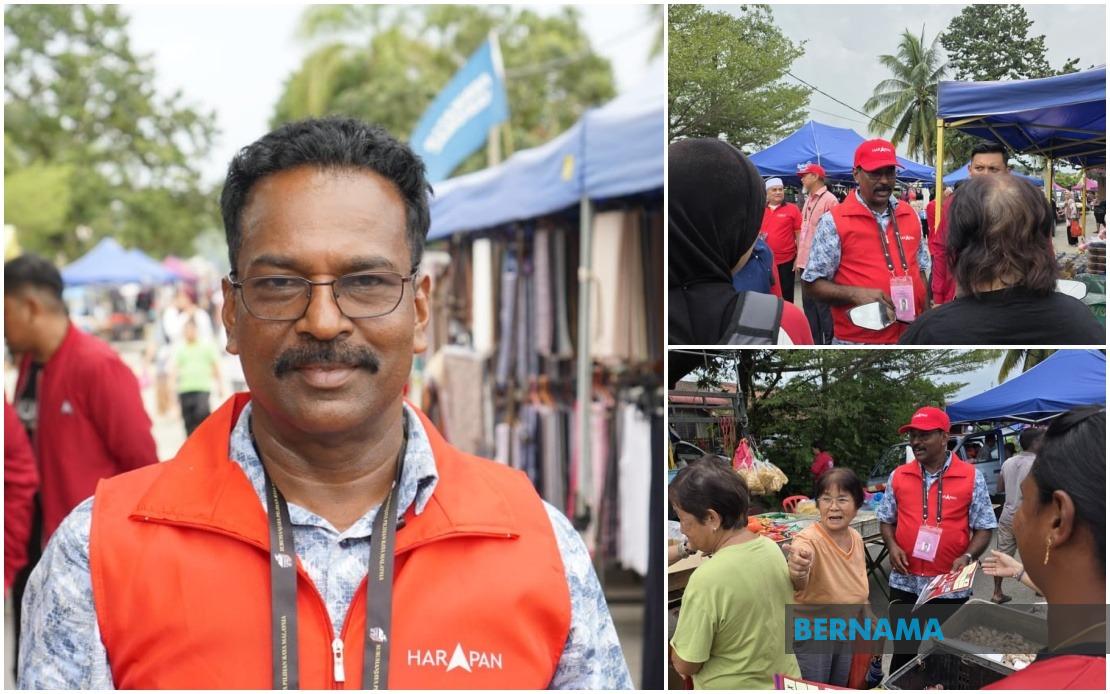
C. Subramani, the Pakatan Harapan candidate contesting the Bukit Kepong seat in the 16th Johor state election, is banking on a groundswell of support from residents yearning for meaningful development and improved governance. Speaking during the campaign, the Pagoh native expressed confidence in his prospects despite facing a three-cornered contest against Barisan Nasional and Perikatan Nasional representatives. His optimism stems from sustained engagement with voters throughout the campaign period, which has revealed widespread appetite for change within the constituency.
The candidate's strategy centres on leveraging enhanced collaboration between Johor's state administration and the federal government in Kuala Lumpur. Subramani argues that such alignment would substantially improve the efficiency with which local problems are addressed, particularly those requiring intervention from federal agencies or ministerial attention. This governance argument resonates with a constituency that has historically faced coordination challenges between different tiers of administration, a common complaint across Malaysian states seeking to expedite development projects.
During his intensive ground campaign, Subramani has undertaken numerous visits to settlements and communities throughout Bukit Kepong, including targeted engagement with four Orang Asli communities. These interactions have illuminated critical infrastructure deficiencies and socioeconomic constraints affecting residents in ways that statistical reports and bureaucratic surveys often fail to capture. The exercise has provided him with concrete evidence of on-the-ground realities, from inadequate transportation networks to limited social services, which form the basis of his campaign platform.
Education facilities and agricultural infrastructure feature prominently in Subramani's development agenda. He has identified irrigation and drainage problems as issues that transcend state jurisdiction and would benefit from the coordinated intervention he proposes. By channelling such matters directly to relevant federal ministers or the Prime Minister's office—contingent on government alignment—he contends that Bukit Kepong can break free from the bureaucratic delays that have constrained progress.
Among his economic revitalisation proposals is the transformation of Bukit Kepong Gallery into a heritage and cultural tourism destination. This initiative aims to diversify the local economy beyond conventional sectors whilst celebrating the constituency's historical significance. Such tourism-focused development represents an increasingly common strategy in Malaysian constituencies seeking sustainable economic growth without heavy industrial investment.
Subramani has also prioritised quality-of-life improvements that directly affect daily living standards. Poor street lighting in numerous areas creates safety concerns, particularly for evening commuters and residents in rural sections. Narrow bridges throughout the constituency restrict traffic flow and hamper emergency vehicle access, creating both economic inefficiency and public health risks. Additionally, affordable housing for the B40 income group remains critically scarce, mirroring a nationwide challenge that has become a significant electoral issue.
The candidate's political experience, having previously contested the Buloh Kasap seat during the 2022 Johor state election, provides him with established networks and institutional familiarity. This prior electoral engagement, though unsuccessful, has afforded him insights into voter behaviour, ground organisation requirements, and the nuanced political dynamics of Johor constituencies. His continuous engagement with residents beyond electoral cycles has strengthened personal relationships and demonstrated commitment to constituency matters.
The Bukit Kepong contest reflects broader patterns within Malaysian electoral politics, where voter demand for demonstrable development and effective administration increasingly outweighs traditional partisan allegiances. The three-way competition in this constituency mirrors the fractionalised political landscape across Johor, where no single coalition has dominated comprehensively and swing voters hold considerable influence. Such contests frequently produce unexpected outcomes when grassroots momentum builds around candidates perceived as more responsive to community needs.
Statewide, the 16th Johor election encompasses 56 assembly seats contested by 172 candidates, with approximately 2.7 million registered voters participating. This broader electoral context situates Bukit Kepong within a significant statewide contest that carries implications for Johor's governance trajectory and federal-state political balance. Results in constituencies like Bukit Kepong, where voters signal demand for change, often prove pivotal in determining overall state-level outcomes.
Subramani's campaign reflects the evolving Malaysian electorate's emphasis on delivery and pragmatic governance rather than ideological positioning alone. His focus on infrastructure gaps, administrative efficiency, and targeted community engagement addresses voter frustrations that have accumulated through previous election cycles. Whether such grassroots momentum translates into an upset victory will depend on voter turnout and the effectiveness of rival campaigns, but his confidence appears grounded in substantive engagement rather than mere optimism.

