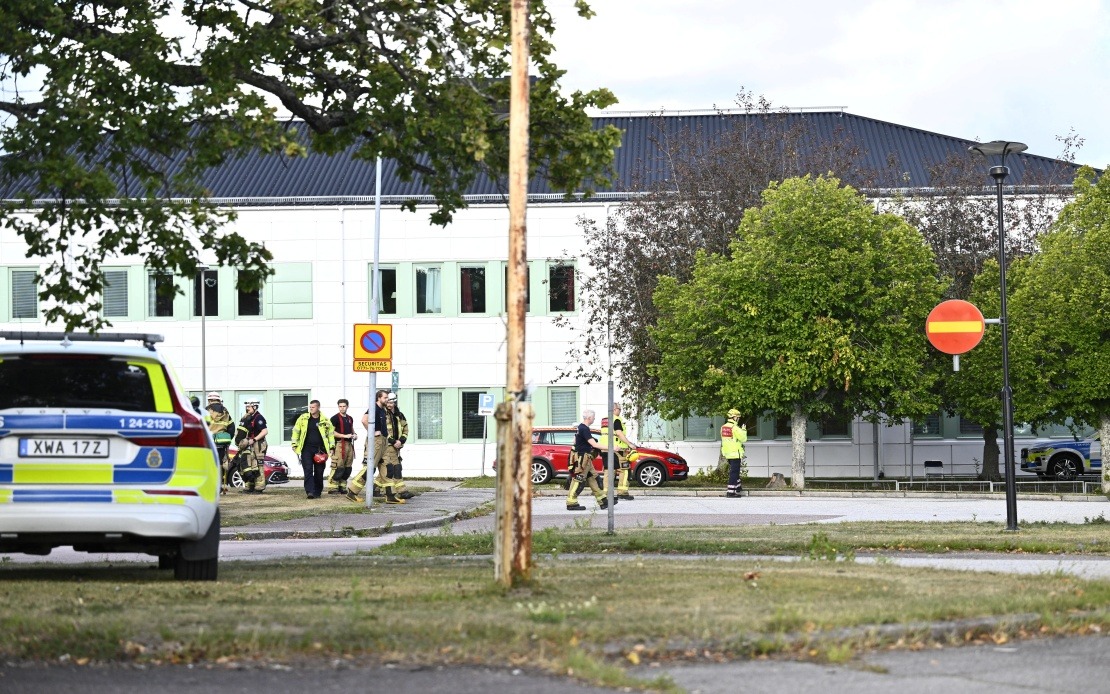
A horrific incident unfolded in central Sweden on August 22 when an armed assailant attacked students at Brinell School in the town of Fagersta, resulting in one death and multiple injuries that have sent shockwaves through the community and prompted a wide-ranging security response. The attack, which occurred at approximately 2.06 pm local time, marks a stark reminder of the school safety concerns that persist across Scandinavian nations and beyond, prompting intense scrutiny from authorities and government officials.
Emergency services and police descended on the Fagersta location following emergency calls reporting an active threat on school grounds. According to accounts from the Fagersta Municipality, the situation rapidly escalated into a full-scale crisis response. Two male victims, both under 18 years old, sustained serious injuries and were reported to be in stable but critical condition following immediate medical intervention. A third individual received treatment for minor injuries sustained during the chaotic moments that followed the initial assault. The swift arrival of emergency personnel likely prevented further casualties, though the circumstances surrounding the violence remain under active investigation.
Authorities have apprehended a suspect identified as an 18-year-old male who police linked to two separate addresses within Fagersta. Significantly, this individual was identified as a former student of Brinell School, suggesting potential familiarity with the institution's layout and student population. The revelation that the perpetrator had previous connections to the school has raised questions about warning signs or behavioural issues that may have preceded the attack. Investigators are now examining the suspect's background and motive in considerable detail.
The security response to the incident extended far beyond the immediate school grounds, reflecting the authorities' determination to prevent any escalation or copycat incidents. Seven educational facilities and public venues across Fagersta were placed under immediate lockdown as a precautionary measure, including Olympen, Fagerstahallen, Risbroskolan, Skogsglantan, Bjorksta, Prastkragen, and Norrbybacken. This widespread closure disrupted educational activities and community services, demonstrating how a single violent act reverberates through an entire town's infrastructure and daily operations.
Sweden's Justice Minister Gunnar Strommer responded to the incident by emphasizing governmental coordination with law enforcement. His statement acknowledged the gravity of the situation while reassuring the public that authorities were maintaining constant vigilance. Strommer noted that police were present at the scene and conducting intensive investigative work, underscoring the official commitment to understanding how such violence occurred and preventing future occurrences. The minister's framing of government-police cooperation as ongoing and active sought to project competence and control during a moment of community trauma.
For regional observers across Southeast Asia, this incident highlights how school violence represents a transnational challenge that affects wealthy, socially stable democracies alongside developing nations. Malaysia and other ASEAN countries have occasionally experienced similar incidents, prompting discussions about mental health services, early intervention programmes, and campus security protocols. The Fagersta attack serves as a sobering example of how even societies with robust social infrastructure can face unexpected security threats in educational settings.
Sweden's strong social support systems and comprehensive mental health resources have historically insulated the nation from the frequency of mass violence seen elsewhere. Yet this incident demonstrates that systemic safeguards, while valuable, cannot eliminate all risk. The fact that an 18-year-old former student carried out the attack suggests that transitional periods—such as the passage from secondary to post-secondary life—may represent particular vulnerability windows. Investigators will likely examine whether the suspect experienced social isolation, academic difficulties, or psychological distress during this critical developmental phase.
The weapon choice itself warrants consideration in the broader context of European violence patterns. Swords and bladed weapons, while less commonly used in mass casualty incidents than firearms, represent an alternative means of inflicting harm in nations with strict gun control regulations. This distinction underscores how the availability of different weapons shapes the nature and methodology of violent acts across different regulatory environments.
The community of Fagersta, a town of approximately 6,000 residents in Västmanland County, now faces the collective trauma of processing a violent attack that struck at the heart of civic life. Schools represent spaces where communities typically feel their children are safeguarded and nurtured; the violation of this sanctuary creates psychological reverberations that extend far beyond the immediate victims' families. Counselling services and psychological support will likely be mobilized across affected institutions and the broader population.
For Malaysian policymakers and educators, the Swedish incident reinforces the importance of developing comprehensive school safety frameworks that balance security measures with maintaining open, welcoming educational environments. The challenge lies in implementing protocols that identify at-risk individuals without creating climate of surveillance or stigmatization. Mental health screening, peer support networks, and clear escalation procedures for concerning behaviours represent evidence-based approaches that have shown promise in various international contexts.
As Swedish authorities continue their investigation into the Fagersta attack, questions will inevitably emerge regarding the sequence of events, any warning indicators that may have been missed, and systemic improvements that could reduce similar risks. The outcome of this investigation will likely influence educational policy discussions not only in Sweden but across Scandinavia and potentially inform international best practices regarding school safety and threat assessment protocols.

