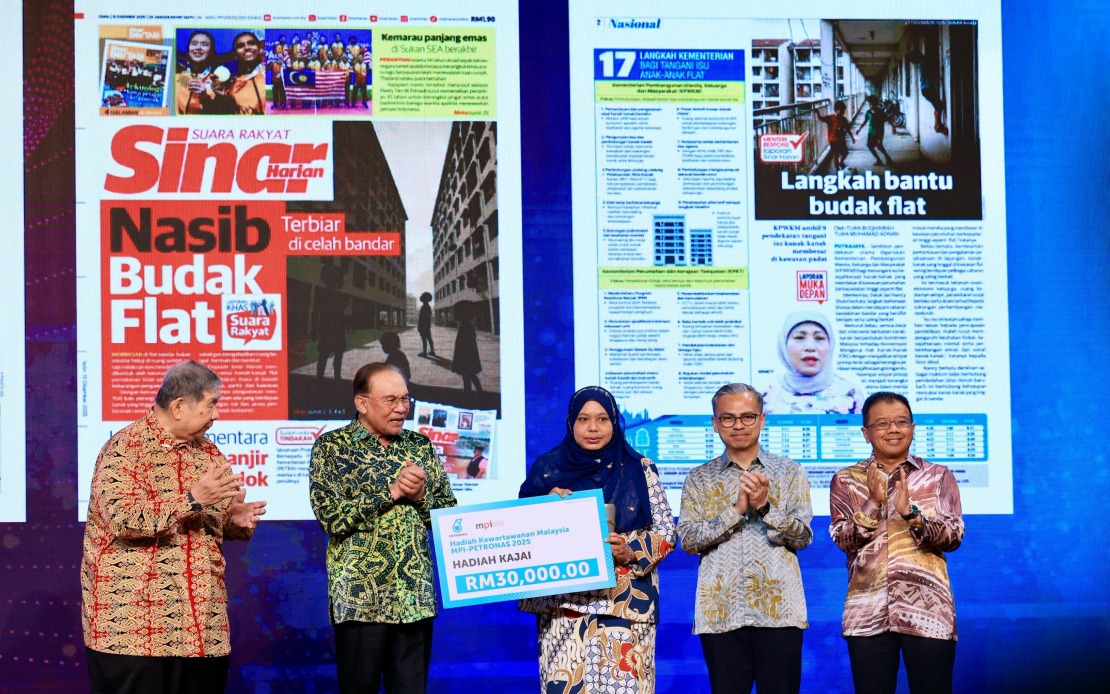
Communications Minister Datuk Seri Fahmi Fadzil has stressed that ethical, independent and responsible media constitute the foundation upon which strong democracies are built and informed societies thrive. Speaking at a prominent gathering of media professionals, Fahmi articulated a vision of journalism as essential infrastructure for democratic governance, one that demands unwavering commitment to truth-telling and integrity in an era increasingly complicated by the proliferation of false information and unreliable narratives.
The minister's remarks came during his attendance at the Malaysian Journalists' Night (MWM) 2026, a marquee event in Malaysia's media calendar where the industry celebrates its practitioners and recognises outstanding contributions to the profession. Accompanying Prime Minister Datuk Seri Anwar Ibrahim, Fahmi witnessed the presentation of the MPI-PETRONAS Malaysian Journalism Awards 2025, which honours excellence across the journalism landscape and serves as a barometer for the quality and influence of contemporary reporting in the nation.
The gathering drew approximately 1,000 participants representing a cross-section of Malaysia's institutional landscape. Beyond journalists and editors who formed the event's core constituency, attendees included government officials from various ministries and agencies, corporate sector representatives, and academics from higher education institutions. This diversity of participants underscores the interconnected nature of media, governance and commerce in the Malaysian ecosystem, and the necessity for constructive dialogue among these sectors on matters affecting public discourse.
Fahmi's emphasis on media independence carries particular weight given Malaysia's evolving relationship with free expression and journalistic freedom. By positioning independent media not as adversarial to government but as complementary to democratic health, the minister attempted to frame the relationship between state institutions and press as fundamentally cooperative rather than antagonistic. This framing reflects broader global trends wherein democratic governments increasingly recognise that thriving media sectors contribute to institutional legitimacy and public confidence in governance.
The challenge of misinformation and fake news, which Fahmi specifically highlighted, has emerged as a defining concern for democracies worldwide and represents a threat distinct from traditional forms of media control or censorship. Unlike historical constraints on press freedom, contemporary misinformation operates through the logic of algorithmic amplification and social network effects, allowing false narratives to circulate faster and wider than corrections. Media practitioners operating in this environment face not merely the traditional burden of accurate reporting but the additional responsibility of actively combating coordinated disinformation campaigns that exploit platform vulnerabilities.
Malaysia's media landscape has experienced significant transformation in recent years, marked by the rise of digital platforms, consolidation among traditional outlets, and shifting audience preferences. The Malaysian Press Institute, which organises the annual journalists' night, serves as custodian of professional standards across this fragmented terrain. By maintaining institutional recognition of excellence through awards programmes, the institute endeavours to sustain professional norms and accountability measures even as the economic models supporting journalism undergo fundamental stress and restructuring.
The participation of Prime Minister Anwar Ibrahim alongside Fahmi signals at the governmental level a commitment to recognising journalism's institutional role. Such visibility from the executive reinforces the symbolic importance attached to media professionalism, though observers have noted that rhetorical support for press freedom requires consistent action through policy measures, legal protections, and resource allocation. The presence of corporate sector representatives at such gatherings also reflects the emerging reality that media sustainability increasingly depends upon diverse funding models beyond advertising, including philanthropic support and corporate partnerships.
Fahmi's call for media practitioners to "continue to uphold integrity and report the truth in the interests of the people and the nation" articulates a vision of journalism as serving the public interest above narrow partisan or commercial considerations. This formulation challenges media organisations to maintain editorial independence while acknowledging their role within a broader national project. For Malaysian newsrooms contending with economic pressures, ownership consolidation, and digital disruption, maintaining such integrity requires institutional commitment and professional discipline even when commercially disadvantageous.
The Malaysian Journalists' Night represents more than ceremonial recognition; it functions as an annual affirmation of journalism's societal legitimacy and a platform for strengthening relationships between media institutions and other sectors of influence. The gathering provides opportunity for networked dialogue on challenges facing the profession, including economic sustainability, digital transformation, and the balance between speed and accuracy in news production. These conversations occurring at the intersection of government, corporate and media sectors potentially shape policy frameworks and investment decisions affecting journalistic capacity.
For Southeast Asian readers observing Malaysia's approach to media governance and professional standards, the emphasis on ethical journalism carries relevance beyond national borders. The region faces shared challenges regarding platform governance, digital literacy, and the protection of credible information ecosystems amid rapid technological change. Malaysia's investment in institutional frameworks supporting journalism quality and professional recognition contributes to regional efforts to maintain journalistic standards and resist the erosion of truth-oriented reporting in an age of algorithmic distribution and information abundance.
The sustainability of independent, ethical media ultimately depends upon structural conditions extending beyond individual practitioner commitment. These include legal frameworks protecting editorial independence, economic models enabling quality journalism, regulatory environments preventing concentrated media ownership, and public education supporting media literacy. While ministerial acknowledgement of media's democratic role provides necessary political validation, realising the vision articulated by Fahmi requires complementary action across government, the corporate sector, educational institutions, and civil society to ensure journalism can fulfil its democratic function amid escalating challenges to information integrity and professional viability.

