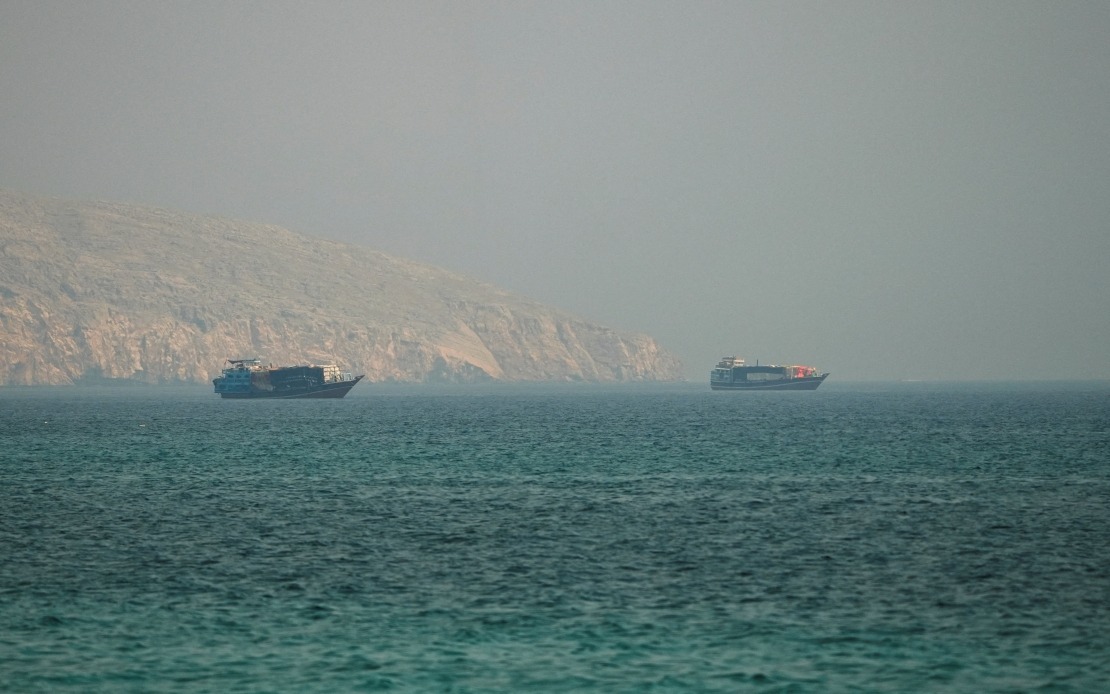
The waters of the Strait of Hormuz remain treacherous for merchant shipping, with British maritime authorities sustaining a "severe" security warning after a string of attacks targeting commercial vessels transiting one of the world's most critical energy corridors. The UK Maritime Trade Operations (UKMTO) Joint Maritime Information Centre issued formal notice on Friday reiterating the gravity of the situation, even as it confirmed that expanded southern transit routes remain technically open to international traffic.
The strategic waterway, through which roughly one-fifth of global seaborne oil passes, has become the focal point of escalating military tensions between the United States and Iran. A succession of incidents targeting merchant ships has triggered a new cycle of confrontational responses from Washington, which has launched retaliatory strikes against Iranian military and infrastructure installations throughout the region. These American operations are explicitly framed as defensive measures undertaken in response to threats to commercial maritime activity.
For vessel operators and shipping companies navigating these waters, the practical reality remains grim despite official assurances about route availability. The UKMTO advisory instructs mariners to anticipate radio communications from naval forces operating on very high frequency channels and to exercise heightened vigilance around designated mine-danger zones. The cumulative effect of these warnings creates an environment of persistent uncertainty that adds both operational costs and insurance premiums for any company moving cargo through the waterway.
Iran's position in this maritime standoff reflects a broader assertion of regional authority and control over passage through its territorial waters. Tehran has repeatedly insisted that all vessels coordinate with Iranian authorities before transit and has rejected alternative routes that fall outside its designated corridors. This stance has been reinforced through military action: Iranian forces have responded to American strikes with drone attacks targeting US military infrastructure across the broader Gulf region and extending into Jordan, demonstrating Tehran's willingness to project force beyond its immediate coastline.
The underlying strategic stakes are significant for Malaysia and other Southeast Asian economies dependent on energy imports. Disruption to Hormuz transit flows invariably feeds into global crude oil pricing and supply chain stability. The region's economies, which rely heavily on affordable energy and just-in-time shipping logistics, face indirect exposure to any sustained interruption of traffic through the waterway. Insurance costs for vessels, particularly those carrying petrochemical products or other sensitive cargo, have already begun to reflect the heightened risk environment.
Diplomacy appears to have achieved only fragile footholds amid the military reality on the water. Last month, Iran and the United States brokered a memorandum of understanding with Pakistani mediation, theoretically aimed at cessation of hostilities and pursuit of a durable peace framework. Yet the document's prospects remain clouded as military operations continue regardless. The disconnect between diplomatic overtures and battlefield actions suggests that neither side has fundamentally altered its strategic calculations or threat assessments.
The expanded southern shipping route referenced in the UKMTO notice represents a technical attempt to provide mariners with safer passage options, though the designation of "safer" remains relative in waters where attacks have occurred across multiple routes. The route expansion itself acknowledges that traditional passages have become unreliable, though international shipping protocols still treat the corridor as commercially viable for those willing to accept the security risks.
For regional powers and Southeast Asian trading nations, the Hormuz situation exemplifies a broader challenge: critical sea lanes increasingly intersect with zones of geopolitical contestation. Malaysia's own maritime interests depend on freedom of navigation principles and stable access to global shipping corridors. The persistence of high-threat conditions in the Strait underscores vulnerabilities embedded in regional supply chains and the extent to which distant conflicts can reshape commercial logistics and energy costs across Asia.
The trajectory of these tensions remains unpredictable. While the Pakistani-mediated talks suggest some willingness to negotiate, the continuation of military operations indicates neither Washington nor Tehran has yet approached a genuine negotiating position. The "severe" threat designation from UKMTO, maintained as an ongoing advisory rather than issued as an emergency alert, suggests acceptance of this heightened-risk state as a new operating environment. For international shipping and the broader global economy, the Strait of Hormuz is likely to remain a zone of elevated caution and elevated cost for the foreseeable future.

