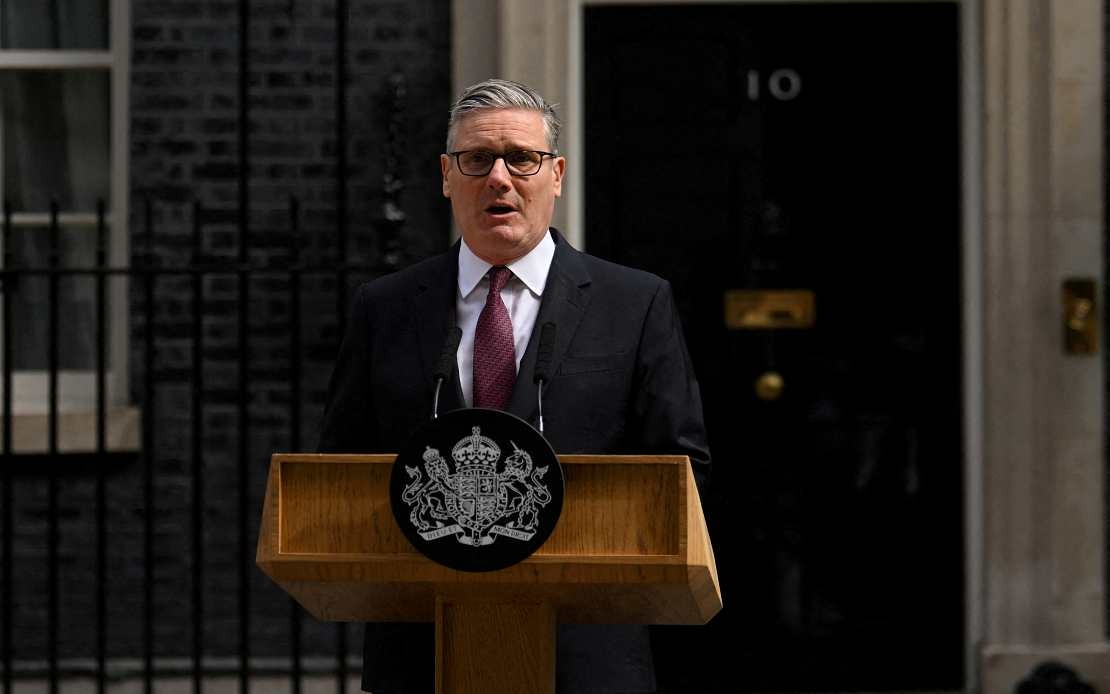
Keir Starmer has ended his tenure as British Prime Minister on Monday, delivering a farewell address from Downing Street before formally tendering his resignation to King Charles. The departing premier struck a reflective note as he prepared to vacate Number 10, announcing that his work was finished and that he was departing "with a smile" on his face. Andy Burnham is widely expected to take over the reins of power, marking a significant transition in British politics.
Starmer's final remarks as premier reflected on the Labour Party's remarkable journey from near-total electoral collapse to commanding a substantial parliamentary majority. He reminded his audience that six and a half years had elapsed since Labour suffered what many considered a devastating defeat in 2019, a position from which he personally oversaw a comprehensive rebranding and reorganisation of the party machinery. The subsequent general election victory in 2024 validated his strategy and restored Labour to government after more than a decade in opposition.
Throughout his relatively brief period in office, Starmer maintained that his administration had strengthened Britain's position both domestically and internationally. He asserted that the country had become "stronger and fairer" compared to its condition when the Labour government first took office, suggesting that his policy agenda had yielded tangible improvements across various sectors and for different constituencies. This framing positions his departure as occurring at a moment when his strategic objectives had been substantially realised, rather than as a result of political crisis or electoral failure.
The symbolic weight of Starmer's departure lies partly in what it represents for British Labour politics. The party has historically experienced difficulties with leadership transitions, often marked by internal acrimony and ideological disputes. However, this particular handover appears to have been orchestrated as a planned succession rather than an emergency change, suggesting some degree of party unity regarding the direction forward. Burnham, who brings experience from both Parliament and as a regional authority leader, represents a different political generation and approach.
Burnham's emergence as Starmer's successor carries implications for how Labour might recalibrate its policy focus and public presentation. As a figure with strong metropolitan connections and a record of championing regional concerns, Burnham may shift emphasis toward different constituencies or policy priorities than those Starmer emphasised during his tenure. The transition therefore extends beyond simple personnel change to potentially herald adjustments in how Britain's government articulates its agenda and priorities.
The handover to a new Prime Minister typically provides an opportunity for political recalibration and renewal. Burnham will inherit both the achievements and challenges that characterise Starmer's record in office. The incoming administration will face pressing decisions regarding economic policy, public service funding, and Britain's international positioning. How decisively Burnham marks his own distinct identity, as opposed to presenting himself as a continuity candidate, will likely shape the early months of his premiership and public reception.
For Malaysian observers, the transition illustrates broader patterns in Westminster democracies regarding orderly leadership change within governing parties. Unlike some political systems where power transfers involve considerable uncertainty or disruption, the British model demonstrated here emphasises planned succession and institutional continuity. This procedural stability has long been presented as a strength of the Westminster system, though contemporary political polarisation globally has tested these conventions in various democracies.
Regional Southeast Asian governments and observers often scrutinise how major democratic powers manage transitions of leadership, as these events can signal shifts in foreign policy orientation and international priorities. Changes in British Prime Ministers have historically correlated with adjustments in London's strategic posture toward Asia, including trade relationships, security partnerships, and diplomatic initiatives. Burnham's accession therefore warrants attention from Malaysian and broader regional perspectives, as his government may introduce new emphases in Britain's engagement with Southeast Asia and the Indo-Pacific region.
Starmer's decision to frame his departure as the natural conclusion of accomplished work, rather than acknowledging pressure or controversy, reflects a particular narrative choice about his legacy. By emphasising that his objectives were realised and presenting his exit as opportune rather than forced, he seeks to control how his premiership is historically remembered and interpreted. Whether this framing will endure as Labour's narrative, or whether subsequent political developments might revise assessments of his record, remains to be determined as Burnham assumes responsibility for the party's continued electoral viability and governing performance.

