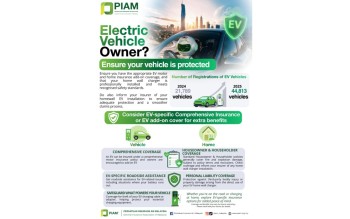
The General Insurance Association of Malaysia (PIAM) has moved to reassure homeowners about their protection against fires linked to electric vehicle chargers, following growing concerns after a recent incident in Cheras where an EV home charger sparked extensive property damage. According to the association, standard house owner and fire insurance policies across the country provide coverage for fire damage from any source, provided policyholders comply with their policy conditions and there is no evidence of fraud or deliberate negligence.
Chua Kim Soon, PIAM's chief executive officer, emphasised that the language in typical Malaysian insurance policies does not restrict claims based on what triggered the fire. Instead, coverage extends to specified perils including fire damage "regardless of the ignition source," meaning that whether a fire originates from an EV charger, electrical fault, or other cause, the underlying claim should remain valid if all other policy requirements are met. This distinction matters considerably for the growing number of Malaysian EV owners who have installed home charging infrastructure, as it addresses a key anxiety about whether their existing policies would protect them in the event of a charging-related incident.
However, PIAM's reassurance comes with important caveats that homeowners must understand. The coverage is contingent on the terms, conditions, and exclusions stipulated in individual policies, meaning that what is covered can vary between insurers and policy types. Furthermore, insurers retain the right to deny claims if they establish fraud, deliberate action by the policyholder, or breach of policy conditions. This underscores the critical importance of maintaining full transparency with insurers and adhering to all safety requirements, as any violation could jeopardise coverage.
The categorisation of EV charging equipment plays a significant role in determining how claims are handled and what coverage applies. Permanently installed, hardwired EV chargers typically fall under the "buildings" section of a home insurance policy, classified as fixtures and fittings that form part of the residential structure. Conversely, portable or unattached charging cables are generally covered under specialised electric vehicle motor insurance policies or optional add-on packages that individual insurers offer. This distinction means that homeowners relying on different charging methods may find themselves covered under different policy sections, requiring careful review of their individual arrangements.
Insurers have made clear their expectations regarding risk management and electrical compliance. Homeowners are required to exercise reasonable precautions and maintain electrical safety standards in their properties, particularly when introducing new high-powered equipment like EV chargers. When a fire claim is submitted, insurers will scrutinise official investigation reports from fire departments and other authorities to determine whether the policyholder contributed to the loss through neglect, deliberate acts, or violations of statutory electrical codes. Evidence of illegal, uncertified electrical modifications or non-compliant installations could provide grounds for claim denial, even if the underlying fire damage would ordinarily be covered.
To ensure continuous and adequate protection, PIAM advises homeowners to proactively notify their insurers whenever they install a permanent EV charger. This notification is not merely a formality but a crucial step that serves multiple purposes. Declaring electrical upgrades allows the insurer to reassess whether the current sum insured adequately reflects the actual rebuilding costs of the property, accounting for the new infrastructure and any modifications made during installation. This process also creates a clear record of the installation and helps establish baseline conditions, which can streamline the claims process if an incident occurs later. Failure to disclose such upgrades could potentially create complications during a claim.
Homeowners should also take the opportunity to review their sum insured figures comprehensively. Property values and rebuilding costs shift over time, and the installation of an EV charger alongside other home improvements may mean that the current sum insured no longer adequately reflects what it would actually cost to rebuild the property to its current state. An underinsured property could result in claim settlements that fall short of actual losses, leaving homeowners with significant out-of-pocket costs after a fire.
The risk of fire or electrical incidents spreading to neighbouring properties presents another dimension that property owners must consider, particularly those living in terraced homes or high-rise residential complexes. Given the interconnected nature of such properties, a fire originating in one unit could potentially damage adjacent dwellings. Standard house owner policies typically provide public liability coverage with a limit of RM50,000, which covers the policyholder's legal liability for damages caused to third parties. However, given the potential scale of damage in multi-unit residential settings, many experts recommend that EV-owning homeowners evaluate whether they should purchase optional extensions to increase their public liability limits beyond the standard coverage.
For EV owners themselves, the responsibility extends beyond ensuring their homes are adequately covered. They should also conduct a thorough review of their motor insurance policies to confirm that their vehicle, the charging equipment, and the residential charging infrastructure are all comprehensively protected. Many policies may contain gaps or exclusions that leave portions of the charging ecosystem unprotected. By working with their insurers to identify and address these gaps through optional add-ons or policy adjustments, owners can achieve a more complete risk management posture that protects both their investment in the vehicle and their home.
The PIAM clarification arrives at a critical juncture for Malaysia's automotive sector, as EV adoption accelerates and more households embrace home charging infrastructure. While standard policies do provide a foundation of protection, the specifics of that protection depend heavily on individual policy language, the type of charging equipment in use, and the thoroughness of the homeowner's disclosures to the insurer. As this technology becomes increasingly commonplace, both insurers and policyholders are in a learning phase regarding best practices for risk assessment and claims handling. The incident in Cheras serves as a timely reminder that while modern convenience technologies like EV chargers offer genuine benefits, they must be installed correctly, maintained properly, and integrated into comprehensive insurance arrangements.

