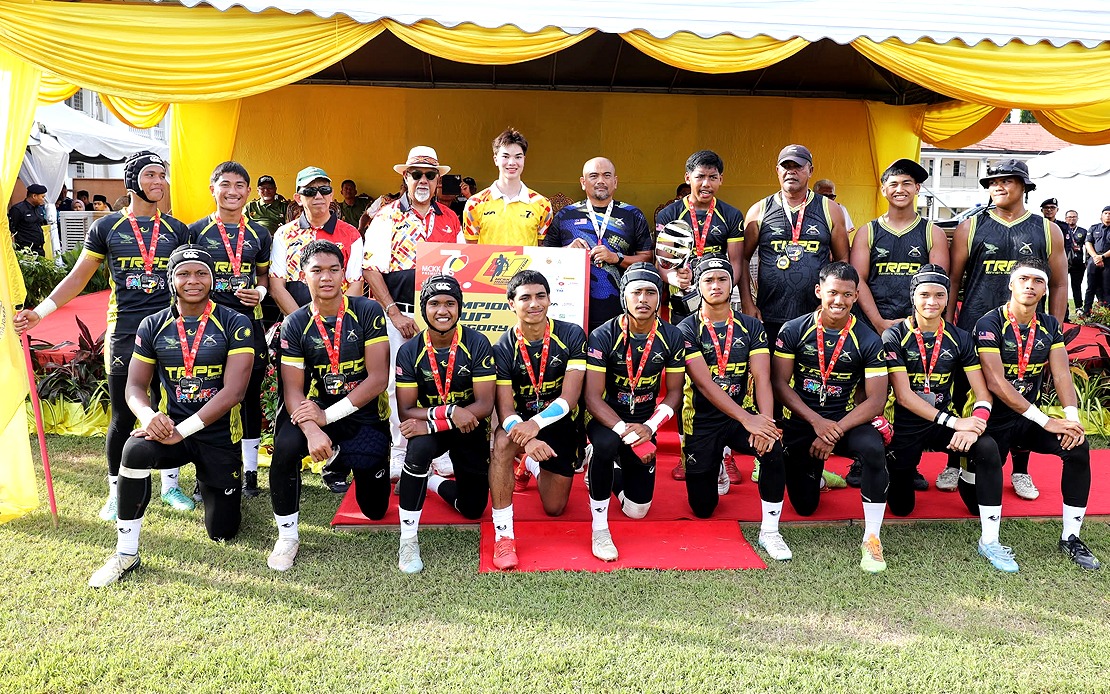
Sekolah Sukan Malaysia Pahang consolidated its position as Malaysia's premier school rugby programme by retaining the MCKK Premier 7s title, overcoming fierce rivals Sekolah Sukan Tunku Mahkota Ismail with a 19-14 victory in the Cup final. The match, played at the Malay College Kuala Kangsar field in Perak on July 5, saw the defending champions claim the NJ Ryan Trophy for the second consecutive year, underlining their dominance in Malaysian secondary school rugby.
The final pitted the nation's two most established school rugby powerhouses against each other in what proved to be a tightly fought encounter. Both SSMP and SSTMI demonstrated the technical polish and tactical acumen expected of top-tier school rugby programmes, with neither side willing to concede ground easily. The intensity of competition between these institutions has become characteristic of the MCKK Premier 7s, which has evolved into the most prestigious tournament in the Malaysian school rugby calendar. SSMP's ability to maintain their edge through all four quarters reflected not only superior conditioning but also the quality of their squad depth and coaching infrastructure.
This represents SSMP's second consecutive MCKK Premier 7s title, having also defeated SSTMI in last year's final. The back-to-back championships signal a period of sustained excellence for the Pahang-based sporting school, which has invested heavily in developing young rugby talent. The rivalry between SSMP and SSTMI has become one of Malaysian school rugby's defining narratives, with both institutions consistently producing players who progress to national age-group and senior representative levels. The proximity of these two victories suggests SSMP has established a meaningful performance gap over the competition.
Beyond the headline Cup competition, the 14th edition of the MCKK Premier 7s showcased depth across Malaysian school rugby. SMK Tun Hussein Onn emerged victorious in the Plate division, securing a 24-19 triumph over Sekolah Sultan Alam Shah in a match that demonstrated competitive quality below the elite tier. This result indicates that rugby development extends beyond the top two institutions, with other programmes gradually closing the performance gap.
The Bowl competition saw SMK Hosba capture the title with a 17-12 victory against SMK Syed Sirajuddin, while MRSM Balik Pulau dominated the Shield final with an emphatic 22-0 whitewashing of Royal Military College. The breadth of competition across multiple divisions reflects the healthy state of school rugby participation in Malaysia, with various institutions fielding competitive teams and providing opportunities for younger or less experienced players to gain valuable tournament experience.
For Malaysian rugby stakeholders, the sustained excellence of SSMP and SSTMI raises important questions about resource distribution and development pathways. Both institutions benefit from dedicated facilities, specialist coaching staff, and student selection processes that prioritise athletic talent. The concentration of competitive advantage in a small number of schools mirrors patterns seen across Commonwealth rugby nations, yet presents challenges for broadening the grassroots base. Schools lacking equivalent infrastructure face significant barriers in competing at the highest level, potentially limiting the talent pool available to national selectors.
The closure of the tournament featured an official presence at the highest levels, with Raja Datuk Seri Azlan Muzaffar Shah, son of the Sultan of Perak, presiding over the closing ceremony and prize distribution. This ceremonial element underscores the cultural significance of school rugby within Malaysia's sporting landscape and reflects the commitment of state leadership to youth development through sport. The participation of royal patrons in school athletics events signals government recognition of sport's role in nation-building and character development.
The MCKK Premier 7s tournament represents one of the flagship events in the Malaysian school sports calendar, showcasing not merely athletic competition but also values of discipline, teamwork, and sportsmanship. The sevens format, with its emphasis on pace and decision-making under pressure, has become increasingly popular in school rugby development programmes globally. For Malaysian youth rugby, the format provides an excellent platform for testing skills in fast-paced environments while maintaining safety standards appropriate for secondary school athletes.
Looking forward, SSMP's continued dominance raises the prospect of a potential three-peat in 2025, though SSTMI's consistent appearance in finals suggests they remain a formidable competitor capable of reclaiming the title. Other institutions participating at lower divisional levels will use this tournament as a benchmark for development, potentially challenging the established hierarchy in future years. The tournament's sustained prominence demonstrates that school rugby remains deeply embedded in Malaysian sporting culture, providing pathways for talented young athletes while maintaining traditions established over decades of competition.

