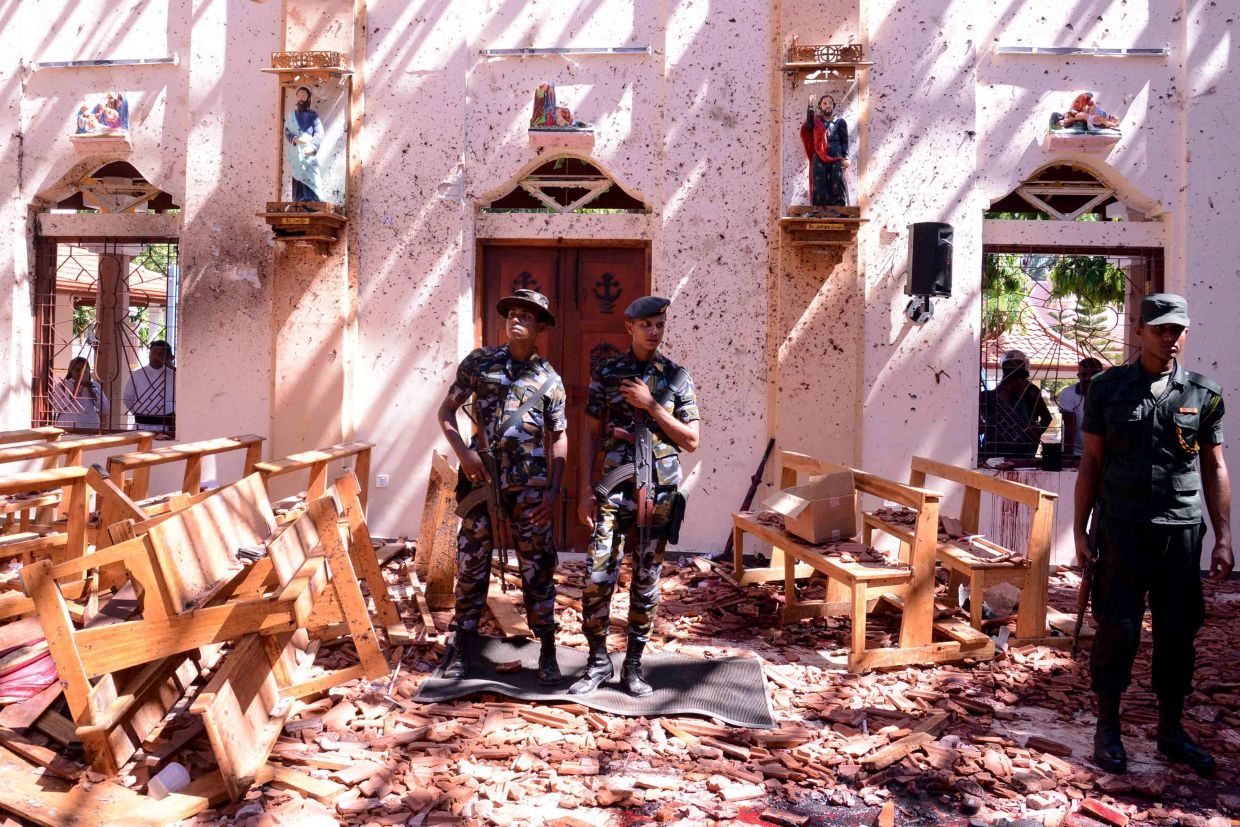
A retired Sri Lankan military officer who built a distinguished career advising international bodies on combating terrorism now faces arrest under his country's anti-terrorism laws, accused of engineering the deadliest civilian attack in Sri Lankan history. Major General Suresh Sallay, the former head of the State Intelligence Service, was taken into custody in February and stands accused by the government of having orchestrated the Easter bombings of April 21, 2019, an attack that claimed 279 lives and left more than 500 others wounded. The dramatic reversal in the official narrative surrounding these attacks has raised uncomfortable questions about Sri Lanka's security establishment and the political forces shaping investigations into one of Asia's most devastating terror incidents.
The Easter Sunday coordinated strikes targeted three luxury hotels and three churches across the island, killing tourists and worshippers in near-simultaneous explosions. Among the dead were 45 foreign nationals from Australia, Britain, China, Denmark, the Netherlands, Japan and the United States, making the attacks an international tragedy that drew scrutiny from global security agencies. Initial reports identified seven Sunni Muslim suicide bombers as the perpetrators, with investigators citing inspiration from the Islamic State group. Yet even as authorities settled on this explanation, serious gaps in the official account began to emerge, particularly regarding advance intelligence warnings from India that were allegedly disregarded.
Sallay has not been formally charged and maintains his innocence, with court proceedings scheduled to continue into mid-July. However, Public Security Minister Ananda Wijepala made explosive public allegations in parliament this June, declaring that Sallay was the "mastermind" who "conspired with and strategically directed Islamic extremists" into carrying out the attacks. According to Wijepala's account, Sallay met with Muslim men just three weeks before the bombing to gather details about potential targets. These ministerial claims mark the first official public accusation of this scale against the retired officer, moving well beyond earlier investigations that had hinted at darker forces at play.
What emerges from official inquiries and investigative reporting is a far more troubling picture than simple extremist violence. Investigators have uncovered links between the Easter bombers and at least two state intelligence agencies, suggesting institutional knowledge extending beyond a single rogue officer. Critics and analysts have begun constructing a different narrative: that the attack network may have been deliberately cultivated and allowed to proceed as part of a political operation. This alternative explanation hinges on the theory that powerful interests within Sri Lanka sought to create a security crisis that could be weaponised for electoral purposes.
The political context is crucial to understanding these allegations. At the time of the Easter bombings, Gotabaya Rajapaksa was positioning himself as a presidential candidate on a hardline security platform, pledging to crush Islamic extremism with the same decisiveness he had previously deployed against Tamil separatists during the civil war. In 2023, Britain's Channel 4 aired allegations from a whistleblower suggesting that allowing the attacks to proceed could have served the Rajapaksa campaign, providing a security crisis that would rally voters around a strongman candidate. Court investigators have reportedly told judges that the alleged conspiracy aimed to generate precisely this chaos, positioning Rajapaksa as the sole leader capable of confronting militant threats.
This theory gains disturbing historical weight from documented practices within Sri Lanka's security apparatus. Previous Rajapaksa administrations have acknowledged that the state cultivated and funded jihadist groups during the 1983-2009 civil war specifically to gather intelligence on Tamil rebel movements. Officials have maintained that these militants were meant to function as controlled assets, yet they concede that the groups "double-crossed" their handlers and launched independent operations, including the Easter bombings. The distinction between deliberately allowing an attack and merely losing control of assets becomes philosophically murky but practically crucial for determining culpability.
Sallay's personal background and career trajectory illuminate the contradictions at the heart of these accusations. A Muslim officer married to a Buddhist woman, with a Catholic mother now appealing to the Pope for his release, Sallay embodied Sri Lanka's multicultural potential. His professional credentials were impeccable: he served in Sri Lankan diplomatic missions in France and Malaysia, studied at India's prestigious National Defence College and British institutions, and became a recognised expert on counterterrorism. He addressed the Pentagon in 2003 on suicide terrorism and spoke at United Nations headquarters in 2023 about social media's role in radicalisation, drawing on apparent deep knowledge of the subject.
Yet Sallay's rise to prominence under the Rajapaksas, culminating in his appointment as the first military officer to head the State Intelligence Service following Gotabaya's 2019 election victory, positioned him within the heart of the political machinery now accusing him. Shortly after taking office, Sallay ordered the arrest of Muslim human rights lawyer Hejaaz Hizbullah in 2020, initially charging him as the Easter bombing "mastermind." Hizbullah spent 22 months in custody before authorities released him, having failed to produce credible evidence. That episode suggests either significant investigative incompetence or something more deliberate—a pattern of accusations without substantiation.
The religious and demographic dimensions add another layer to this unfolding story. Sri Lanka's population of 22 million is approximately 70 per cent Buddhist, with 12 per cent Hindu, 10 per cent Muslim, and 7 per cent Christian. This composition means that Islamic extremism narratives resonate powerfully with the Buddhist majority, particularly when connected to nationalist rhetoric. The alleged cultivation of jihadist networks to create a threatening "other" becomes especially potent in this context, where securitised Islam can drive political mobilisation among the dominant religious community.
For regional observers, particularly in Malaysia where Muslim minority concerns resonate across the political landscape, the Sri Lankan case presents troubling implications. It demonstrates how security apparatus actions intended to serve state interests can spiral into mass casualty events, and how political power can reshape official narratives around tragedy. The shift from blaming Islamic extremists to accusing a top spy chief suggests that truth-telling about such catastrophic events remains hostage to political considerations rather than investigative rigour.
The ongoing court proceedings remain essential to determining whether Sallay's arrest represents genuine accountability for alleged conspiratorial action or merely the scapegoating of a subordinate officer for systemic failures. Sallay's next hearing will provide early indicators of the evidence prosecutors can marshal, and whether the allegations extend upward through the chain of command. Until formal charges are filed and evidence presented in open court, the precise nature of his alleged involvement remains opaque—a reflection of broader questions about whether Sri Lanka's justice system can credibly investigate high-level security operations implicating powerful political figures.

