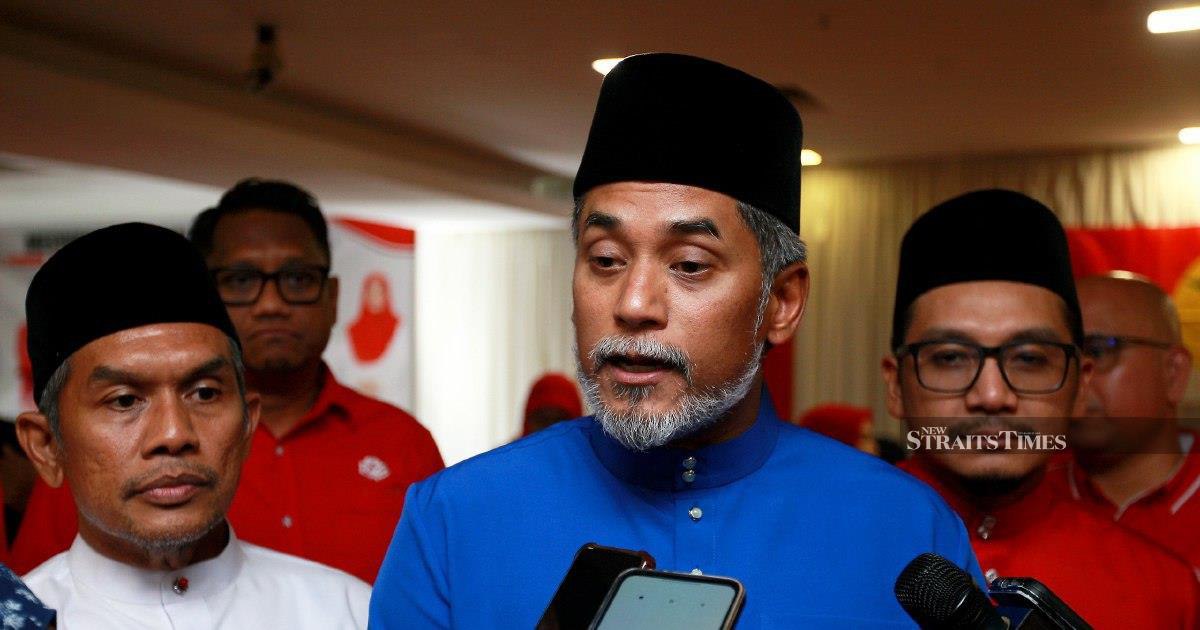
The fragmentation of Malay electoral support represents a critical vulnerability that could decisively shift the outcome of Negri Sembilan's upcoming state election, according to Khairy Jamaluddin, the former head of Umno Youth. Speaking in Shah Alam, Khairy articulated a stark warning to both Barisan Nasional and Perikatan Nasional: their coordinated electoral strategy depends entirely on preventing the Malay vote from scattering across competing candidates and parties.
Khairy's intervention underscores a fundamental tension within Malaysian politics, where coalition-building among Bumiputera parties frequently hinges on controlling the rural and semi-urban constituencies where Malay voters constitute decisive majorities. The Negri Sembilan state assembly comprises 36 seats distributed across districts where Malay Muslim demographics dominate political calculations. Any failure to consolidate this voter base threatens to hand electoral advantages to opposition parties that might exploit the division to claim seats otherwise secure for the ruling coalitions.
The BN-PN arrangement in Negri Sembilan represents an attempt to prevent the kind of three-cornered contests that have plagued Malaysian elections since the 2020 general election. When Umno, Perikatan, and other Bumiputera parties field separate candidates in the same constituency, non-Malay voters or opposition candidates often emerge victorious despite Malays constituting the numerical majority. This phenomenon has proven particularly damaging in state elections across Peninsular Malaysia, where traditional BN strongholds have fallen to opposition parties or splinter movements.
The stakes for this collaboration extend beyond Negri Sembilan itself. The state serves as a testing ground for whether Umno and Perikatan can maintain the kind of voter discipline and candidate coordination necessary for future electoral cooperation. The 2023 general election demonstrated that while these coalitions can achieve substantial victories when unified, any internal fragmentation rapidly erodes their commanding positions. Negri Sembilan's voters, historically sympathetic to Umno's leadership, now face a more complex political landscape where Perikatan has established genuine support, particularly in rural areas where its Islamic governance narrative resonates with sections of the Malay-Muslim population.
Khairy's warning also reflects broader anxieties within Umno's leadership regarding party discipline and factional loyalty. The emergence of competing claims on Malay votes has created what senior party strategists regard as an existential threat to the party's dominance. Unlike the pre-2020 era when Umno's hegemony over Malay electoral support appeared virtually unassailable, current party leaders must now negotiate with Perikatan and other Bumiputera parties from a position of reduced certainty. In Negri Sembilan specifically, both coalitions face pressure from grassroots movements and local sentiment that may not align neatly with Kuala Lumpur-based calculations.
The economic context adds weight to these political calculations. Negri Sembilan's economy relies substantially on palm oil production, automotive manufacturing centered in Shah Alam, and tin mining heritage industries. Rural constituencies in districts like Jembara and Kuala Pilah contain significant populations dependent on agricultural subsidies and state-level development projects. State government decisions regarding land allocation, commodity marketing boards, and rural infrastructure directly influence voter behaviour in these areas. A coalition that demonstrates capacity to coordinate resources and deliver targeted development projects gains considerable advantage over a fragmented opposition.
Historically, Negri Sembilan has provided BN with consistent majorities, though recent elections have shown narrowing margins. The 2018 state election saw BN retain control but with significantly reduced dominance compared to previous contests. This trajectory suggests that complacency or internal division could trigger a more dramatic shift in 2024 or beyond. Opposition parties, particularly Pakatan Harapan, have invested substantial resources in constituency development and grassroots organizing across Negri Sembilan's urban areas, particularly around Shah Alam and Seremban.
The mechanics of preventing vote splitting involve complex coordination: agreeing on candidate selection, directing party machinery toward unified campaigning, and ensuring that party members campaign for the agreed arrangement rather than for internal factional candidates. Perikatan's presence complicates these negotiations because unlike previous BN partners, the coalition brings an organizational structure and electoral base independent of BN's historical apparatus. In constituencies where Perikatan contests, BN voters must accept candidates from a party they may have previously opposed, requiring a significant psychological and political adjustment.
Youth participation adds another dimension to Khairy's concern. Younger Malay voters, particularly those in urban centers or semi-urban areas, exhibit less automatic loyalty to either Umno or Perikatan compared to older generations. These voters frequently base decisions on local candidate quality, service record, and specific policy commitments rather than on broader coalition affiliations. If the BN-PN arrangement produces candidates perceived as imposed through top-down negotiations rather than selected through genuine grassroots processes, younger voters may either abstain or scatter their votes strategically across candidates they perceive as more responsive.
The regional implications extend to other Malaysian states contemplating similar coalition arrangements. Selangor, Kedah, and Pahang all contain constituencies where BN and Perikatan maintain competing support bases. Negri Sembilan's electoral performance will provide crucial intelligence regarding whether voter discipline can be maintained and whether combined BN-PN campaigning generates electoral synergy or merely produces confusion. Success in Negri Sembilan would provide a template for scaling the arrangement across other state elections, while failure would vindicate arguments for maintaining separate party identities and competitive spaces within Bumiputera politics.
Khairy's public articulation of these risks suggests internal BN anxiety regarding the coalition's capacity to manage its senior partner role effectively. His warning, directed implicitly at both party members and the broader electorate, attempts to reframe vote consolidation from a strategic choice into a collective imperative. Whether this framing persuades Malay voters to suppress factional preferences and embrace unified coalition voting will largely determine whether BN-PN achieves the landslide both parties have publicly predicted for Negri Sembilan.

