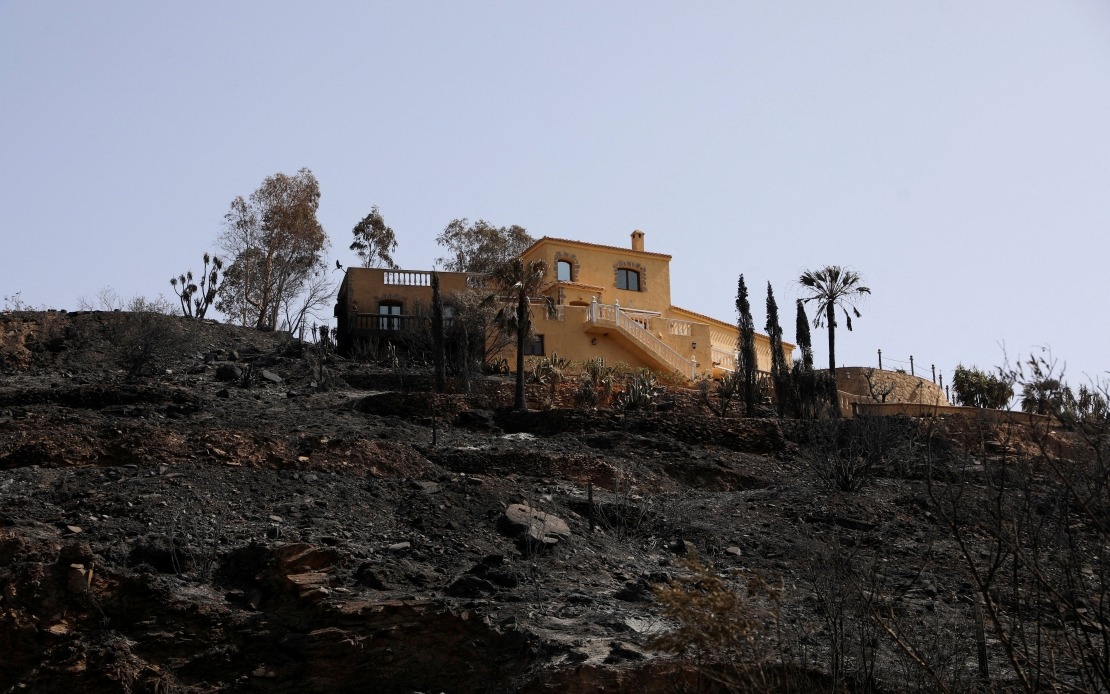
A catastrophic wildfire that erupted in Spain's southeastern province of Almeria has claimed at least 13 lives, with regional officials announcing on Sunday that the uncontrolled blaze has been stabilised after four days of intense firefighting efforts. The announcement marks a critical turning point in one of Andalusia's most serious fire emergencies in recent memory, though authorities have cautioned that weeks of work remain before the fire can be declared completely extinguished and the affected region fully secured.
The disaster commenced on Thursday near Los Gallardos municipality in Almeria, a region within the broader autonomous community of Andalusia that straddles Spain's Mediterranean coast. The flames rapidly consumed approximately 7,000 hectares of land, forcing authorities to evacuate roughly 1,600 residents from surrounding communities as the inferno spread across the parched summer landscape. The rapid escalation reflected both the volatile conditions created by extreme heat and the challenging terrain that hampered initial suppression efforts.
Beyond the confirmed fatalities, the crisis continues to affect numerous individuals. Seven people remain hospitalised with fire-related injuries, including three patients in serious condition requiring intensive medical care. Additionally, ten people have been officially registered as missing and unaccounted for, suggesting the final death toll may yet climb as rescue operations continue in remote and heavily burned areas where identification remains difficult.
A notable aspect of the casualty figures is that many of those killed or affected by the fire are foreign nationals, according to Spain's public broadcaster RTVE. This underscores how summer wildfires in Mediterranean regions disproportionately impact seasonal workers, tourists, and expatriate communities who may be less familiar with emergency procedures or have limited access to evacuation resources. The international dimensions of the disaster will likely complicate recovery efforts and consular notifications.
The stabilisation announced by regional authorities has provided sufficient confidence to begin the gradual process of allowing evacuees to return. Approximately 600 residents were permitted to return to their homes on Saturday, with regional officials authorising the remaining roughly 1,000 evacuees to leave temporary shelters following Sunday's announcement. This measured approach reflects an assessment that while the immediate threat has diminished, ongoing monitoring remains essential given the unpredictability of large wildfires in volatile conditions.
Juanma Moreno, the head of Andalusia's regional government, confirmed that the wildfire has stopped advancing and been contained within its established perimeter, preventing further territorial expansion. However, he cautioned that substantial work remains before authorities can declare the fire completely controlled and extinguished. His assessment reflects the reality that even stabilised fires can reignite if conditions shift, embers remain smouldering in inaccessible areas, or sudden wind changes redirect dormant flames toward fresh vegetation.
The underlying cause of the blaze remains under active investigation by Spanish authorities. The leading hypothesis points to potential failure of electrical infrastructure, specifically suggesting that the collapse of an electricity pole or associated power cable may have ignited the initial fire. Such incidents are not uncommon in regions experiencing extreme heat, as high temperatures can degrade insulation and overhead infrastructure can become compromised, creating dangerous spark hazards in dry vegetation.
Moreno seized the opportunity to emphasise the broader climate dimensions of the crisis, characterising this fire as symptomatic of escalating climate-related risks facing Spain and Europe more broadly. He urged both the public and government authorities to treat climate change with utmost seriousness, noting that shifting climatic conditions are generating increasingly complex wildfire scenarios. The regional leader highlighted how climate change is producing wildfires of unprecedented scale and intensity that stretch firefighting resources beyond traditional capacity levels, requiring new approaches to disaster prevention and management.
For Southeast Asian observers, the Almeria disaster offers instructive parallels to growing wildfire threats across the region. Malaysia and neighbouring countries face escalating risks from uncontrolled fires during extended dry seasons, particularly in areas with extensive peatland and forest resources. The Spanish experience demonstrates how rapid urbanisation in fire-prone regions, combined with climate-driven weather extremes, can create catastrophic scenarios where conventional emergency response systems become overwhelmed. The international composition of casualties also reflects how globalised labour and tourism patterns mean that disasters in distant regions can have significant impacts on Malaysian nationals and regional communities.
The incident further underscores the inadequacy of reactive firefighting approaches when facing climate-driven escalation in fire frequency and intensity. Moreno's warnings about increasingly severe and expansive wildfires reflect scientific consensus that Mediterranean and subtropical regions will experience longer fire seasons, higher peak temperatures, and conditions favouring rapid fire spread. Regional governments across Southeast Asia would benefit from studying Spanish and broader European experiences in developing proactive adaptation strategies, including land-use planning that reduces fire vulnerability, enhanced early-warning systems, and cross-border cooperation mechanisms for managing transnational wildfire threats.
As recovery operations continue in Almeria, the incident serves as a stark reminder of climate change's immediate and tangible consequences for human safety and regional stability. The combination of environmental pressures, infrastructure vulnerabilities, and population exposure creates conditions where natural hazards can rapidly escalate into human catastrophes. Understanding and preparing for such scenarios has become essential for policymakers throughout the Mediterranean basin and increasingly relevant for Southeast Asian nations confronting similar climate-driven risks.

