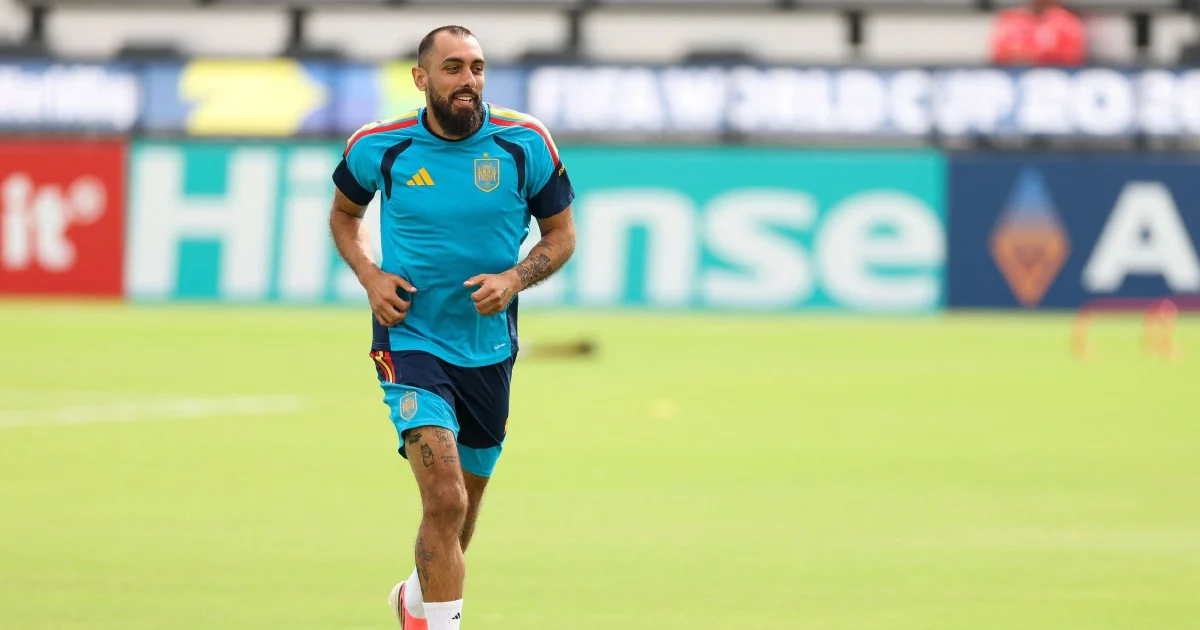
Borja Iglesias, the Spanish striker who represented his country at the World Cup, has cultivated a reputation that extends far beyond his performances on the pitch. The footballer, who openly expresses himself through unconventional means including painted nails, demonstrates a willingness to engage with contentious social and political matters that many in professional sport studiously avoid. His candour on issues ranging from the situation in Gaza to LGBTQ+ rights has positioned him as one of football's most distinctive personalities, though not without controversy.
The moniker "the alien of football" reflects how Iglesias stands apart from the typical footballer archetype. Rather than confining himself to the sanitised narrative that dominates professional sports discourse, he has chosen to inhabit a space where personal expression and social commentary intersect. This approach represents a deliberate departure from the conventional playbook of athlete management, where public figures are typically advised to remain neutral on polarising topics. For Iglesias, however, such neutrality appears philosophically untenable.
His decision to paint his nails serves as a visible marker of this non-conformity. In a sport where masculinity is traditionally performed in narrow, prescribed ways, this aesthetic choice becomes a statement. It challenges unspoken assumptions about how elite footballers should present themselves, contributing to broader conversations about gender expression and acceptance within professional athletics. The visible nature of this choice means Iglesias cannot compartmentalise his activism; every public appearance becomes an implicit endorsement of authenticity over convention.
The timing of such outspokenness carries particular significance in the contemporary football landscape. As players increasingly leverage their platforms for social causes, the contours of acceptable speech remain hotly contested. Iglesias operates within this charged environment, where speaking on divisive issues invites scrutiny from various constituencies. His willingness to address Gaza in particular reflects a growing trend of athletes engaging with international conflict, an arena where football's global audience intersects with geopolitical reality.
For Malaysian and Southeast Asian readers, Iglesias's approach offers a lens through which to consider the evolving role of athletes in public discourse. The region has increasingly prominent football cultures, with local players occasionally facing pressure to remain apolitical. Iglesias's example demonstrates both the potential and the costs of breaking this mould. His trajectory suggests that athletic excellence and social commentary need not be mutually exclusive, though pursuing both simultaneously requires a particular fortitude.
The reception of Iglesias's activism has been decidedly mixed. Some observers celebrate his integrity and courage in a sport often criticised for prioritising commercial interests over moral clarity. Others question whether athletes should use their platforms for political expression, or whether doing so compromises their ability to represent their nations and clubs. This fundamental disagreement about the proper role of athletes in society remains unresolved, with Iglesias serving as a focal point for these broader tensions.
His prominence in this conversation stems partly from Spain's contemporary position in international football. As a nation with a substantial global media footprint and a strong football tradition, Spanish players command significant attention. When they use their visibility to engage with social issues, their voices carry amplified resonance. Iglesias has recognised this asymmetry and leveraged it deliberately, understanding that his status as a World Cup participant grants him a platform unavailable to most.
The homophobia element of his activism carries particular weight in a sport historically resistant to LGBTQ+ acceptance. Football's traditional culture has often marginalised LGBTQ+ athletes and supporters, creating environments where many feel unsafe being openly themselves. By addressing homophobia directly, Iglesias contributes to the ongoing cultural shift within football that prioritises inclusion. This dimension of his activism may ultimately prove more transformative than his other interventions, as it directly targets football's internal culture.
Iglesias's approach also reflects generational change within professional sport. Younger athletes, particularly those coming of age in digital environments where political engagement is normalised, increasingly reject the depoliticisation demanded of previous generations. They view selective engagement with social issues as complicity, and remain unconvinced by arguments that athletes should restrict themselves to their professional domain. Iglesias embodies this emerging consciousness, though his particular intensity distinguishes him even among more politically aware contemporaries.
The sustainability of his activism remains an open question. Maintaining such a visible and principled public stance over an extended career requires considerable emotional labour and social resilience. The sports industry contains powerful incentives to moderate outspoken positions, and Iglesias will undoubtedly face escalating pressure to conform as his career progresses. Whether he maintains this trajectory or gradually moderates his expression will itself constitute a meaningful commentary on the limits of athlete activism within contemporary professional sport.

