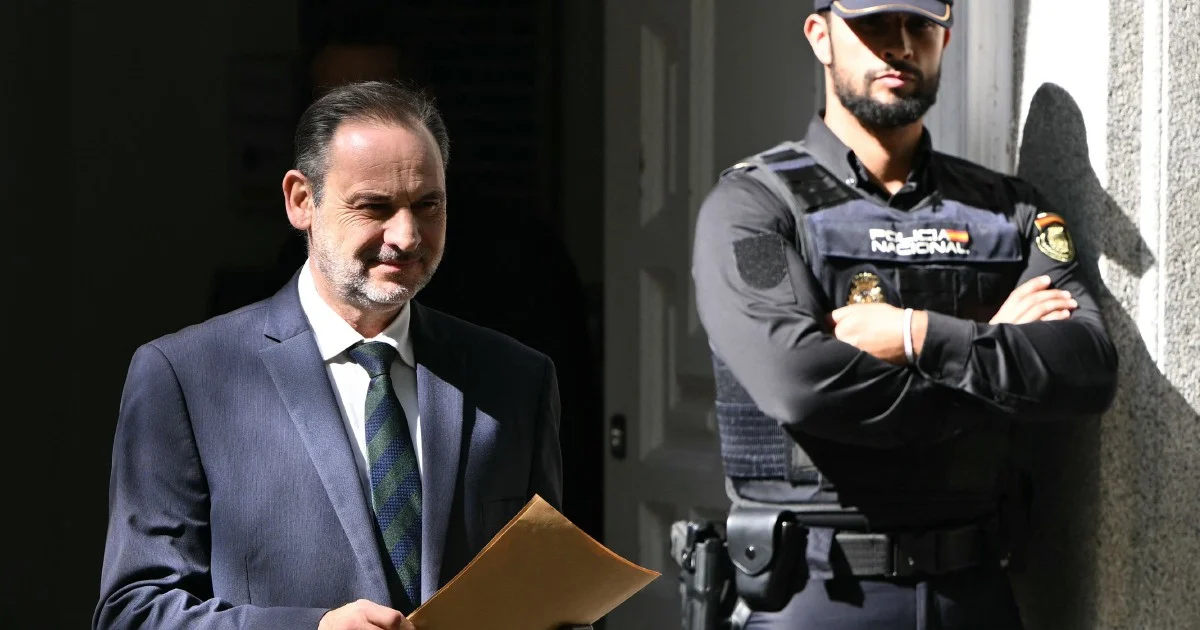
The conviction of Jose Luis Abalos represents a significant blow to Spanish Prime Minister Pedro Sanchez's administration, as the former transport minister and longtime political ally faces a quarter-century in prison following a Spanish court's determination that he engaged in systemic corruption. The verdict, delivered on Monday, marks one of the most severe sentences handed to a high-ranking government official in recent Spanish judicial history and underscores the judicial system's commitment to holding senior politicians accountable for abuse of their positions.
Abalos served as one of Sanchez's most trusted advisors during his tenure as transport minister, a portfolio that gave him significant influence over major infrastructure projects and regulatory decisions affecting Spain's transportation sector. His proximity to the nation's highest political office and his control over substantial state resources made the allegations against him particularly damaging to the government's credibility. The case has raised uncomfortable questions about oversight mechanisms within Spain's executive branch and whether sufficient checks existed to prevent ministerial malfeasance during the administration's tenure.
The judicial proceedings against Abalos unfolded within Spain's complex legal landscape, where allegations of ministerial corruption trigger investigations by both specialized anti-corruption units and regional authorities. The court's decision to impose the maximum available sentence suggests that evidence presented demonstrated systematic wrongdoing rather than isolated incidents or questionable judgment calls. Spanish courts have historically been cautious about convicting sitting or recently departed ministers, making Abalos's conviction particularly notable for its severity and the court's apparent confidence in the evidence.
The conviction carries implications extending beyond the individual defendant. In a political system where ministers typically resign or face dismissal upon facing serious allegations, Abalos's delayed accountability through the judicial system highlights gaps between political and criminal responsibility in Spain. His presence in government until the charges crystallized into formal prosecution sparked public debate about whether Spain's political culture adequately separated individuals suspected of serious crimes from positions of state power and influence.
Corruption scandals involving senior government figures have periodically destabilized Spanish politics, with previous cases touching ministers across the political spectrum. Abalos's case arrives amid broader European scrutiny of governmental integrity, particularly following similar high-profile convictions in neighboring countries. The verdict demonstrates that Spanish courts possess both the independence and investigative resources to pursue complex financial crimes involving government officials, an important assurance for international observers evaluating Spain's commitment to anti-corruption enforcement.
The transport ministry's portfolio, which Abalos oversaw, encompasses decisions affecting billions of euros in public spending on rail infrastructure, highway construction, and urban mobility projects. Allegations against him reportedly involved procurement irregularities and conflicts of interest related to major contracts, raising concerns about whether public resources were deployed according to merit and competitive bidding rather than political patronage or personal enrichment. Any systemic corruption within such a consequential ministry carries reverberations throughout Spain's construction and engineering sectors.
For Prime Minister Sanchez's political future, the conviction represents a manageable but persistent complication. While Abalos departed government months ago, distancing the prime minister from any immediate association with criminal activity, the conviction nonetheless recalls an era when such figures wielded significant influence at the executive's highest levels. Opposition parties have capitalized on the case to question the administration's initial vetting procedures and governance standards, suggesting that insufficient mechanisms existed to identify or prevent Abalos's alleged misconduct before his elevated position amplified his capacity for wrongdoing.
The sentencing also carries lessons for Southeast Asian observers considering Spain's institutional capacity to address executive-level corruption. Democratic systems with relatively robust judicial independence, investigative agencies, and media scrutiny can pursue senior officials through criminal courts despite political pressures to protect allies or avoid embarrassment. However, the extended timeline between alleged misconduct and judicial resolution—a pattern visible in the Abalos case—suggests that even well-resourced systems struggle with the pace of prosecuting complex financial crimes involving powerful figures.
Spain's anti-corruption framework, including specialized prosecutors dedicated to investigating official misconduct, ultimately delivered accountability despite the defendant's former status and political connections. The court's willingness to deliver a severe sentence establishes important precedent that ministerial rank does not confer immunity from substantial punishment once credible evidence of corruption emerges. However, ongoing debates within Spain center on whether preventive measures could have forestalled Abalos's alleged offenses before they allegedly occurred, or whether reactive prosecution, however ultimately effective, remains society's primary tool against such malfeasance.